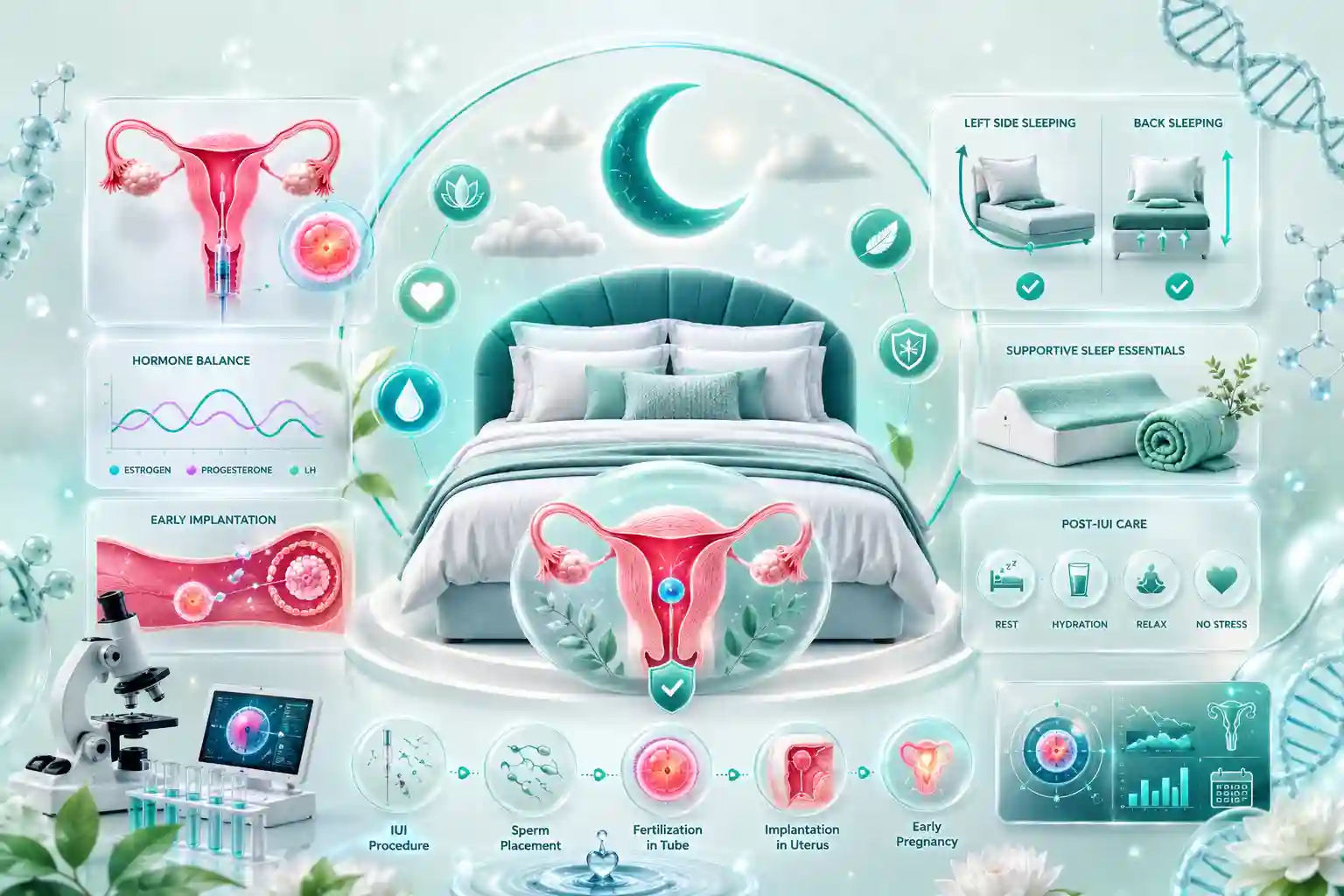
One of the most common questions during the two-week wait is about the sleeping position after IUI. Many patients worry that sleeping on one side, turning over during the night, or lying on their stomach could affect implantation or reduce the chances of pregnancy.
The reassuring news is that there is no scientific evidence that any specific sleeping position after IUI improves or reduces the chances of pregnancy. Once the prepared sperm has been placed inside the uterus, it quickly begins moving toward the fallopian tubes, and your sleeping posture does not influence this process.
This guide explains what experts recommend, which sleeping positions are comfortable, and what healthy habits to follow after IUI.
Does Sleeping Position After IUI Matter?
For most patients, the answer is no.
There is no medically recommended sleeping position after IUI that has been proven to improve implantation or increase pregnancy success.
Once the procedure is complete:
- The sperm begins moving naturally toward the fallopian tubes.
- Gravity does not prevent sperm from reaching the egg.
- Turning in bed or changing positions during sleep does not interfere with fertilization or implantation.
Sleep quality is generally more important than the position in which you sleep.
Why Do People Worry About Sleeping Position After IUI?
Many patients fear that movement after the procedure could affect the outcome.
Common concerns include:
- Sleeping on the left side
- Sleeping on the right side
- Sleeping on the back
- Sleeping on the stomach
- Rolling over during sleep
Current medical evidence does not show that these positions influence pregnancy after IUI.
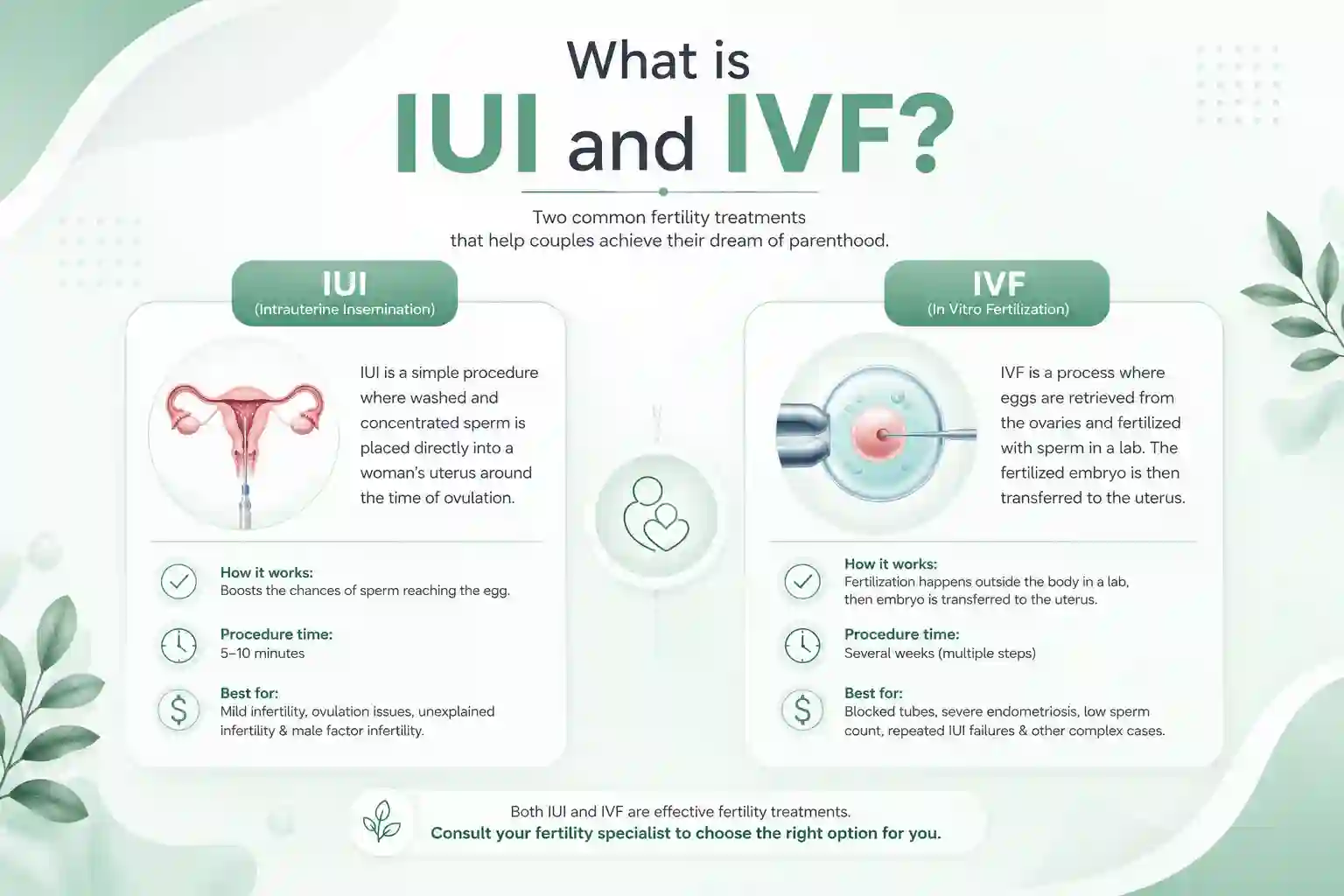
What Happens After IUI?
Understanding the biological process can provide reassurance.
Step 1: Ovulation
An egg is released naturally or with fertility medications.
Step 2: Fertilization
Prepared sperm travels through the uterus toward the fallopian tubes, where fertilization may occur.
Step 3: Embryo Development
If fertilization occurs, the embryo begins dividing while traveling toward the uterus.
Step 4: Implantation
Several days later, the embryo may implant into the uterine lining.
These processes occur naturally and are not affected by sleeping position.
Best Sleeping Position After IUI
The best sleeping position is simply the one that allows you to sleep comfortably.
Sleeping on Your Left Side
Many people prefer sleeping on the left side because it is comfortable, especially later in pregnancy.
However, after IUI there is no evidence that it improves implantation.
Sleeping on Your Right Side
Sleeping on the right side is also considered safe after IUI.
Sleeping on Your Back
Back sleeping is generally acceptable during the two-week wait unless your healthcare provider recommends otherwise.
Sleeping on Your Stomach
If this is your usual sleeping position, it is generally not considered harmful after IUI during the early days before pregnancy is confirmed.
Choose the position that helps you get a restful night’s sleep.
Benefits of Good Sleep After IUI
Although sleep position does not affect implantation, getting enough sleep supports your overall health.
Good sleep may help:
- Reduce stress.
- Support hormonal balance.
- Improve energy levels.
- Promote emotional well-being.
- Encourage healthy lifestyle habits during fertility treatment.
Aim for 7–9 hours of quality sleep each night.
Risks, Side Effects, or Limitations
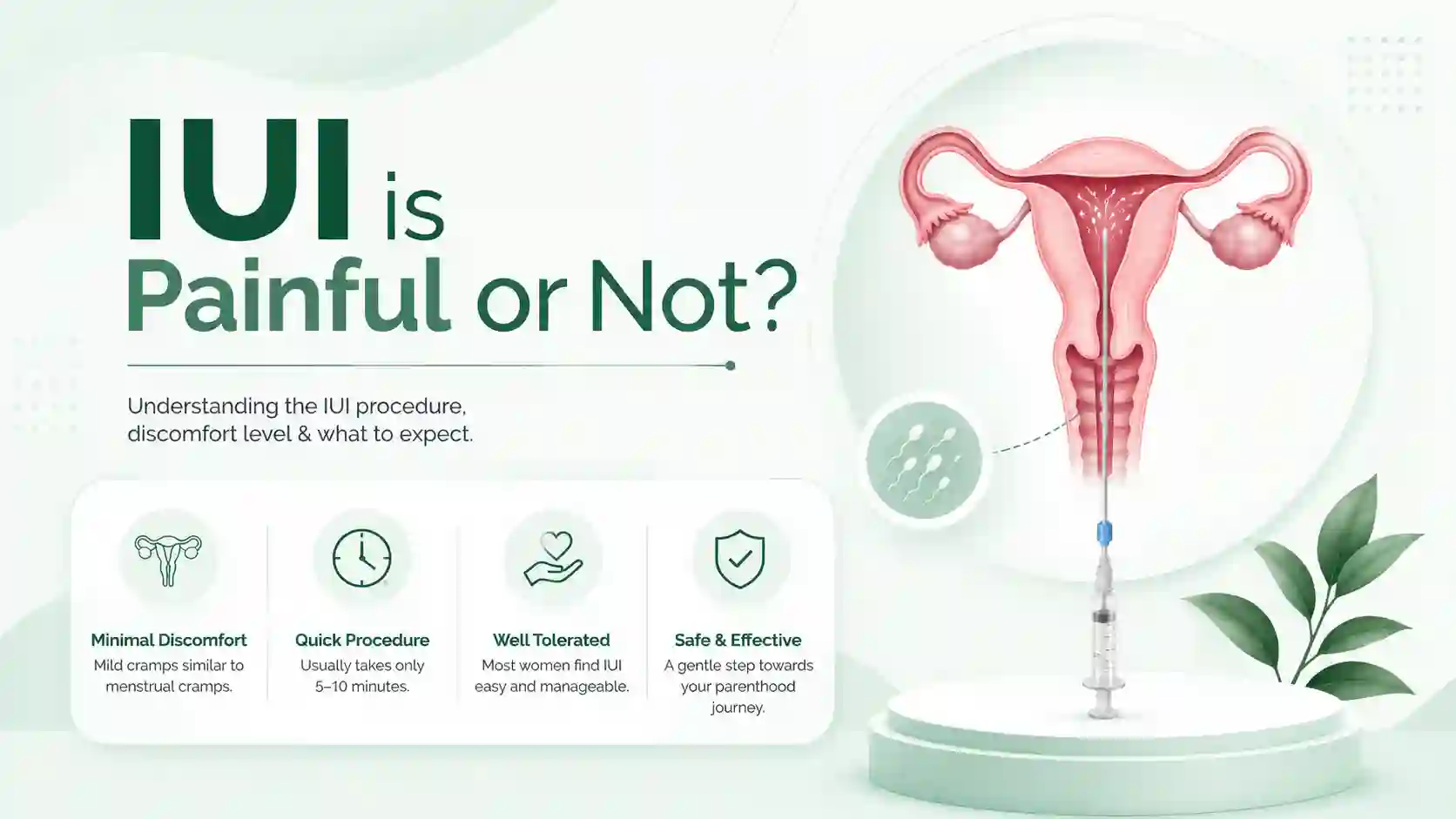
After IUI, some people experience mild symptoms such as:
- Light cramping
- Mild bloating
- Breast tenderness
- Fatigue
- Light spotting
These symptoms are usually related to the procedure or fertility medications rather than your sleeping position.
If you experience severe pain, heavy bleeding, fever, or significant abdominal swelling, contact your fertility clinic promptly.
Factors That Affect IUI Success
Several factors play a much larger role than sleeping position.
Female Age
Egg quality naturally changes with age.
Ovulation Timing
Proper timing between ovulation and insemination is one of the most important factors.
Sperm Quality
Healthy sperm count, movement, and shape improve fertilization potential.
Fallopian Tube Health
At least one healthy, open fallopian tube is generally required for successful IUI.
Overall Health
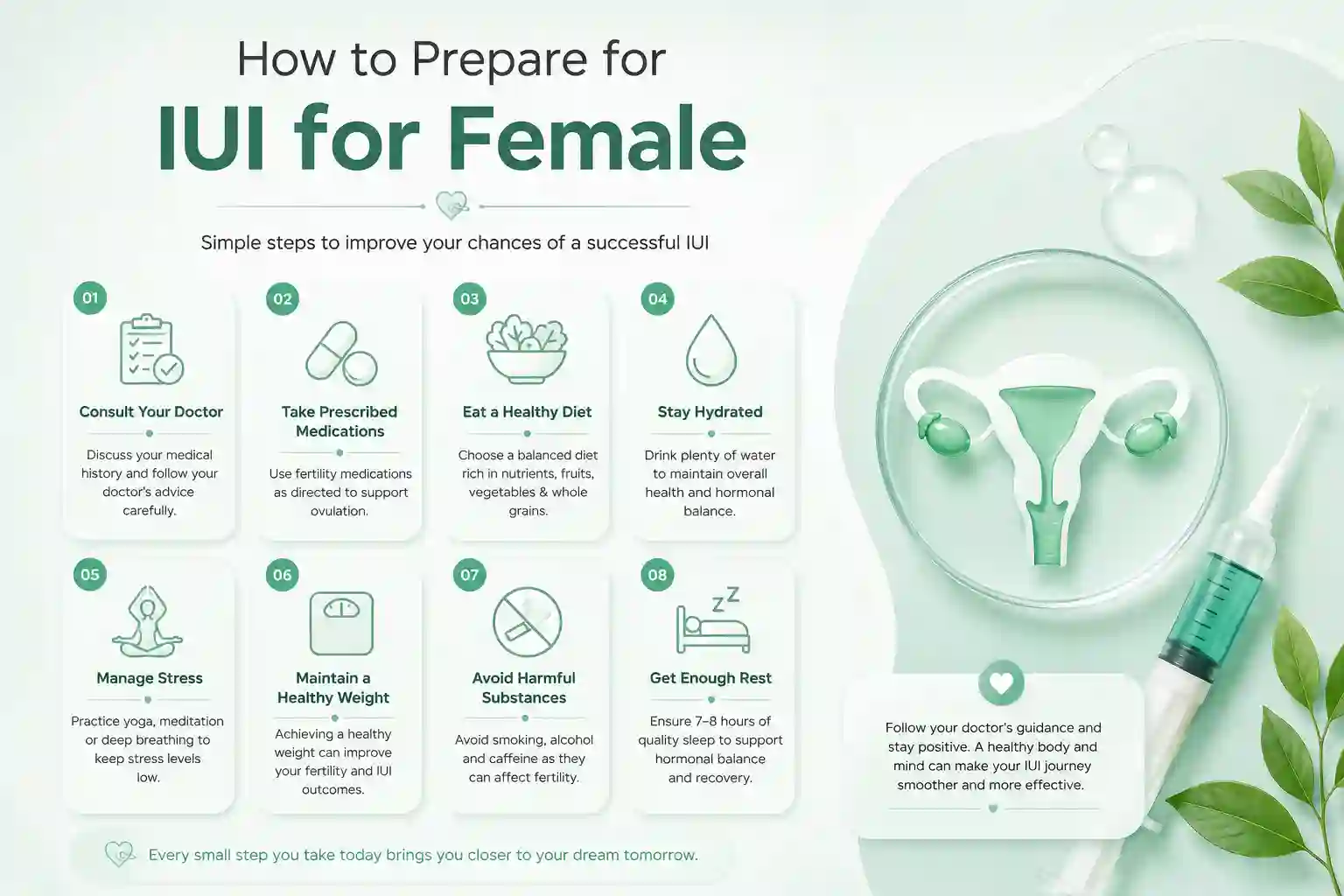
Maintaining a healthy lifestyle before and after treatment supports reproductive health.
Emotional & Patient Perspective
The two-week wait often leads patients to question every activity, including how they sleep.
Many people worry that:
- Rolling over at night could affect implantation.
- Sleeping on the wrong side might reduce pregnancy chances.
- Movement during sleep could interfere with the procedure.
Fortunately, these concerns are not supported by medical evidence. Focus on getting restful sleep instead of trying to maintain one specific position all night.
Tips for Better Sleep After IUI
To improve sleep quality:
- Maintain a regular bedtime.
- Sleep in the position that feels most comfortable.
- Use pillows for extra support if needed.
- Keep your bedroom cool and quiet.
- Avoid excessive caffeine late in the day.
- Stay hydrated.
- Continue prescribed medications as directed.
- Practice relaxation techniques if you feel anxious.
When to See a Fertility Specialist
Contact your fertility specialist if you experience:
- Severe abdominal or pelvic pain
- Heavy vaginal bleeding
- Fever
- Persistent vomiting
- Difficulty breathing
- Significant abdominal swelling
- Any symptoms that concern you
These symptoms require medical evaluation.
Choosing the right sleeping position after IUI is a common concern, but current medical evidence shows that no specific sleeping position improves or reduces the chances of pregnancy. Whether you sleep on your left side, right side, back, or stomach, your sleeping posture is unlikely to affect fertilization or implantation. Instead, focus on getting enough restful sleep, following your fertility specialist’s instructions, taking prescribed medications, eating a balanced diet, and maintaining healthy lifestyle habits during the two-week wait.
FAQs About Sleeping Position After IUI
1. What is the best sleeping position after IUI?
There is no medically proven best sleeping position after IUI. Sleep in whichever position is most comfortable for you.
2. Can I sleep on my side after IUI?
Yes. Sleeping on either your left or right side is generally considered safe after IUI.
3. Is it safe to sleep on my stomach after IUI?
For most people, yes. Sleeping on your stomach during the early days after IUI is not known to affect fertilization or implantation.
4. Can sleeping position affect implantation?
No. Current evidence does not show that sleeping position influences embryo implantation after IUI.
5. Should I stay lying down after the IUI procedure?
Many clinics ask patients to rest for a few minutes after the procedure, but prolonged bed rest has not been shown to improve pregnancy rates.
6. Does turning over in bed affect IUI success?
No. Normal movement during sleep does not interfere with the fertilization or implantation process.
7. When should I contact my fertility clinic after IUI?
Seek medical advice if you experience severe abdominal pain, heavy bleeding, fever, persistent vomiting, significant abdominal swelling, or any symptoms that concern you after the procedure.