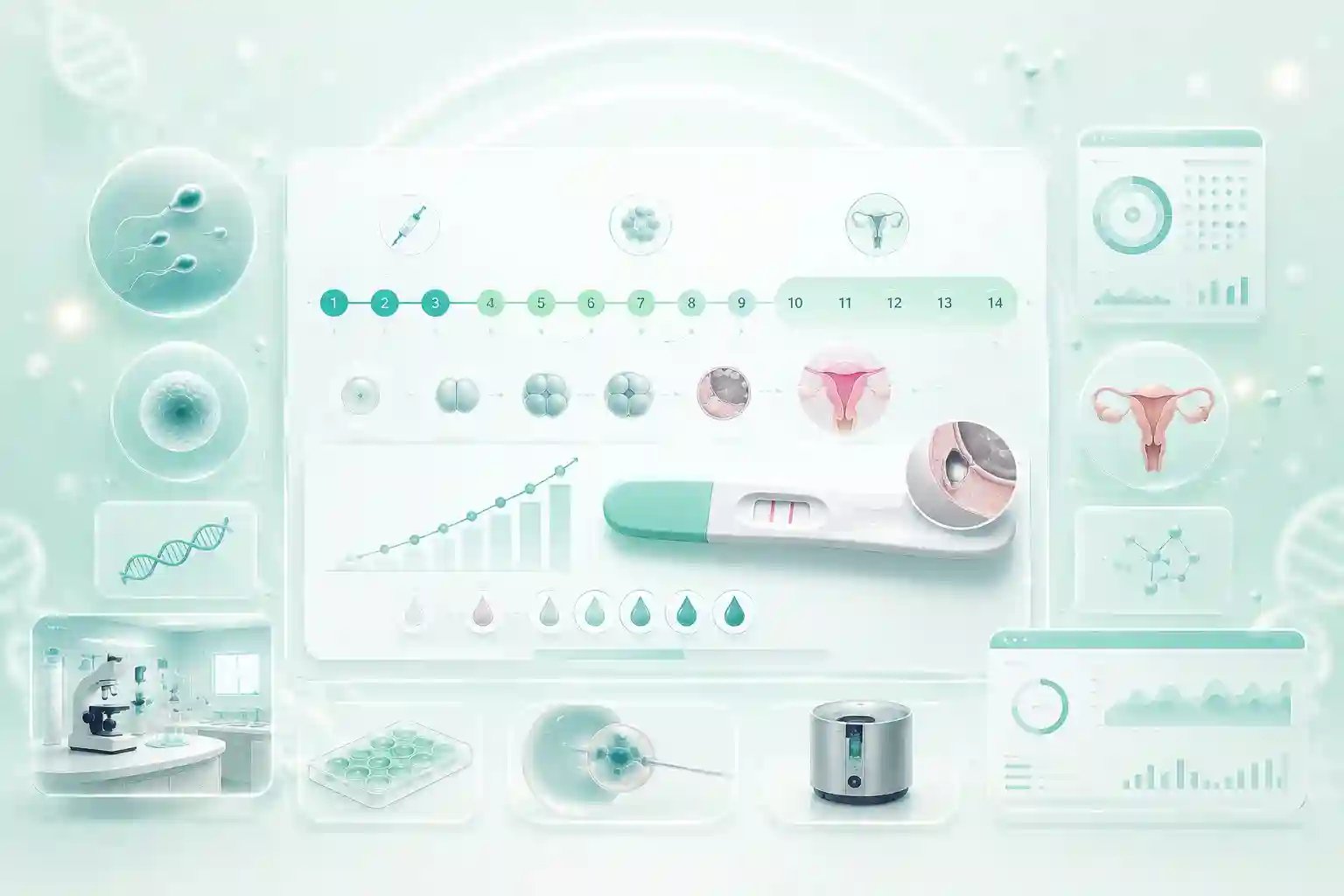
The two-week wait after intrauterine insemination (IUI) can feel like the longest part of the fertility journey. One of the most common questions patients ask is about the pregnancy test after IUI and the best time to take it. While it’s tempting to test early, doing so may lead to false-negative or false-positive results, especially if fertility medications were used.
Understanding the right timing for a pregnancy test after IUI can help you avoid unnecessary stress and provide the most accurate results. This guide explains when to test, how pregnancy tests work after IUI, and what to do if your result is positive or negative.
What Is a Pregnancy Test After IUI?
A pregnancy test after IUI is used to detect human chorionic gonadotropin (hCG), the hormone produced after a fertilized embryo implants into the uterine lining.
There are two main types of pregnancy tests:
- Home urine pregnancy test
- Blood hCG test performed at a fertility clinic or laboratory
Both tests measure hCG, but blood tests can detect lower hormone levels earlier than most home tests.
Why Is the Timing of a Pregnancy Test After IUI Important?
Testing too early can produce misleading results.
If you test before enough hCG has been produced, you may receive a false-negative result even if pregnancy has occurred.
If your treatment included an hCG trigger injection, testing too soon may detect the medication instead of a pregnancy, leading to a false-positive result.
For this reason, most fertility specialists recommend waiting until the appropriate testing day.
How Does Pregnancy Develop After IUI?
Understanding the biological timeline explains why patience is important.
Step 1: Ovulation
An egg is released naturally or after a trigger injection.
Step 2: Fertilization
Prepared sperm may fertilize the egg inside the fallopian tube.
Step 3: Embryo Development
The fertilized egg divides while traveling toward the uterus.
Step 4: Implantation
Several days later, the embryo attaches to the uterine lining.
Step 5: hCG Production
After implantation, the body begins producing hCG, which is detected by pregnancy tests.
When Should You Take a Pregnancy Test After IUI?
Most fertility specialists recommend taking a pregnancy test after IUI about 14 days after the procedure.
At this stage:
- hCG levels are usually high enough to detect if pregnancy has occurred.
- The chance of a false-negative result is lower.
- Results are generally more reliable than testing earlier.
Always follow your fertility clinic’s specific instructions, as testing schedules may vary.
Home Pregnancy Test vs. Blood Test
Home Pregnancy Test
Advantages include:
- Convenient
- Easy to use
- Provides results within minutes
However, home tests may not detect very low hCG levels during early pregnancy.
Blood hCG Test
A blood test offers several advantages:
- Higher sensitivity than urine tests
- Can detect pregnancy earlier
- Measures the exact hCG level
- Helps monitor early pregnancy development
Many fertility clinics recommend a blood test to confirm pregnancy after IUI.
What If the Pregnancy Test Is Negative?
A negative result does not always mean treatment has failed.
Possible reasons include:
- Testing too early
- Late implantation
- Lower-than-expected hCG levels
If your test is negative before the recommended testing day, your fertility specialist may advise repeating the test after a few days.
If your menstrual period has not started and your pregnancy test remains negative, contact your fertility clinic for further guidance.
What If the Pregnancy Test Is Positive?
A positive pregnancy test after IUI is an encouraging first step.
Your fertility specialist may recommend:
- A blood hCG test
- Repeat hCG testing after 48 hours
- An early pregnancy ultrasound
- Continuing prescribed medications
These follow-up evaluations help confirm that the pregnancy is progressing as expected.
Benefits of Waiting Until the Recommended Testing Day
Waiting to take a pregnancy test can:
- Reduce false-negative results
- Reduce false-positive results caused by trigger injections
- Minimize unnecessary emotional stress
- Provide more accurate information
- Help guide appropriate medical follow-up
Although waiting can be difficult, it often prevents confusion and disappointment.
Factors Affecting Pregnancy Test Results
Several factors influence when a pregnancy becomes detectable.
Implantation Timing
Earlier implantation may lead to earlier hCG production.
Trigger Injection
Residual hCG from a trigger shot may affect early pregnancy tests.
Test Sensitivity
Different home pregnancy tests detect different minimum hCG levels.
Individual Hormonal Response
Every pregnancy produces hCG at a slightly different rate.
Emotional & Patient Perspective
Waiting for a pregnancy test after IUI can be emotionally challenging.
Many patients experience:
- Hope
- Excitement
- Anxiety
- Frequent symptom checking
- Fear of disappointment
Remember that symptoms alone cannot confirm pregnancy. Some women experience several early pregnancy symptoms, while others notice none before receiving a positive test.
Tips Before Taking a Pregnancy Test
To obtain the most reliable result:
- Wait until your fertility specialist’s recommended testing day.
- Use the first morning urine if taking a home test.
- Follow the test instructions carefully.
- Continue prescribed medications unless instructed otherwise.
- Contact your fertility clinic if you have questions about your results.
When to See a Fertility Specialist
Contact your fertility specialist if:
- Your pregnancy test is positive.
- Your menstrual period is delayed despite a negative test.
- You experience severe abdominal pain.
- You have heavy vaginal bleeding.
- You develop fever or significant abdominal swelling.
- You have questions about your pregnancy test results.
Prompt follow-up helps ensure appropriate care during early pregnancy.
A pregnancy test after IUI is the most reliable way to determine whether treatment has been successful. While it may be tempting to test early, waiting until about 14 days after IUI provides the most accurate results and reduces the chance of false-negative or false-positive findings. If your test is positive, your fertility specialist may recommend additional blood tests and an early ultrasound. If the result is negative but your period has not started, follow your clinic’s guidance regarding repeat testing or further evaluation. Patience during the two-week wait can be difficult, but proper timing helps ensure the most reliable outcome.
FAQs About Pregnancy Test After IUI
1. When should I take a pregnancy test after IUI?
Most fertility specialists recommend taking a pregnancy test about 14 days after IUI for the most accurate result.
2. Can I take a pregnancy test 10 days after IUI?
Some highly sensitive tests may detect pregnancy this early, but false-negative results are common because hCG levels may still be too low.
3. Can the trigger injection cause a false-positive pregnancy test?
Yes. If your trigger shot contained hCG, testing too early may detect the medication rather than a pregnancy.
4. Is a blood pregnancy test more accurate than a home test?
Yes. Blood hCG tests are more sensitive and can detect lower levels of the pregnancy hormone than most home urine tests.
5. What should I do if my pregnancy test is negative after IUI?
If you tested before the recommended date, your fertility specialist may advise repeating the test. If your period is delayed despite a negative result, contact your clinic for further evaluation.
6. Can I have pregnancy symptoms even if my test is negative?
Yes. Fertility medications and hormonal changes can cause symptoms that resemble early pregnancy, even when a pregnancy test is negative.
7. What happens after a positive pregnancy test following IUI?
Your fertility specialist may recommend blood hCG testing, repeat hormone measurements, and an early ultrasound to confirm that the pregnancy is developing normally.