
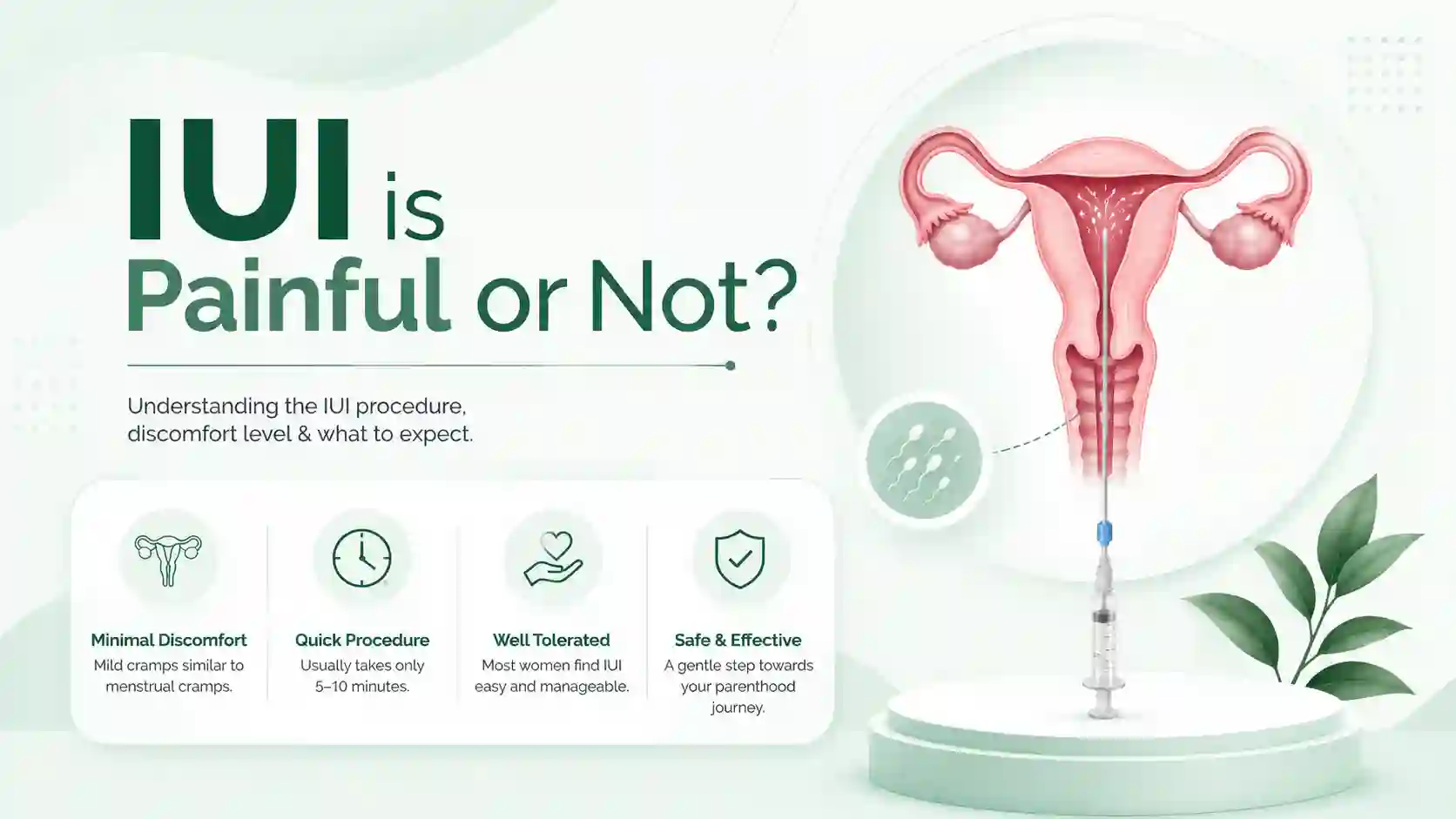

If you’re considering fertility treatment, one of the most common questions is, “iui is painful or not?” It’s a completely understandable concern. Many people feel anxious about any medical procedure, especially when it involves something as personal as reproductive health.
The good news is that intrauterine insemination (IUI) is generally considered a simple, minimally invasive procedure. While some people experience mild discomfort or cramping, severe pain is uncommon. Knowing what happens before, during, and after IUI can help reduce anxiety and prepare you for the experience.
In this guide, we’ll explain what IUI feels like, why discomfort varies from person to person, and what you can do to make the procedure more comfortable.
What Is IUI Is Painful or Not?
Before answering whether iui is painful or not, it’s important to understand what IUI actually is.
Intrauterine insemination (IUI) is a fertility treatment in which specially prepared sperm is placed directly inside the uterus around the time of ovulation. The goal is to increase the chances of fertilization by helping sperm reach the egg more efficiently.
The procedure is commonly recommended for:
- Mild male infertility
- Unexplained infertility
- Ovulation disorders
- Cervical factor infertility
- Couples using donor sperm
- Certain cases of endometriosis
Unlike IVF, IUI does not involve egg retrieval or surgery, making it one of the least invasive fertility treatments.
Why Is IUI Is Painful or Not an Important Question?
Many people delay fertility treatment because they fear pain. Understanding whether iui is painful or not can help reduce unnecessary anxiety and encourage informed decision-making.
Knowing what to expect also helps patients:
- Feel more relaxed during the procedure
- Prepare mentally beforehand
- Recognize normal symptoms afterward
- Understand when discomfort may require medical attention
Anxiety itself can make medical procedures feel more uncomfortable, so having realistic expectations is beneficial.
How Does IUI Work?
The IUI process is straightforward and usually takes only a few minutes.
Step 1: Ovulation Monitoring
Your fertility specialist tracks your ovulation using ultrasound scans, blood tests, or ovulation predictor kits.
Step 2: Sperm Preparation
A semen sample is collected and processed in the laboratory. This “sperm washing” removes debris and concentrates healthy, motile sperm.
Step 3: Catheter Placement
A thin, flexible catheter is gently inserted through the cervix into the uterus.
Step 4: Sperm Insertion
The prepared sperm is slowly injected into the uterus.
Step 5: Short Rest
Most patients rest for about 10–15 minutes before returning to normal daily activities.
The actual insemination typically takes less than five minutes.
Is IUI Actually Painful?
The simple answer is:
For most people, IUI is not painful.
Instead of pain, many patients describe the sensation as:
- Mild cramping
- Light pressure
- Brief discomfort
- A sensation similar to a Pap smear
Some people feel almost nothing during the procedure.
Others may experience temporary cramping for a few minutes afterward.
Pain levels depend on several individual factors, including cervical sensitivity, underlying medical conditions, and personal pain tolerance.
What Might Cause Discomfort During IUI?
Although IUI is usually well tolerated, mild discomfort can occur for several reasons.
Cervical Sensitivity
Passing the catheter through the cervix may create slight pressure or brief cramping.
Uterine Contractions
The uterus may react to catheter insertion with mild contractions, similar to menstrual cramps.
Anxiety and Muscle Tension
Feeling nervous may cause pelvic muscles to tighten, making the procedure feel more uncomfortable.
Pre-existing Gynecological Conditions
Patients with conditions such as:
- Endometriosis
- Pelvic inflammatory disease
- Cervical stenosis
- Fibroids
may experience greater discomfort during the procedure.
Benefits of IUI
IUI offers several advantages compared with more advanced fertility treatments.
Some benefits include:
- Minimally invasive
- Usually performed without anesthesia
- Quick outpatient procedure
- Lower cost than IVF
- Minimal recovery time
- Can be combined with fertility medications
- Suitable for many infertility diagnoses
For many couples, IUI is often one of the first fertility treatments recommended before considering IVF.
Risks, Side Effects, or Limitations
Although IUI is considered very safe, some temporary side effects are possible.
These may include:
- Mild cramping
- Light spotting
- Pelvic pressure
- Temporary bloating
- Mild discomfort lasting a few hours
Rare complications include:
- Infection
- Significant bleeding
- Severe pelvic pain
If severe pain, fever, heavy bleeding, or persistent symptoms occur after IUI, medical evaluation is important.
Cost, Timeline, and Success Rate
The procedure itself usually lasts less than five minutes, while the entire appointment often takes 20–30 minutes.
Recovery is generally immediate, allowing most people to return to work or normal activities the same day.
Success rates vary depending on factors such as:
- Female age
- Cause of infertility
- Sperm quality
- Ovulation timing
- Use of fertility medications
Generally, pregnancy rates per IUI cycle are lower than IVF, but many patients achieve pregnancy after multiple well-timed cycles.
Factors Affecting the IUI Experience
Whether iui is painful or not depends on several personal factors.
These include:
- Individual pain tolerance
- Cervical anatomy
- Previous childbirth
- Anxiety level
- Fertility diagnosis
- Experience of the healthcare provider
- Presence of pelvic conditions
A gentle technique and experienced fertility specialist can often make the procedure even more comfortable.
Emotional & Patient Perspective
Fertility treatment is not only a physical journey but also an emotional one.
Many patients report that their fear before the first IUI was much greater than the discomfort they actually experienced.
Waiting for pregnancy results after IUI can sometimes be emotionally more challenging than the procedure itself.
Having support from a partner, family member, friend, or counselor may help reduce stress during treatment.
Remember that everyone’s experience is unique. Comparing yourself to others online may increase unnecessary worry.
Tips to Make IUI More Comfortable
If you’re wondering iui is painful or not, these practical tips may help reduce discomfort.
- Ask your doctor to explain each step beforehand.
- Stay relaxed and breathe slowly during the procedure.
- Empty your bladder if instructed.
- Wear comfortable clothing.
- Avoid reading frightening stories online before treatment.
- Discuss any previous pelvic pain with your fertility specialist.
- Follow all medication instructions carefully.
Most patients find that the procedure is over before they realize it.
When to See a Fertility Specialist
You should speak with a fertility specialist if:
- You’ve been trying to conceive for 12 months (or six months if over age 35).
- You have irregular ovulation.
- Your partner has mild sperm abnormalities.
- You have unexplained infertility.
- You have concerns about whether IUI is the right treatment.
After IUI, seek medical attention immediately if you experience:
- Severe abdominal pain
- Heavy bleeding
- Fever
- Foul-smelling vaginal discharge
- Persistent worsening symptoms
These symptoms are uncommon but should always be evaluated.
Many people ask, “iui is painful or not?” Fortunately, for most patients, IUI is associated with little to no pain. The procedure is quick, minimally invasive, and usually feels similar to a routine gynecological examination, with only mild cramping or temporary pressure.
Understanding what happens during IUI can ease anxiety and help you approach fertility treatment with greater confidence. If you’re worried about discomfort or have an underlying pelvic condition, discussing your concerns with a fertility specialist can help ensure the most comfortable experience possible.
FAQs About IUI Is Painful or Not
1. Is IUI painful or not for first-time patients?
Most first-time patients experience only mild cramping or pressure. Severe pain is uncommon.
2. How long does discomfort last after IUI?
Any mild cramping usually lasts from a few minutes to several hours and often resolves without treatment.
3. Can I walk or return to work after IUI?
Yes. Most people can resume normal daily activities immediately after the procedure unless advised otherwise by their doctor.
4. Why do I have cramps after IUI?
Mild cramping is often caused by temporary uterine contractions or slight cervical irritation from the catheter.
5. Does IUI hurt more than a Pap smear?
Many patients say IUI feels similar to or even less uncomfortable than a routine Pap smear.
6. Can I take pain medication before IUI?
Only take medication if your fertility specialist recommends it, as some medicines may not be appropriate during fertility treatment.
7. When should I worry if IUI is painful?
Seek medical care if pain is severe, persistent, accompanied by heavy bleeding, fever, or abnormal vaginal discharge, as these symptoms require evaluation.