The “two-week wait” following an intrauterine insemination is a period defined by intense anticipation and hyper-awareness. After months of carefully timed appointments and fertility medications, it is completely natural to analyze every single physical symptom your body experiences. Every cramp, twinge, and shift in energy is heavily scrutinized.
One of the most common symptoms patients frantically search for on the internet is noticing a white discharge after IUI. Seeing unexpected vaginal secretions can trigger immediate anxiety. You might wonder if you have developed an infection, if the sperm is leaking out, or if this is finally the early sign of pregnancy you have been praying for.
The reassuring truth is that changes in your cervical mucus and vaginal secretions are entirely expected during this phase of your cycle. This guide explores exactly what causes this symptom, the role of your fertility medications, and how to differentiate between healthy hormonal shifts and signs that require a doctor’s attention.
What Is White Discharge After IUI?
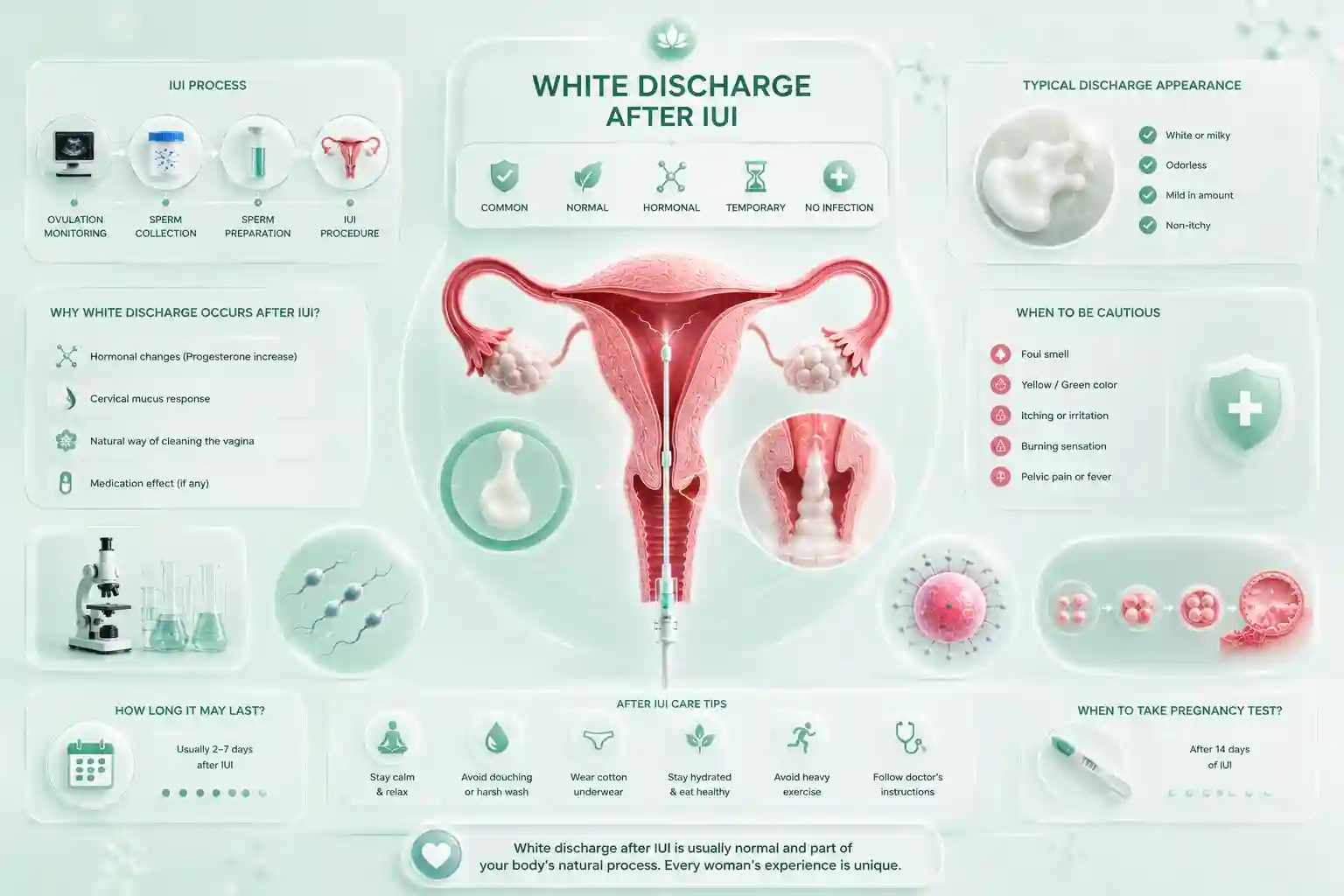
Noticing a white discharge after IUI is an incredibly common physical occurrence where patients observe a milky, creamy, or thick vaginal secretion in the days and weeks following their insemination procedure.
During a natural menstrual cycle, cervical mucus changes in texture and volume based on fluctuating hormones. Leading up to ovulation, it typically becomes clear, slippery, and stretchy (like raw egg whites) to help sperm travel. However, once ovulation has occurred and the insemination is complete, your hormonal landscape shifts dramatically. This hormonal pivot changes the texture and color of your natural secretions, often turning them thick, opaque, and white.
Why Does White Discharge After IUI Happen?
This specific symptom is usually driven by a combination of your body’s natural biological processes and the clinical protocols of your fertility clinic. The main culprits include:
- Progesterone Production: After you ovulate, the empty follicle that released the egg transforms into a structure called the corpus luteum. This structure pumps out massive amounts of progesterone, the hormone responsible for stabilizing the uterine lining. High levels of progesterone naturally cause cervical mucus to become thick, white, and creamy.
- Vaginal Suppositories: This is the most frequent cause of thick discharge. Many fertility specialists prescribe progesterone vaginal suppositories (like Endometrin or Crinone) to support early pregnancy. As the casing of the suppository melts and absorbs into the vaginal walls, the excess carrier material leaks out, looking like thick, white, or slightly yellow clumps.
- Leukorrhea: If the insemination was successful and an embryo implants, your body will begin producing human chorionic gonadotropin (hCG) and even more estrogen and progesterone. This surge increases blood flow to the pelvic region, stimulating the mucous membranes to produce leukorrhea—a mild, milky-white, and odorless early pregnancy discharge.
Is This Symptom a Good Sign or a Bad Sign?
Patients desperately want to know if this symptom means the procedure worked. Generally speaking, a creamy, white secretion is a very good sign that your body is doing exactly what it is supposed to do.
It indicates that your progesterone levels are high, creating a thick, nutrient-rich uterine lining that is highly receptive to an implanting embryo. However, because both early pregnancy and standard fertility medications trigger the exact same physical response, it is impossible to use this discharge as a definitive proof of pregnancy. It is a sign of a healthy post-ovulation environment, but you must still wait for a blood test to confirm conception.
Risks, Side Effects, or Warning Signs
While white discharge after IUI is overwhelmingly normal, it is important to know when a shift in your vaginal health requires medical attention. The intense hormone fluctuations of a fertility cycle can temporarily alter your vaginal microbiome, making you slightly more susceptible to mild infections.
You should contact your reproductive endocrinologist or OBGYN if you experience:
- A Cottage Cheese Texture: If the discharge is highly clumpy, accompanied by severe itching, burning, or redness, you likely have a yeast infection.
- Foul Odors: A strong, fishy smell is the primary indicator of Bacterial Vaginosis (BV).
- Unusual Colors: Discharge that turns green, bright yellow, or frothy is abnormal and warrants a quick swab at your clinic to rule out an infection.
- Severe Pelvic Pain: While mild cramping is normal, severe abdominal pain paired with unusual discharge should be evaluated immediately.
The Timeline of Symptoms After Insemination
Understanding the timeline of your cycle can help you manage your expectations during the waiting period.
- Days 1 to 3 Post-IUI: You may notice some clear or white fluid. This is often just the natural remnants of your fertile cervical mucus, the saline used to clean your cervix, or the beginning of your progesterone suppository leakage.
- Days 6 to 12 Post-IUI: This is the implantation window. During this time, your white discharge might briefly mix with a tiny amount of pink or brown blood. This is known as implantation spotting and is caused by the embryo burrowing into the uterine lining.
- Days 13 to 15 Post-IUI: If you are pregnant, the milky white leukorrhea often sustains or increases. If you are not pregnant, progesterone levels will drop, the discharge may dry up, and your menstrual cycle will begin.
Factors Affecting Your Discharge
No two fertility patients will experience the exact same symptoms. Your unique presentation of discharge will depend heavily on:
- Your Medication Protocol: Patients taking vaginal suppositories will experience significantly more discharge than patients taking intramuscular progesterone in oil (PIO) injections or oral medications.
- Hydration Levels: The volume of your cervical fluid is directly impacted by how much water you drink. Dehydration can make the discharge noticeably thicker and more scant.
- Hormone Sensitivity: Some bodies simply react more strongly to estrogen and progesterone surges, producing a higher volume of leukorrhea naturally.
The Emotional and Patient Perspective
The phenomenon known as “symptom spotting” is one of the most mentally exhausting aspects of assisted reproduction. It is incredibly difficult to go to the bathroom, look at your underwear, and try to decipher what a drop of fluid means for your future family.
It is vital to give yourself grace during this time. Remember that the medications you are taking are designed to perfectly mimic the symptoms of early pregnancy. Bloating, sore breasts, fatigue, and creamy discharge are all side effects of progesterone. Try to protect your mental health by accepting that these symptoms mean your body is currently a healthy, supportive environment, rather than viewing them as a pass-or-fail test.
Tips, Recommendations, and Hygiene Care
Managing increased vaginal secretions during your two-week wait is mostly about prioritizing comfort and hygiene.
- Wear Breathable Fabrics: Stick to 100% cotton underwear to allow for airflow and prevent moisture buildup, which helps ward off yeast infections.
- Use Unscented Panty Liners: If you are using vaginal suppositories, thin, unscented panty liners will save your clothes. Change them frequently to stay dry and comfortable.
- Avoid Douching: Never douche or use heavily scented feminine washes. These products destroy the good bacteria in your vagina and can actively cause the infections you are trying to avoid.
- Stay Hydrated: Drink plenty of water to help your body flush out toxins and maintain healthy cellular function as you wait for your test day.
When to See a Fertility Specialist
You are deeply connected to your fertility clinic during this process, so you should never hesitate to utilize their nursing line. Call your clinic if your discharge is accompanied by intense itching, a bad odor, or if you begin to experience heavy, bright red bleeding (enough to fill a pad) before your scheduled pregnancy test. If you develop a yeast infection, your doctor can prescribe a pregnancy-safe antifungal treatment that will not interfere with your fertility cycle.
Navigating the aftermath of a fertility procedure requires immense patience and self-compassion. While noticing white discharge after IUI can initially cause a spike in anxiety, understanding the biological mechanics behind it provides immense relief. Whether it is a side effect of your much-needed progesterone medications or the beautiful early signs of leukorrhea from a successful implantation, this symptom is a normal, healthy part of the reproductive process. Continue taking your medications as prescribed, practice gentle self-care, and hold on to hope as you approach your official test day.
FAQs About White Discharge After IUI
Is white discharge after IUI a definite sign of pregnancy?
No. While it can be an early sign of pregnancy (leukorrhea), it is most often caused by the natural rise in progesterone that occurs after ovulation or the use of progesterone suppositories prescribed by your clinic.
Will the sperm fall out if I have a lot of discharge?
No. The washed sperm is placed directly inside the uterine cavity, well past the cervix. The discharge you see in your underwear is originating from your vaginal walls and cervix, not from the uterus. The sperm is safe.
Why is my discharge thick and clumpy like paper?
If you have been prescribed a vaginal progesterone suppository like Endometrin or Crinone, the active medication is absorbed by the body, but the carrier matrix (the casing) is not. Your body naturally expels this casing, which looks like thick, white, or slightly yellow paper-like clumps.
Is it normal to have watery discharge instead of creamy?
Yes. Every body reacts differently to hormonal shifts. While creamy discharge is the most common, a slight increase in estrogen can cause your secretions to temporarily thin out and become more watery.
Should I stop taking my suppositories if I have too much discharge?
Never stop your fertility medications without explicit instructions from your doctor. A drop in progesterone can trigger early bleeding and prevent an embryo from successfully implanting. The messiness of the suppositories is unfortunately just a normal part of the process.
What is the difference between normal discharge and a yeast infection?
Normal hormonally driven discharge is usually odorless and painless. A yeast infection will typically present with an intense, uncontrollable itch, redness and swelling of the vulva, and a distinctly thick, “cottage cheese” texture.
Can the insemination procedure itself cause an infection?
It is incredibly rare. Fertility clinics use highly sterile equipment and strictly adhere to medical protocols to prevent introducing bacteria into the uterus. Most infections that occur during the two-week wait are standard yeast or bacterial imbalances caused by hormonal shifts, not the physical procedure.