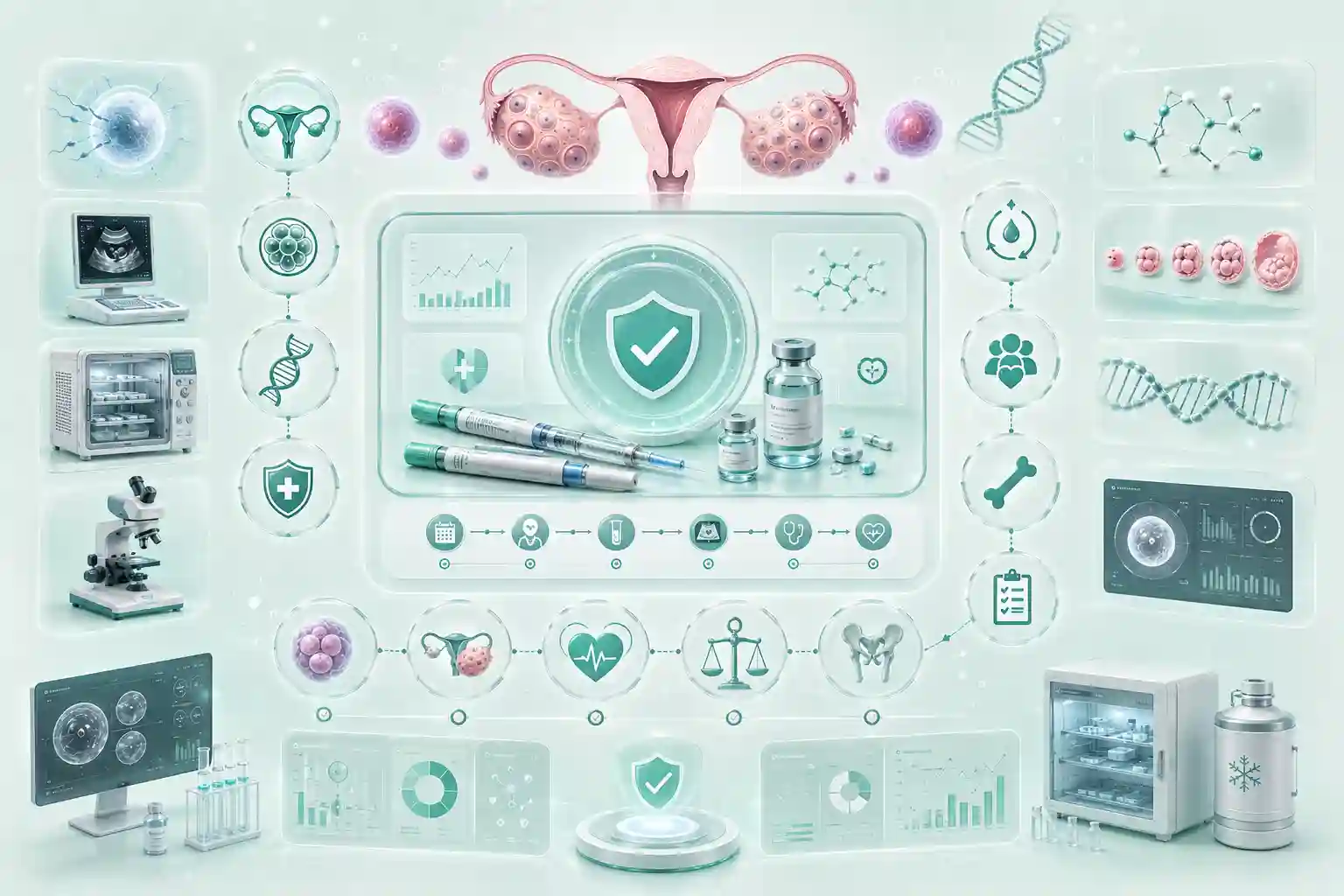
If you’re planning to undergo In Vitro Fertilization (IVF), you may wonder, “What are the long-term side effects of IVF injections?” IVF treatment involves fertility medications that stimulate the ovaries to produce multiple mature eggs. These injections are an essential part of the IVF process and have been used safely in fertility treatment for decades.
The reassuring news is that current scientific evidence does not show that IVF injections cause serious long-term health problems for most women. Most side effects occur during or shortly after treatment and usually resolve once the medications are stopped. However, like any medical treatment, IVF medications have potential risks that should be discussed with your fertility specialist.
This guide explains the possible long-term side effects of IVF injections, what research says, and how fertility specialists help minimize risks.
What Are IVF Injections?
IVF injections are fertility medications used to stimulate the ovaries so they produce multiple eggs instead of the single egg released during a natural menstrual cycle.
Common types of IVF medications include:
- Follicle-Stimulating Hormone (FSH)
- Luteinizing Hormone (LH) preparations
- Gonadotropin-Releasing Hormone (GnRH) agonists or antagonists
- Human Chorionic Gonadotropin (hCG) trigger injections
- Progesterone support after egg retrieval or embryo transfer
Your medication protocol is personalized according to your age, ovarian reserve, and fertility diagnosis.
Are There Long-Term Side Effects of IVF Injections?
For most women, IVF injections do not cause significant long-term health problems.
Research over several decades has found no convincing evidence that fertility medications alone increase the long-term risk of conditions such as breast cancer, ovarian cancer, or uterine cancer in the general IVF population. However, ongoing research continues, and individual risk may vary depending on personal and family medical history.
Your fertility specialist will consider your health profile before recommending treatment.
Short-Term Side Effects (More Common)
Most side effects occur during treatment and improve after the medications are stopped.
These may include:
- Abdominal bloating
- Mild pelvic discomfort
- Breast tenderness
- Mood changes
- Headache
- Fatigue
- Injection-site redness or bruising
- Nausea
These symptoms are usually temporary.
Possible Long-Term Considerations
Ovarian Hyperstimulation Syndrome (OHSS)
OHSS is a short-term complication rather than a long-term side effect.
It occurs when the ovaries respond excessively to fertility medications.
Modern IVF protocols have significantly reduced the risk of severe OHSS through careful monitoring and individualized medication plans.
Ovarian Reserve
There is no evidence that IVF injections permanently “use up” your eggs faster than the natural aging process.
The medications stimulate eggs that would normally be lost during that menstrual cycle rather than depleting your lifetime egg supply.
Cancer Risk
Current evidence suggests:
- No consistent increase in breast cancer risk
- No consistent increase in ovarian cancer risk due to fertility drugs alone
- No consistent increase in endometrial (uterine) cancer risk
Some earlier studies showed conflicting findings, but more recent large studies indicate that any increased risk is more likely related to underlying infertility or other patient factors rather than IVF medications themselves.
Future Fertility
IVF injections do not appear to reduce future fertility.
If pregnancy does not occur after one IVF cycle, many women can safely undergo additional cycles under medical supervision.
Benefits of IVF Injections
IVF medications help:
- Stimulate multiple mature eggs
- Increase the number of embryos available for treatment
- Improve the chances of successful fertilization
- Support personalized fertility treatment
- Enhance the opportunity for embryo freezing when appropriate
Factors That Affect Safety
The safety of IVF injections depends on several factors.
Age
Medication doses are adjusted according to age and ovarian reserve.
Ovarian Reserve
Women with high ovarian reserve may require careful monitoring to reduce the risk of OHSS.
Medical History
Your fertility specialist considers:
- Previous fertility treatments
- Hormonal disorders
- Family history
- Chronic medical conditions
Monitoring During Treatment
Regular ultrasound scans and blood tests help ensure medications are working safely and allow dose adjustments when needed.
Emotional & Patient Perspective
Many women worry that repeated hormone injections might cause permanent damage or long-term illness.
These concerns are completely understandable.
The good news is that IVF medications have been studied extensively, and most women complete treatment without long-term health problems related to the injections themselves. Regular monitoring throughout treatment is designed to identify and manage any short-term complications early.
If you have concerns because of your personal medical history or family history of cancer, discuss them openly with your fertility specialist before starting treatment.
Tips for Safe IVF Treatment
To support a safe treatment experience:
- Take medications exactly as prescribed.
- Attend all monitoring appointments.
- Stay hydrated.
- Report unusual symptoms promptly.
- Avoid changing medication doses on your own.
- Follow your fertility specialist’s instructions carefully.
When to Contact Your Fertility Specialist
Seek medical advice immediately if you experience:
- Severe abdominal pain
- Rapid abdominal swelling
- Difficulty breathing
- Persistent vomiting
- Heavy vaginal bleeding
- Fever
- Sudden weight gain
- Severe pelvic discomfort
These symptoms require prompt medical evaluation.
For most women, IVF injections are considered safe and are not associated with significant long-term side effects. The majority of side effects are temporary and resolve after treatment ends. Current scientific evidence does not show that fertility medications alone increase the long-term risk of cancer or permanently reduce fertility in the general population. Because every patient’s medical history is different, the safest approach is to undergo IVF under the care of an experienced fertility specialist who can personalize medication doses and closely monitor your response throughout treatment.
FAQs About the Long-Term Side Effects of IVF Injections
1. Do IVF injections have long-term side effects?
For most women, no significant long-term side effects have been identified. Most side effects are temporary and occur only during treatment.
2. Can IVF injections increase cancer risk?
Current evidence does not show a consistent increase in breast, ovarian, or uterine cancer risk caused by fertility medications alone. Individual risk depends on many factors, including personal and family medical history.
3. Do IVF injections reduce ovarian reserve?
No. IVF medications stimulate eggs that would naturally be lost during that menstrual cycle and do not permanently deplete your lifetime egg supply.
4. What is the most serious complication of IVF injections?
The most important short-term complication is Ovarian Hyperstimulation Syndrome (OHSS), which has become much less common with modern IVF protocols and careful monitoring.
5. Can I undergo more than one IVF cycle safely?
Many women safely undergo multiple IVF cycles under the supervision of their fertility specialist. Your treatment plan will be individualized based on your health and previous response.
6. Are IVF injections painful?
Most injections cause only mild discomfort or temporary redness at the injection site. Your fertility team will show you how to administer them correctly.
7. How can I reduce the risks associated with IVF injections?
Follow your medication schedule exactly, attend all monitoring appointments, stay hydrated, and contact your fertility clinic if you develop severe pain, rapid swelling, difficulty breathing, or other concerning symptoms.