If you’re struggling to conceive because of poor egg quality, diminished ovarian reserve, or premature ovarian insufficiency, IVF with donor eggs may be a treatment option recommended by your fertility specialist. This advanced fertility treatment has helped many individuals and couples achieve successful pregnancies when using their own eggs is unlikely to result in pregnancy.
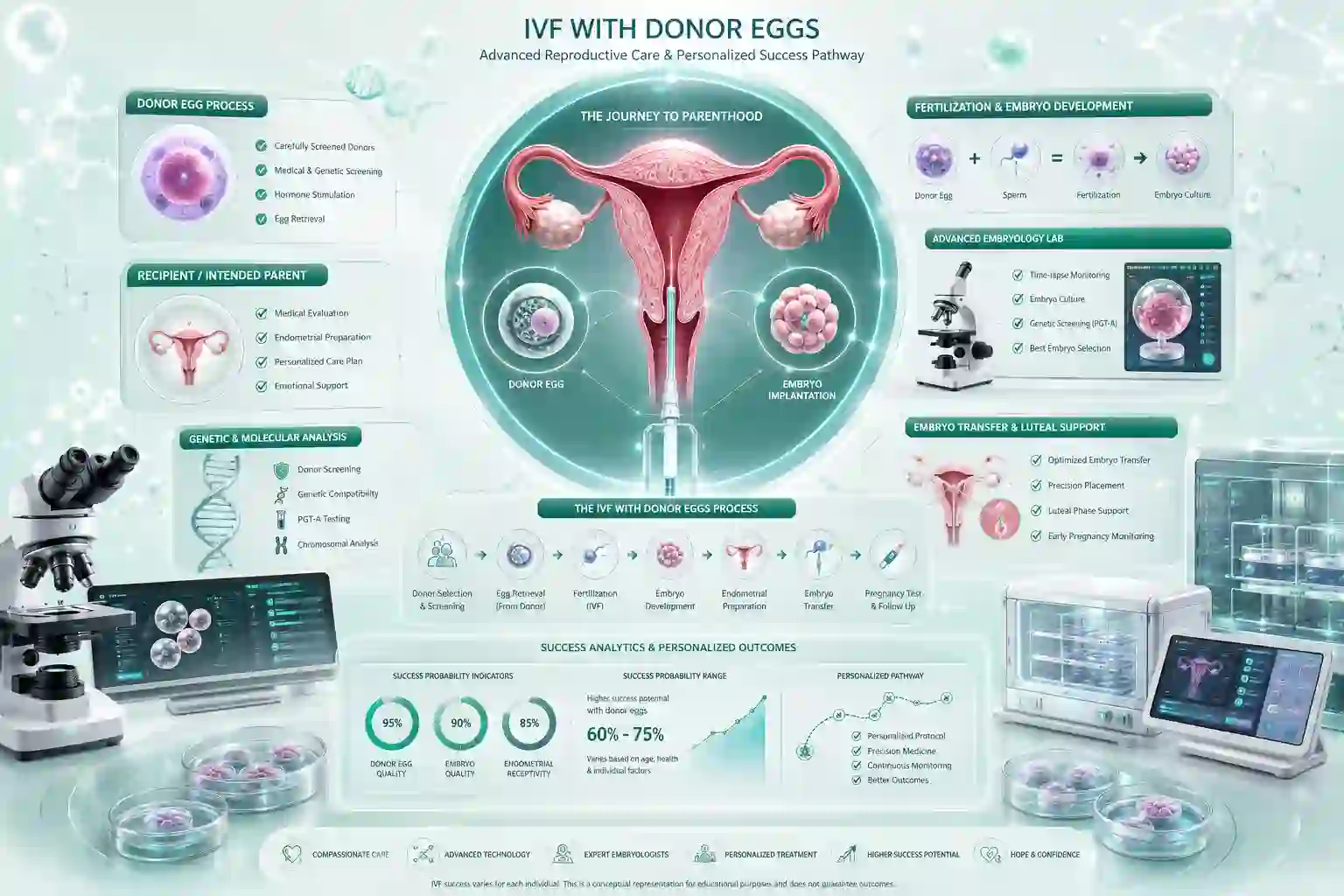
In IVF with donor eggs, eggs from a carefully screened donor are fertilized with sperm in the laboratory. The resulting embryo is then transferred into the recipient’s uterus, where implantation and pregnancy may occur.
This guide explains IVF with donor eggs, including how the procedure works, who may benefit, success rates, advantages, risks, costs, and frequently asked questions.
What Is IVF with Donor Eggs?
IVF with donor eggs is a form of In Vitro Fertilization in which eggs from a donor are used instead of the intended mother’s eggs.
The treatment involves:
- Selecting a suitable egg donor.
- Retrieving eggs from the donor.
- Fertilizing the eggs with sperm from the partner or a donor.
- Culturing the embryos in the laboratory.
- Transferring a healthy embryo into the recipient’s uterus.
Although the recipient does not contribute the egg, she carries the pregnancy and gives birth to the baby.
Who May Need IVF with Donor Eggs?
Your fertility specialist may recommend donor egg IVF if you have:
- Premature ovarian insufficiency (POI)
- Diminished ovarian reserve
- Poor egg quality
- Advanced maternal age
- Multiple unsuccessful IVF cycles using your own eggs
- Repeated poor embryo development
- Certain inherited genetic conditions that you do not wish to pass on
- Previous ovarian surgery affecting egg reserve
The decision depends on your medical history and fertility evaluation.
How Does IVF with Donor Eggs Work?
Step 1: Donor Selection
Egg donors undergo medical, genetic, and infectious disease screening according to local regulations and clinic protocols.
Step 2: Ovarian Stimulation for the Donor
The donor receives fertility medications to stimulate the ovaries to produce multiple mature eggs.
Step 3: Egg Retrieval
The mature eggs are collected from the donor using ultrasound-guided egg retrieval under sedation.
Step 4: Fertilization
The retrieved eggs are fertilized with sperm in the embryology laboratory.
Fertilization may occur using:
- Conventional IVF
- Intracytoplasmic Sperm Injection (ICSI)
Step 5: Embryo Culture
The embryos develop in the laboratory for several days before selection.
Step 6: Preparing the Recipient
The recipient receives hormone therapy to prepare the uterine lining for embryo implantation.
Step 7: Embryo Transfer
A healthy embryo is transferred into the recipient’s uterus using a thin catheter.
The procedure is generally painless and performed without anesthesia.
Step 8: Pregnancy Test
A blood beta-hCG test is usually performed 10–14 days after embryo transfer.
Success Rate of IVF with Donor Eggs
Donor egg IVF often has higher pregnancy and live birth rates than IVF using a patient’s own eggs when egg quality is the main fertility issue.
This is primarily because donor eggs usually come from carefully screened young women with healthy ovarian function.
However, success still depends on factors such as:
- Uterine health
- Embryo quality
- Sperm quality
- Overall medical health
- Fertility clinic experience
Your fertility specialist can provide an individualized estimate based on your specific situation.
Benefits of IVF with Donor Eggs
Potential benefits include:
- Higher pregnancy rates for women with poor egg quality
- Option for women with diminished ovarian reserve
- Reduced risk of certain inherited genetic disorders when medically appropriate
- Opportunity to experience pregnancy and childbirth
- Suitable for women with premature ovarian insufficiency
- Effective treatment after repeated unsuccessful IVF cycles using own eggs
Risks, Side Effects, or Limitations
Although donor egg IVF is generally safe, patients should understand that:
- Pregnancy cannot be guaranteed.
- Hormone medications may cause temporary side effects.
- Multiple pregnancy is possible if more than one embryo is transferred.
- Emotional and psychological considerations may require counseling.
- Legal and ethical regulations vary between countries.
Discuss these issues with your fertility specialist before treatment.
Factors Affecting Success
Several factors influence donor egg IVF outcomes.
Uterine Health
A healthy uterine lining supports embryo implantation.
Embryo Quality
Healthy embryos improve the chance of successful pregnancy.
Sperm Quality
Good sperm quality contributes to healthy embryo development.
Recipient’s Overall Health
Well-managed medical conditions and a healthy lifestyle support pregnancy.
Fertility Clinic Experience
Experienced fertility specialists and embryology laboratories contribute to high-quality care.
Emotional & Patient Perspective
Choosing donor egg IVF is often an emotional decision.
Many patients experience mixed feelings about using donated eggs while also feeling hopeful about the opportunity to become pregnant.
Counseling and open discussions with your fertility specialist, partner, and, when appropriate, a mental health professional can help you make a decision that aligns with your personal values and family goals.
Remember that parenting involves far more than genetics. Many families formed through donor egg IVF experience healthy pregnancies and strong emotional bonds with their children.
Tips Before Starting Donor Egg IVF
Before treatment:
- Discuss whether donor egg IVF is appropriate for you.
- Understand the donor screening process.
- Review the legal requirements in your country.
- Ask about success rates at your fertility clinic.
- Discuss the number of embryos to transfer.
- Follow all medication instructions carefully.
- Attend every scheduled appointment.
When to See a Fertility Specialist
Consult a fertility specialist if:
- You have poor ovarian reserve.
- You have experienced repeated unsuccessful IVF cycles.
- You have premature ovarian insufficiency.
- You have been advised that your egg quality is significantly reduced.
- You would like to discuss donor egg IVF as a treatment option.
A personalized fertility assessment will help determine whether donor egg IVF is appropriate for your situation.
IVF with donor eggs is an effective fertility treatment for women who are unable to conceive using their own eggs because of poor egg quality, diminished ovarian reserve, premature ovarian insufficiency, or certain genetic conditions. Because donor eggs are typically obtained from healthy, carefully screened young donors, pregnancy and live birth rates are often higher than standard IVF in patients with age-related or egg-related infertility. Although donor egg IVF cannot guarantee pregnancy, it offers many individuals and couples the opportunity to experience pregnancy and childbirth with the support of advanced reproductive medicine and personalized fertility care.
FAQs About IVF with Donor Eggs
1. What is IVF with donor eggs?
IVF with donor eggs is a fertility treatment in which eggs from a donor are fertilized in the laboratory and the resulting embryo is transferred into the recipient’s uterus.
2. Who should consider donor egg IVF?
Women with poor egg quality, diminished ovarian reserve, premature ovarian insufficiency, repeated IVF failure, advanced maternal age, or certain inherited genetic disorders may be candidates.
3. Is IVF with donor eggs more successful than standard IVF?
For women whose primary fertility challenge is poor egg quality, donor egg IVF often has higher pregnancy and live birth rates than IVF using their own eggs.
4. Will the baby be genetically related to the mother?
The child inherits genetic material from the egg donor and the sperm source. However, the recipient carries the pregnancy and gives birth to the baby.
5. Is donor egg IVF safe?
Yes. Donor egg IVF is a well-established fertility treatment performed under careful medical supervision. As with all IVF treatments, there are risks and limitations that should be discussed with your fertility specialist.
6. Can frozen donor eggs be used?
Yes. Many fertility clinics successfully use both fresh and frozen donor eggs, depending on availability and treatment planning.
7. How long does donor egg IVF take?
The timeline varies, but most donor egg IVF cycles take several weeks to a few months, depending on donor availability, recipient preparation, and treatment scheduling.