One of the most important factors affecting fertility treatment outcomes is age. Many couples researching fertility treatment want to understand IVF success rates by age before starting the IVF process.
IVF (In Vitro Fertilization) has helped millions of couples achieve pregnancy, but age plays a major role in egg quality, embryo development, and implantation success.
Understanding IVF success rates by age can help patients set realistic expectations and make informed treatment decisions.
Why Age Matters in IVF
Female fertility naturally declines with age because:
- Egg quantity decreases
- Egg quality declines over time
- Chromosomal abnormalities become more common
These factors directly affect:
- Fertilization success
- Embryo quality
- Pregnancy and live birth rates
Age is one of the strongest predictors of IVF success.
IVF Success Rates by Age
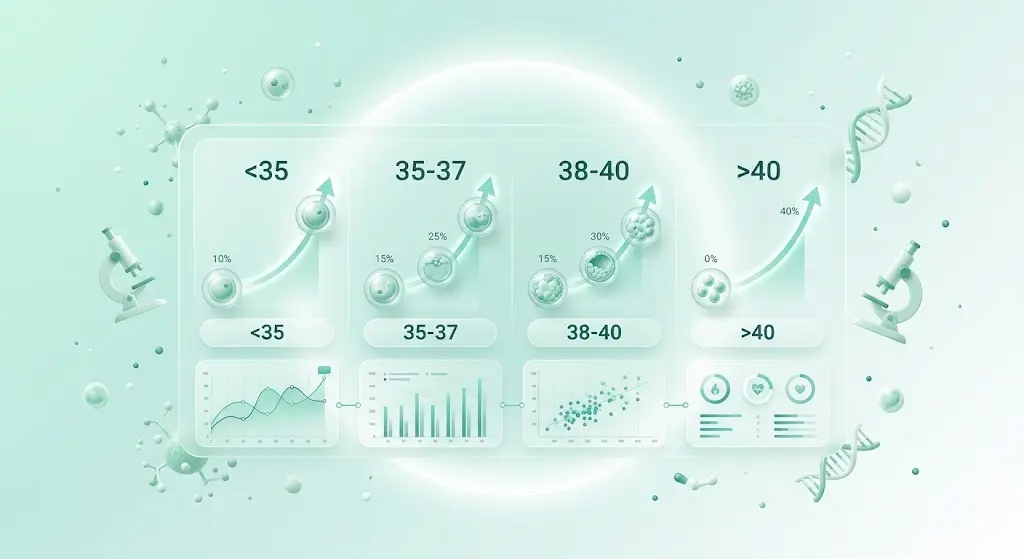
Below are approximate IVF success rates by age for one treatment cycle.
IVF Success Rates by Age
Approximate average IVF success rates per cycle by age group.
| Age Group | Success Rate |
| Under 35 | 55 |
| 35-37 | 40 |
| 38-40 | 28 |
| 41-42 | 15 |
| 43+ | 7 |
IVF Success Rate Under 35
Women under 35 usually have:
- The highest IVF success rates
- Better egg quality
- Higher implantation rates
Average success rates may range:
- Around 40%–55% per cycle
Younger patients often produce healthier embryos.
IVF Success Rates Age 35–37
At this age:
- Fertility begins declining gradually
- Egg quality may decrease slightly
Average success rates are often:
- Around 30%–40% per cycle
Many women in this group still achieve successful pregnancies with IVF.
IVF Success Rates Age 38–40
Between ages 38 and 40:
- Egg quantity and quality decline more significantly
- Chromosomal abnormalities become more common
Average IVF success rates may range:
- Around 20%–30% per cycle
Doctors may recommend advanced fertility techniques at this stage.
IVF Success Rates Over 40
After age 40:
- Fertility declines more rapidly
- Miscarriage risk increases
- Egg quality becomes a major concern
Average IVF success rates may fall:
- Below 15%–20% using own eggs
Some patients consider donor eggs to improve pregnancy chances.
Factors Affecting IVF Success Besides Age
Although age is important, other factors also affect IVF outcomes.
Egg Quality
Healthy eggs improve:
- Fertilization
- Embryo development
- Implantation success
Sperm Quality
Male fertility also plays a major role in IVF success.
Uterine Health
A healthy uterine lining supports embryo implantation.
Lifestyle Factors
Smoking, obesity, poor diet, and stress may negatively affect fertility treatment outcomes.
How to Improve IVF Success Rates
Patients may improve IVF outcomes by:
- Maintaining a healthy weight
- Following a balanced diet
- Avoiding smoking and alcohol
- Managing stress levels
- Following medication instructions carefully
Choosing an experienced fertility clinic also matters.
IVF with Donor Eggs
For older patients, donor eggs may significantly improve IVF success rates because:
- Donor eggs are usually obtained from younger women
- Embryo quality may improve substantially
This option is commonly considered in advanced maternal age cases.
Emotional Impact of Age and IVF
Age-related fertility concerns can create emotional stress for many couples.
Patients often experience:
- Anxiety about declining fertility
- Fear of unsuccessful cycles
- Emotional pressure during treatment
Emotional support and counseling may help during the IVF journey.
When to See a Fertility Specialist
You should consider fertility evaluation if:
- You’ve been trying to conceive for over one year
- You’re over 35 and trying for 6 months
- You have known fertility issues
- Previous fertility treatments failed
Early consultation may improve fertility planning and treatment success.
Understanding IVF success rates by age helps couples set realistic expectations before starting fertility treatment. While IVF success generally declines with age, many patients still achieve successful pregnancies with proper medical care and advanced fertility treatments.
Consulting an experienced fertility specialist can help you better understand your fertility health and treatment options.
FAQs About IVF Success Rates by Age
Does age affect IVF success?
Yes, age is one of the biggest factors affecting IVF outcomes.
What age has the highest IVF success rate?
Women under 35 usually have the highest success rates.
Can women over 40 succeed with IVF?
Yes, although success rates are lower.
Does egg quality decline with age?
Yes, egg quality decreases naturally over time.
Can donor eggs improve IVF success?
Yes, donor eggs often improve success rates for older patients.