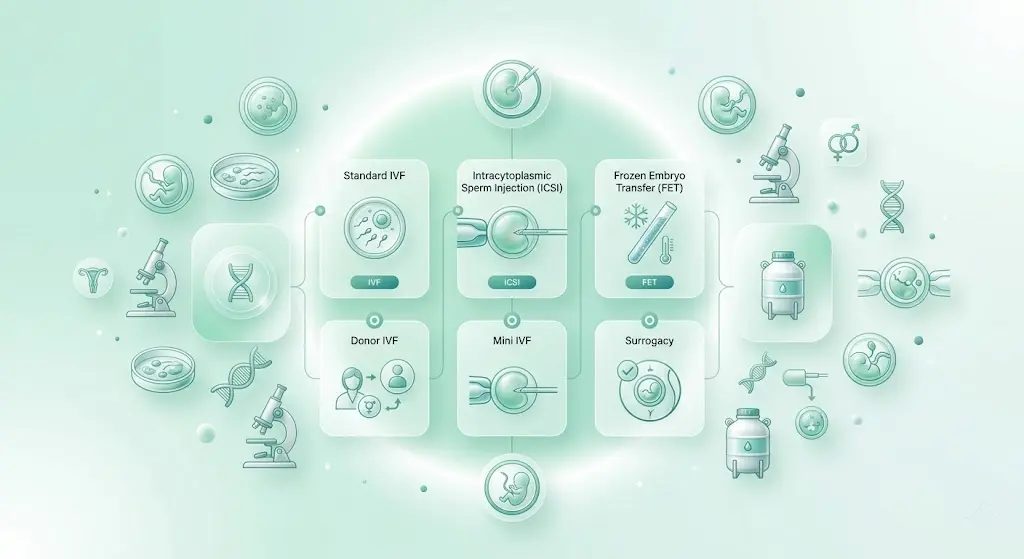
Couples exploring fertility treatment often want to understand the different types of IVF available before beginning the process. IVF (In Vitro Fertilization) is not a single treatment method. Modern fertility medicine offers several IVF techniques designed to address different infertility conditions.
Understanding the types of IVF can help patients choose the most suitable treatment based on their medical condition, fertility history, and reproductive goals.
What Is IVF?
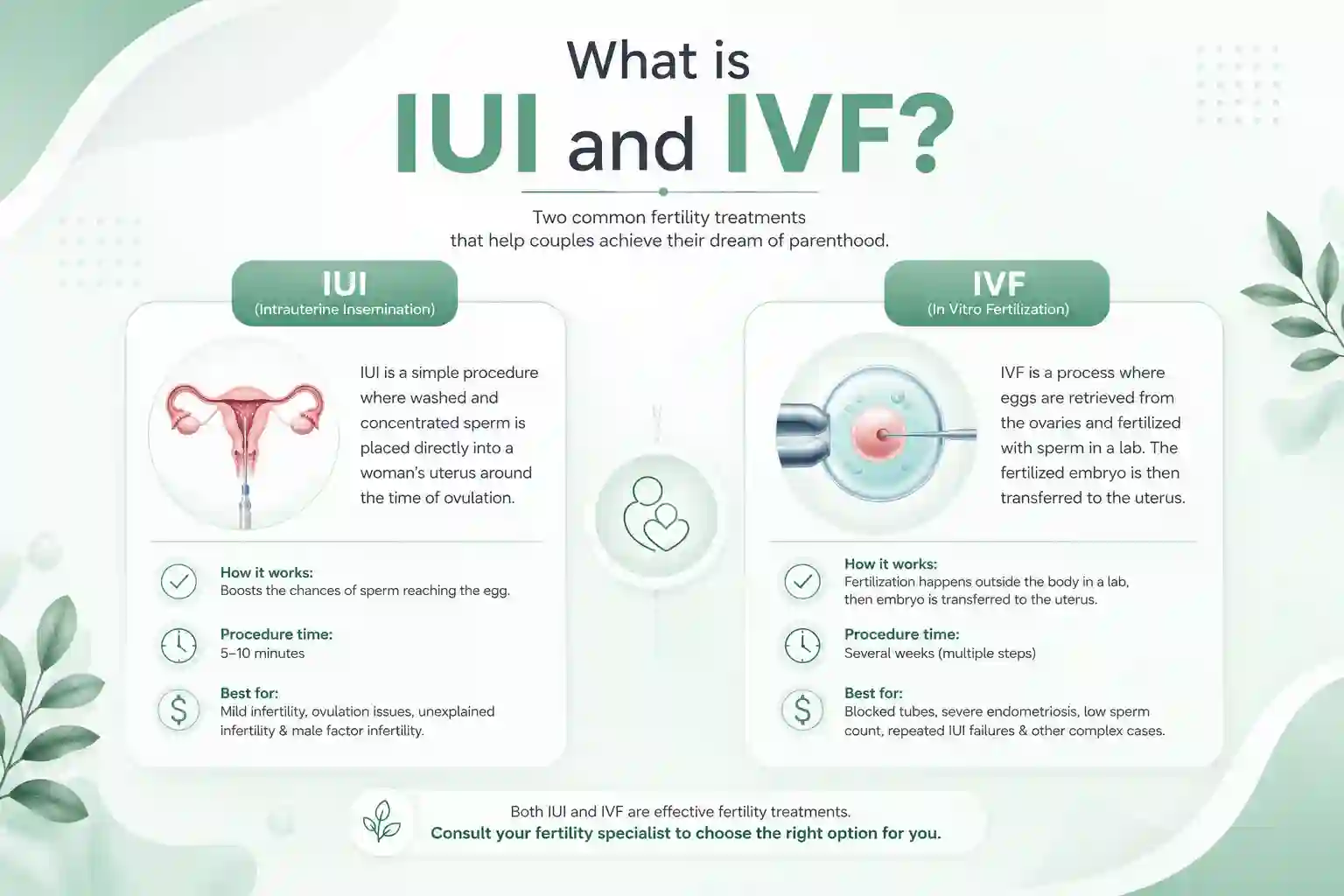
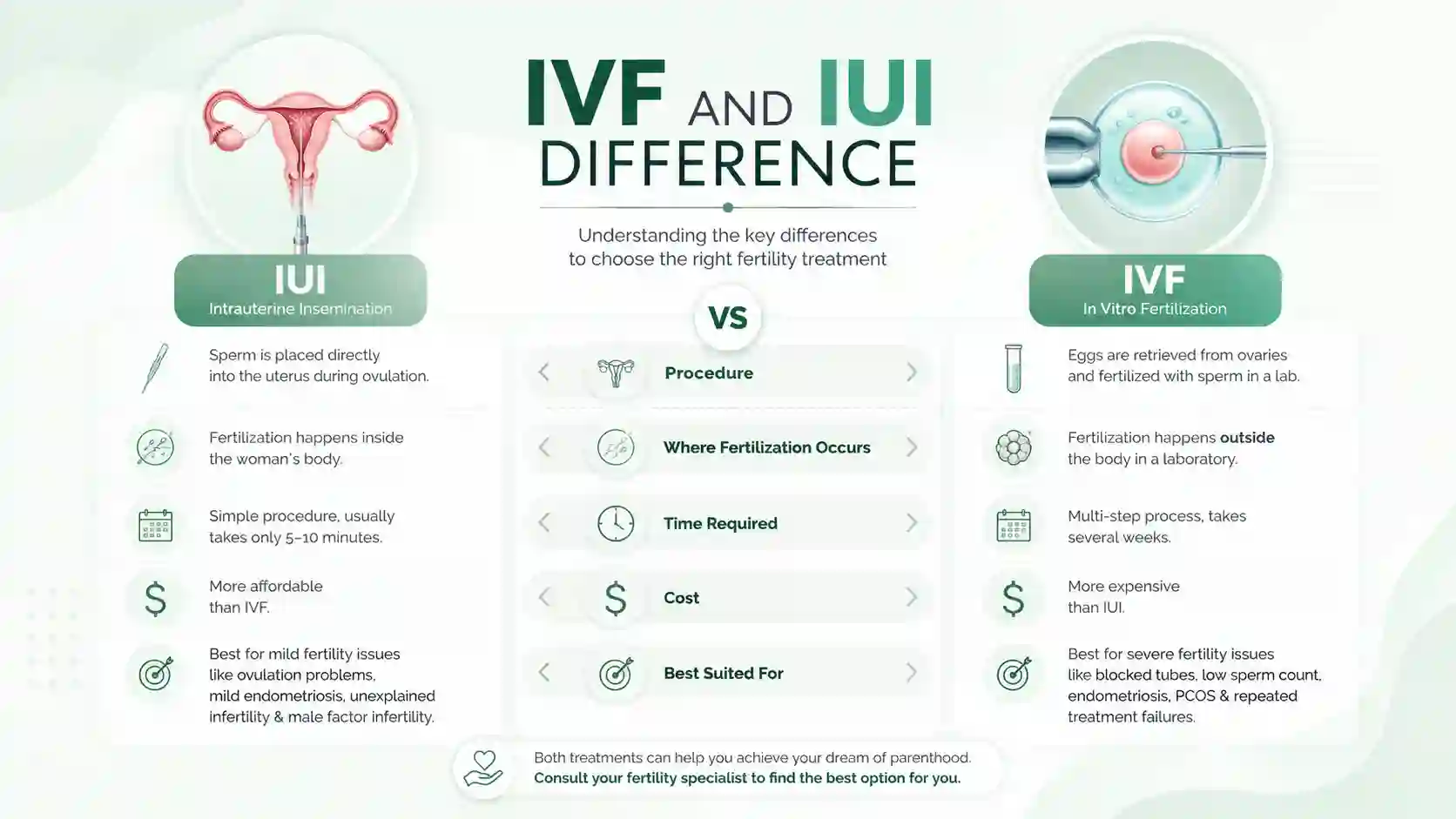
IVF (In Vitro Fertilization) is a fertility treatment where:
- Eggs are collected from the ovaries
- Fertilized with sperm in a laboratory
- A healthy embryo is transferred into the uterus
IVF is commonly recommended for couples facing infertility problems that cannot be treated through simpler methods.
Types of IVF Treatments
There are several important types of IVF used in fertility treatment today.
1. Conventional IVF
Conventional IVF is the standard IVF treatment method.
In this procedure:
- Eggs and sperm are placed together in a laboratory dish
- Fertilization happens naturally in controlled laboratory conditions
This type of IVF is commonly used when sperm quality is normal.
2. ICSI IVF
ICSI (Intracytoplasmic Sperm Injection) is one of the most common advanced IVF techniques.
In ICSI:
- A single sperm is injected directly into the egg
ICSI is often recommended for:
- Low sperm count
- Poor sperm motility
- Male infertility
- Previous failed fertilization
3. Frozen Embryo Transfer (FET)
In Frozen Embryo Transfer:
- Embryos created during IVF are frozen and stored
- The embryo is transferred during a later cycle
Benefits of FET may include:
- More flexible treatment timing
- Reduced ovarian stimulation stress
- Additional pregnancy opportunities
4. Donor Egg IVF
Donor egg IVF uses eggs from another woman.
This option may be recommended for:
- Women with low ovarian reserve
- Poor egg quality
- Premature ovarian failure
- Advanced maternal age
The donor eggs are fertilized and transferred into the intended mother’s uterus.
5. Donor Sperm IVF
In donor sperm IVF:
- Donor sperm is used for fertilization
This treatment may help:
- Severe male infertility cases
- Single women
- Certain genetic conditions
6. Surrogacy IVF
In surrogacy IVF:
- The embryo is transferred into a surrogate’s uterus
This option may be considered for:
- Women without a uterus
- Serious medical conditions preventing pregnancy
- Repeated IVF failure
7. Natural Cycle IVF
Natural cycle IVF uses:
- The body’s naturally produced egg without heavy ovarian stimulation
Benefits may include:
- Lower medication use
- Reduced risk of OHSS
However, fewer eggs are available compared to standard IVF.
8. Mild Stimulation IVF
Mild IVF uses:
- Lower doses of fertility medications
Doctors may recommend this for patients who:
- Respond poorly to high-dose stimulation
- Want reduced medication exposure
How Doctors Choose the Right Type of IVF
The best IVF method depends on:
- Female age
- Egg quality
- Sperm health
- Fertility diagnosis
- Previous IVF history
Fertility specialists create personalized treatment plans based on each patient’s condition.
Success Rates of Different Types of IVF
Success rates vary depending on:
- Age
- Embryo quality
- Fertility condition
- Type of IVF used
Advanced methods like ICSI may improve fertilization rates in male infertility cases.
Risks and Side Effects of IVF
All types of IVF may involve:
- Hormonal side effects
- Mild bloating or cramping
- Emotional stress during treatment
Rare complications such as OHSS can also occur.
Emotional Support During IVF
The IVF journey can feel emotionally demanding for many couples.
Patients often experience:
- Anxiety about treatment success
- Emotional stress during waiting periods
- Financial pressure
Counseling and family support may help patients manage fertility treatment more comfortably.
When to See a Fertility Specialist
You should consult a fertility specialist if:
- You’ve been trying to conceive for over one year
- You’re over 35 and trying for 6 months
- You have known fertility issues
- Previous fertility treatments failed
Early fertility evaluation may improve treatment planning and outcomes.
Understanding the different types of IVF can help couples make informed fertility decisions. From standard IVF and ICSI to donor IVF and surrogacy, modern reproductive medicine offers multiple treatment options for different infertility conditions.
Consulting an experienced fertility specialist is the best way to determine which IVF treatment is right for your fertility journey.
FAQs About Types of IVF
What are the main types of IVF?
Conventional IVF, ICSI, donor IVF, frozen embryo transfer, and surrogacy IVF.
What is the most common type of IVF?
Conventional IVF and ICSI are the most commonly used methods.
What is ICSI IVF?
A procedure where one sperm is injected directly into an egg.
What is frozen embryo transfer?
A process where frozen embryos are transferred in a later cycle.
Can donor eggs improve IVF success?
Yes, donor eggs may improve pregnancy chances in some patients.