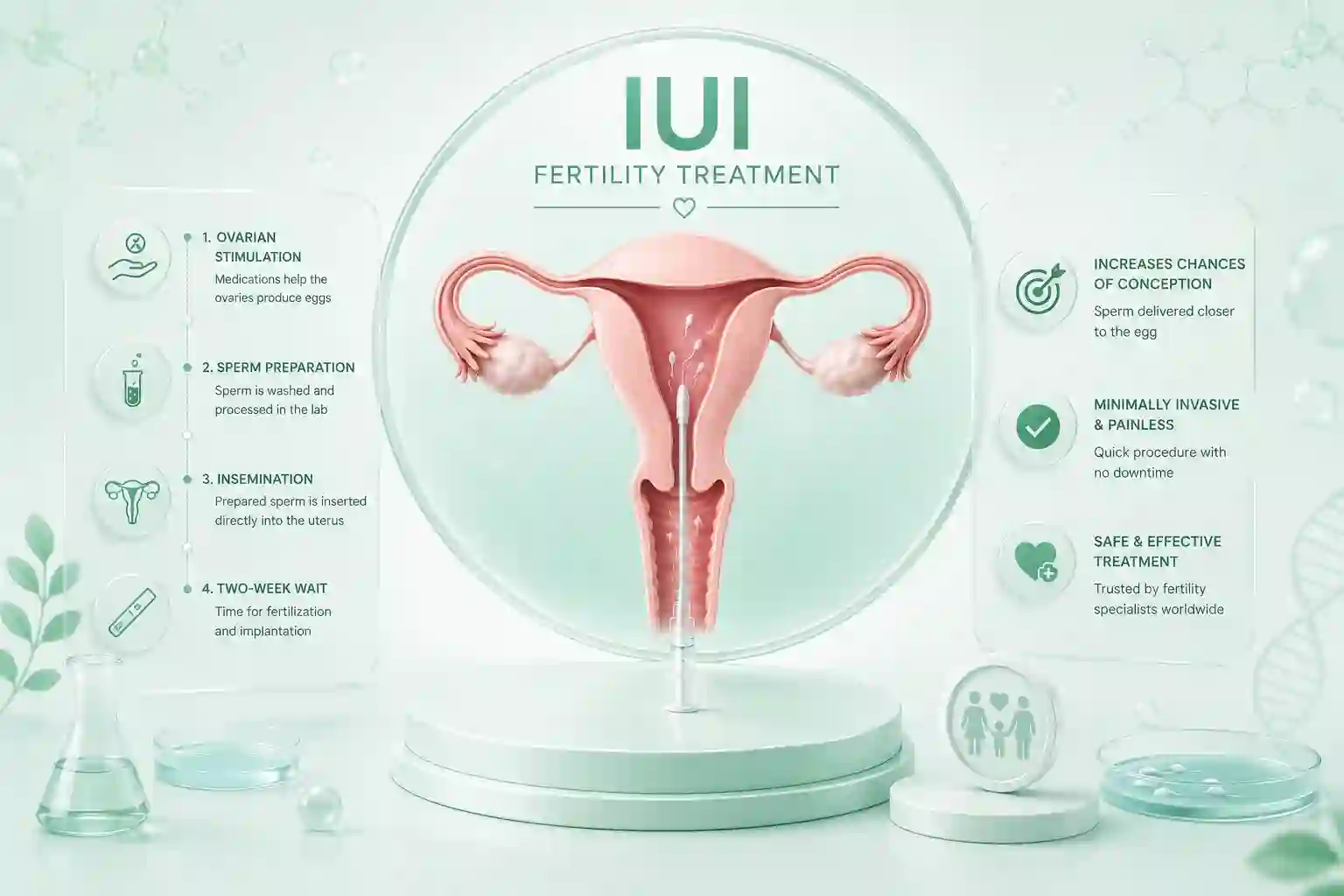
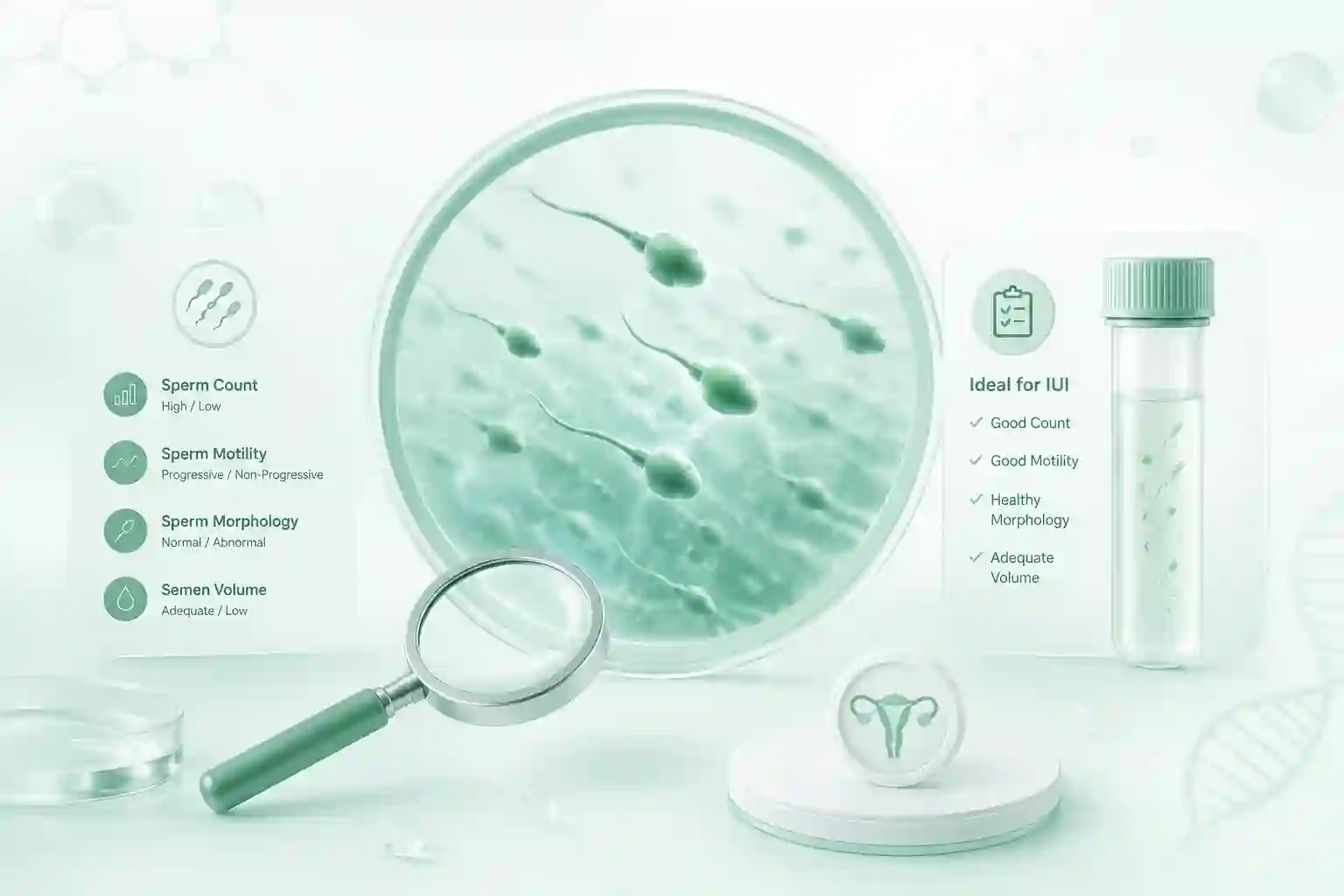
When planning Intrauterine Insemination (IUI), one of the most important questions is whether the sperm count is suitable for treatment. IUI sperm count refers to the number of healthy, motile sperm available before and after sperm washing, which can influence the chances of pregnancy.
Although there is no single sperm count that guarantees success, fertility specialists generally assess the total motile sperm count (TMSC) rather than the total sperm count alone. Motility, morphology, and the quality of the sperm sample are just as important as the number of sperm.
This guide explains IUI sperm count, the recommended ranges, how sperm is evaluated, and the factors that influence IUI success.
What Is IUI Sperm Count?
IUI sperm count refers to the number of sperm available for intrauterine insemination after evaluating and preparing the semen sample.
During fertility evaluation, the laboratory examines:
- Total sperm count
- Sperm concentration
- Total motile sperm count (TMSC)
- Progressive motility
- Sperm morphology (shape)
- Semen volume
For IUI, total motile sperm count (TMSC) is one of the most clinically useful measurements because only motile sperm can travel through the reproductive tract to fertilize an egg.
What Is a Good Sperm Count for IUI?
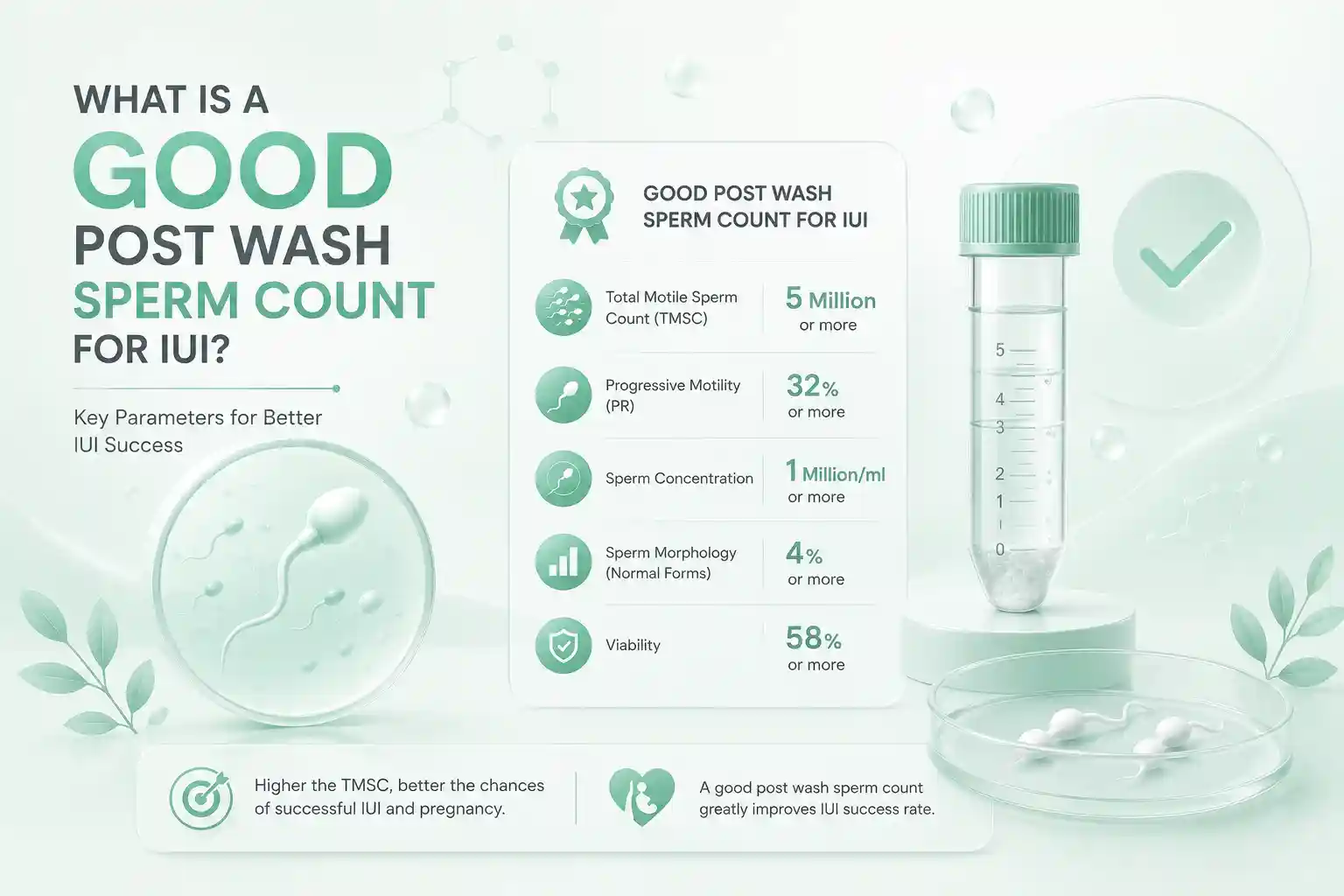
While there is no universal cutoff, many fertility specialists use the following general guide for post-wash total motile sperm count (TMSC):
| Post-Wash Total Motile Sperm Count | General Interpretation |
| Less than 1 million | Lower chance of pregnancy with IUI |
| 1–5 million | Pregnancy is possible, but success rates may be lower |
| 5–10 million | Generally considered a good range for IUI |
| More than 10 million | Often considered an excellent post-wash count |
These values are approximate and should always be interpreted together with other fertility factors.
Pre-Wash vs. Post-Wash Sperm Count
Understanding the difference between pre-wash and post-wash sperm counts is important.
Pre-Wash Sperm Count
This is the semen analysis performed before laboratory processing. It measures:
- Total sperm count
- Concentration
- Motility
- Morphology
- Semen volume
Post-Wash Sperm Count
After sperm washing:
- Seminal fluid is removed.
- Healthy motile sperm are concentrated.
- The laboratory reports the post-wash total motile sperm count (TMSC) used for insemination.
The post-wash result is generally more relevant when assessing IUI suitability.
Why Is Total Motile Sperm Count Important?
A high total motile sperm count increases the number of sperm capable of reaching and fertilizing the egg.
However, pregnancy depends on many additional factors, including:
- Female age
- Egg quality
- Ovulation timing
- Fallopian tube health
- Underlying fertility diagnosis
Even a high sperm count cannot guarantee pregnancy.
Can IUI Work with a Low Sperm Count?
Yes. Some couples achieve pregnancy even with relatively low sperm counts.
However, if the post-wash TMSC is very low, your fertility specialist may recommend:
- Additional IUI cycles
- Lifestyle changes
- Medical treatment for male infertility
- IVF with Intracytoplasmic Sperm Injection (ICSI)
The most appropriate treatment depends on the individual situation.
Factors Affecting IUI Success
Sperm count is only one factor affecting treatment outcomes.
Female Age
Younger women generally have higher pregnancy rates because egg quality and ovarian reserve are typically better.
Ovulation Timing
Correct timing of insemination is essential for fertilization.
Fallopian Tube Health
At least one open fallopian tube is usually required for IUI.
Sperm Motility
The ability of sperm to swim effectively is often more important than the total sperm count alone.
Sperm Morphology
Normal sperm shape contributes to successful fertilization.
Underlying Fertility Condition
Conditions such as unexplained infertility, mild male factor infertility, or ovulation disorders may influence treatment success.
Benefits of Sperm Washing Before IUI
Sperm washing provides several advantages:
- Concentrates healthy, motile sperm.
- Removes seminal plasma and debris.
- Reduces inflammatory substances.
- Improves sperm preparation for insemination.
- Optimizes the sample used during IUI.
Risks, Side Effects, or Limitations
Although sperm preparation improves the quality of the inseminated sample, patients should understand that:
- A good sperm count does not guarantee pregnancy.
- Some sperm are naturally lost during laboratory processing.
- Female fertility factors remain equally important.
- Multiple IUI cycles may be necessary.
Emotional & Patient Perspective
Learning about your IUI sperm count can be stressful, particularly if the results are lower than expected. It is important to remember that fertility is influenced by both male and female factors. Many couples with modest sperm counts still achieve successful pregnancies, while others with excellent semen parameters may require additional treatment. Discussing your semen analysis with your fertility specialist can help you understand the results and the most appropriate treatment options.
Tips to Improve IUI Success
To optimize your chances of pregnancy:
- Follow your fertility specialist’s recommendations.
- Maintain a healthy body weight.
- Avoid smoking and recreational drugs.
- Limit alcohol intake.
- Eat a balanced diet.
- Attend all fertility appointments.
- Take prescribed medications as directed.
When to See a Fertility Specialist
Consult a fertility specialist if:
- Your semen analysis is abnormal.
- You have been trying to conceive for one year (or six months if you are 35 years or older).
- You have known infertility.
- You have experienced recurrent pregnancy loss.
- You are considering IUI or IVF treatment.
IUI sperm count is an important part of fertility evaluation, but it is only one factor influencing treatment success. A post-wash total motile sperm count of at least 5 million is generally considered favorable, while 10 million or more is often regarded as an excellent range. However, successful pregnancy also depends on female age, ovulation timing, fallopian tube health, sperm quality, and the underlying cause of infertility. A fertility specialist can interpret your semen analysis and recommend the treatment approach that best fits your individual circumstances.
FAQs About IUI Sperm Count
1. What is a good sperm count for IUI?
A post-wash total motile sperm count (TMSC) of at least 5 million is generally considered favorable, while 10 million or more is often considered an excellent count for IUI.
2. What is total motile sperm count (TMSC)?
TMSC is the number of moving sperm available after laboratory preparation. It is one of the most important semen measurements used when planning IUI.
3. Can IUI work with a low sperm count?
Yes. Pregnancy is possible with lower sperm counts, although the chance of success per cycle may be reduced compared with higher post-wash TMSC values.
4. Is sperm motility more important than sperm count?
Both are important, but sperm motility is particularly significant because sperm must swim through the reproductive tract to fertilize the egg.
5. Why is sperm washed before IUI?
Sperm washing removes seminal fluid, debris, and poorly motile sperm while concentrating healthy motile sperm for insemination.
6. Does a high sperm count guarantee IUI success?
No. Pregnancy depends on several factors, including female age, egg quality, ovulation timing, fallopian tube health, and sperm quality.
7. What happens if my sperm count is too low for IUI?
Your fertility specialist may recommend repeating IUI, treating underlying male infertility, or considering IVF with ICSI, depending on your individual fertility evaluation.