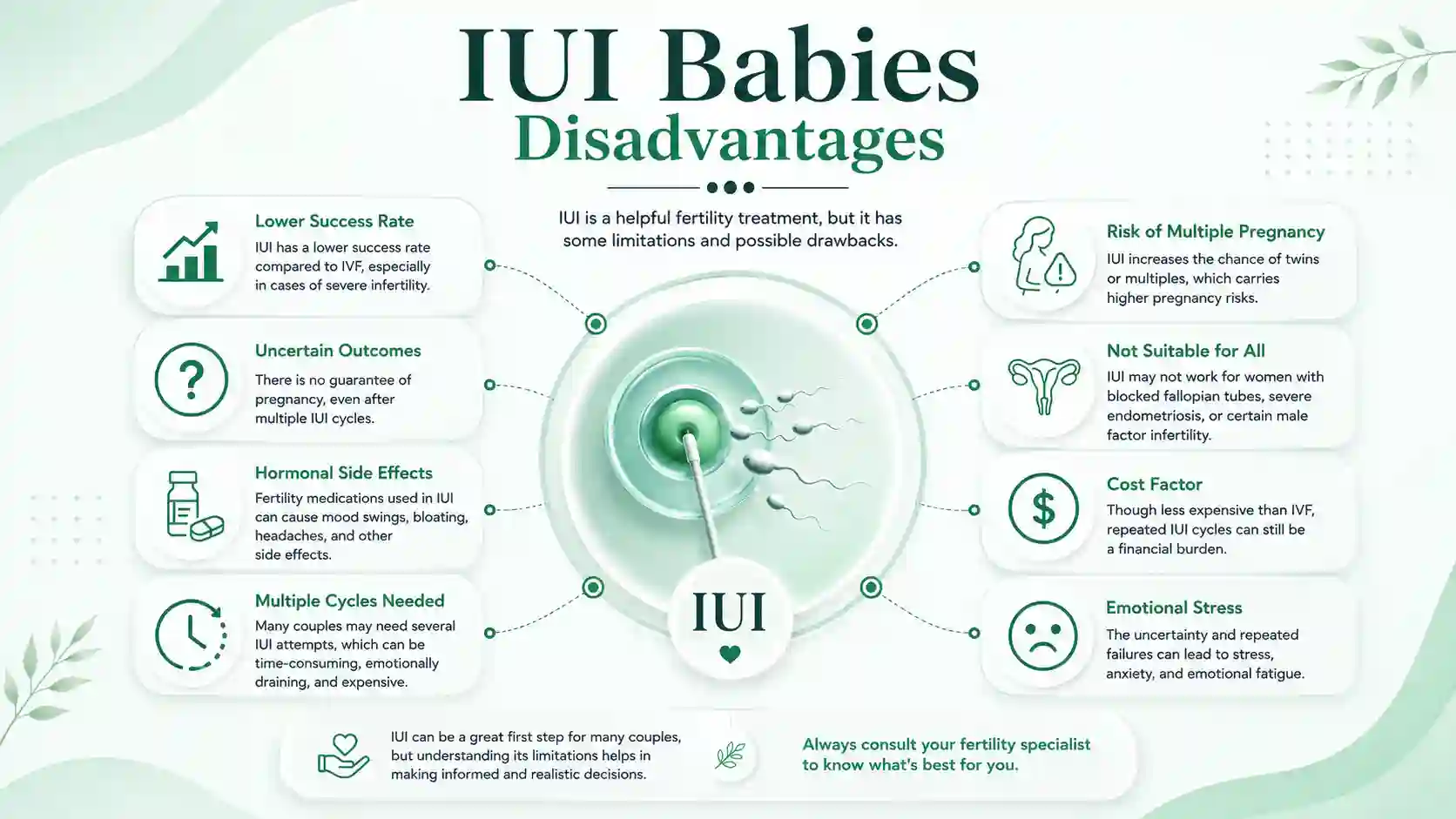
Many prospective parents wonder whether there are any IUI babies disadvantages compared with babies conceived naturally. This concern is understandable, especially for couples considering fertility treatment. The reassuring news is that babies conceived through Intrauterine Insemination (IUI) are generally as healthy as babies conceived without fertility treatment.
IUI is a procedure that places washed sperm directly into the uterus around the time of ovulation. Unlike In Vitro Fertilization (IVF), fertilization still occurs naturally inside the fallopian tube. Because of this, the procedure itself is not known to cause birth defects, developmental problems, or long-term health issues in babies.
This guide explains what people mean by IUI babies disadvantages, what current research suggests, and the factors that may influence pregnancy and newborn outcomes.
Are There Any Disadvantages for IUI Babies?
Current medical evidence indicates that IUI itself does not make babies less healthy or increase the risk of developmental problems.
Most babies conceived through IUI:
- Have normal growth and development.
- Reach developmental milestones similarly to naturally conceived children.
- Do not have a higher risk of congenital abnormalities because of the IUI procedure itself.
However, certain pregnancy outcomes may be influenced by parental age, underlying infertility, or fertility medications, rather than IUI itself.
Factors That May Influence Pregnancy Outcomes
Although IUI is generally considered safe, some factors associated with fertility treatment can affect pregnancy.
Multiple Pregnancy
When fertility medications stimulate the release of more than one egg, the chance of twins or higher-order multiple pregnancies increases.
Multiple pregnancies carry a higher risk of:
- Preterm birth.
- Low birth weight.
- Pregnancy complications.
- Neonatal intensive care admission.
These risks are related to carrying multiples rather than the IUI procedure itself.
Advanced Maternal Age
Many people undergoing fertility treatment are older than average when they conceive.
Advanced maternal age may independently increase the risk of:
- Pregnancy complications.
- Miscarriage.
- Chromosomal abnormalities.
These risks are associated with maternal age, not with IUI.
Underlying Infertility
Some medical conditions that contribute to infertility may also influence pregnancy outcomes.
Examples include:
- Endometriosis.
- Polycystic ovary syndrome (PCOS).
- Thyroid disorders.
- Male factor infertility.
Does IUI Increase the Risk of Birth Defects?
Current evidence suggests that IUI alone is not associated with a significant increase in birth defects compared with natural conception.
The overall risk of congenital abnormalities is believed to be influenced more by:
- Maternal age.
- Genetic factors.
- Lifestyle factors.
- Existing medical conditions.
Are IUI Babies Different from Naturally Conceived Babies?
No.
Children conceived through IUI generally:
- Grow normally.
- Develop normally.
- Attend school and participate in daily activities like other children.
- Have similar long-term health outcomes.
Once fertilization occurs, embryo development proceeds naturally inside the body.
Benefits of IUI
Although people often search for IUI babies disadvantages, IUI offers several advantages for suitable patients.
Benefits include:
- Less invasive than IVF.
- Lower treatment cost.
- No egg retrieval procedure.
- Fertilization occurs naturally inside the body.
- Short outpatient procedure.
- Minimal recovery time.
Risks, Side Effects, or Limitations
The procedure itself has relatively few risks.
Possible limitations include:
- Lower pregnancy rates than IVF.
- Multiple treatment cycles may be needed.
- Mild cramping or light spotting after the procedure.
- Increased chance of multiple pregnancy when fertility medications are used.
These factors affect the pregnancy process rather than the baby’s long-term health.
Factors Affecting IUI Success
Several factors influence whether IUI results in pregnancy.
Female Age
Egg quality generally declines with age.
Ovulation Timing
Proper timing of insemination is essential.
Sperm Quality
Healthy sperm count, motility, and morphology contribute to successful fertilization.
Fallopian Tube Health
At least one healthy, open fallopian tube is generally required.
Cause of Infertility
The underlying fertility diagnosis significantly affects treatment outcomes.
Emotional & Patient Perspective
It’s natural to worry about the health of a future child when considering fertility treatment. Many parents search for IUI babies disadvantages because they want reassurance before starting treatment. Fortunately, current research indicates that babies conceived through IUI generally have health outcomes comparable to those conceived naturally. Discussing your individual medical history and treatment plan with a fertility specialist can help you better understand any pregnancy-related risks that apply to your specific situation.
Tips for a Healthy Pregnancy After IUI
To support a healthy pregnancy:
- Attend all prenatal appointments.
- Take prenatal vitamins as recommended.
- Eat a balanced diet.
- Avoid smoking, alcohol, and recreational drugs.
- Manage chronic medical conditions.
- Follow your fertility specialist’s and obstetrician’s advice throughout pregnancy.
When to See a Fertility Specialist
Consult a fertility specialist if:
- You have been trying to conceive without success.
- You have known infertility.
- You have recurrent pregnancy loss.
- You want to discuss whether IUI or IVF is the most appropriate treatment.
- You have questions about pregnancy risks related to your medical history.
Although many people search for IUI babies disadvantages, current evidence is reassuring. IUI itself is not known to increase the risk of birth defects, developmental delays, or long-term health problems in babies. Most children conceived through IUI are as healthy as those conceived naturally. Pregnancy outcomes are influenced more by factors such as maternal age, multiple pregnancy, underlying infertility, and overall maternal health than by the IUI procedure itself. Your fertility specialist can explain your individual risks and help you choose the treatment option that best meets your needs.
FAQs About IUI Babies Disadvantages
1. Are babies conceived through IUI healthy?
Yes. Most babies conceived through IUI are healthy and have growth and developmental outcomes similar to naturally conceived children.
2. Does IUI increase the risk of birth defects?
Current research indicates that IUI itself is not associated with a significant increase in birth defects. Other factors, such as age and underlying medical conditions, play a larger role.
3. Are IUI babies different from naturally conceived babies?
No. After fertilization occurs, pregnancy develops naturally, and most IUI-conceived children have similar long-term health outcomes.
4. Why do some people think IUI babies have disadvantages?
Concerns often arise because fertility treatment is associated with higher maternal age or the use of fertility medications, not because of the IUI procedure itself.
5. Can IUI increase the chance of twins?
Yes. If fertility medications stimulate multiple eggs, the likelihood of twins or other multiple pregnancies may increase.
6. Does IUI affect a baby’s intelligence or development?
Current evidence does not show that IUI negatively affects intelligence, learning ability, or overall development.
7. Should I be worried about choosing IUI?
For appropriately selected patients, IUI is generally considered a safe and well-established fertility treatment. Your fertility specialist can discuss the potential benefits and risks based on your individual medical history.