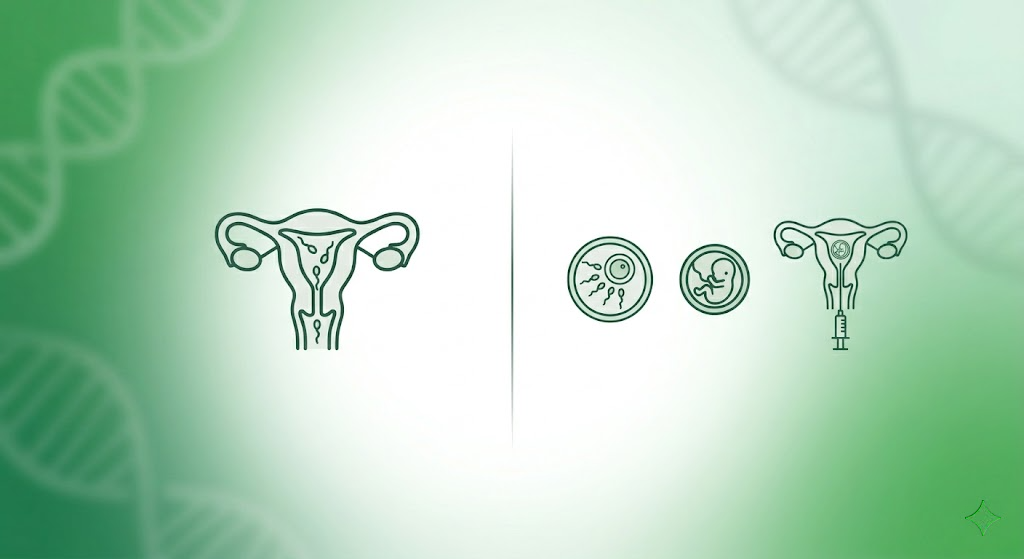
If you’re exploring fertility options, a common question is: “What is the difference between IUI and IVF?”
Both treatments help couples conceive, but they work in very different ways. Understanding the difference between IUI and IVF can help you choose the right path with your doctor.
What is IUI?
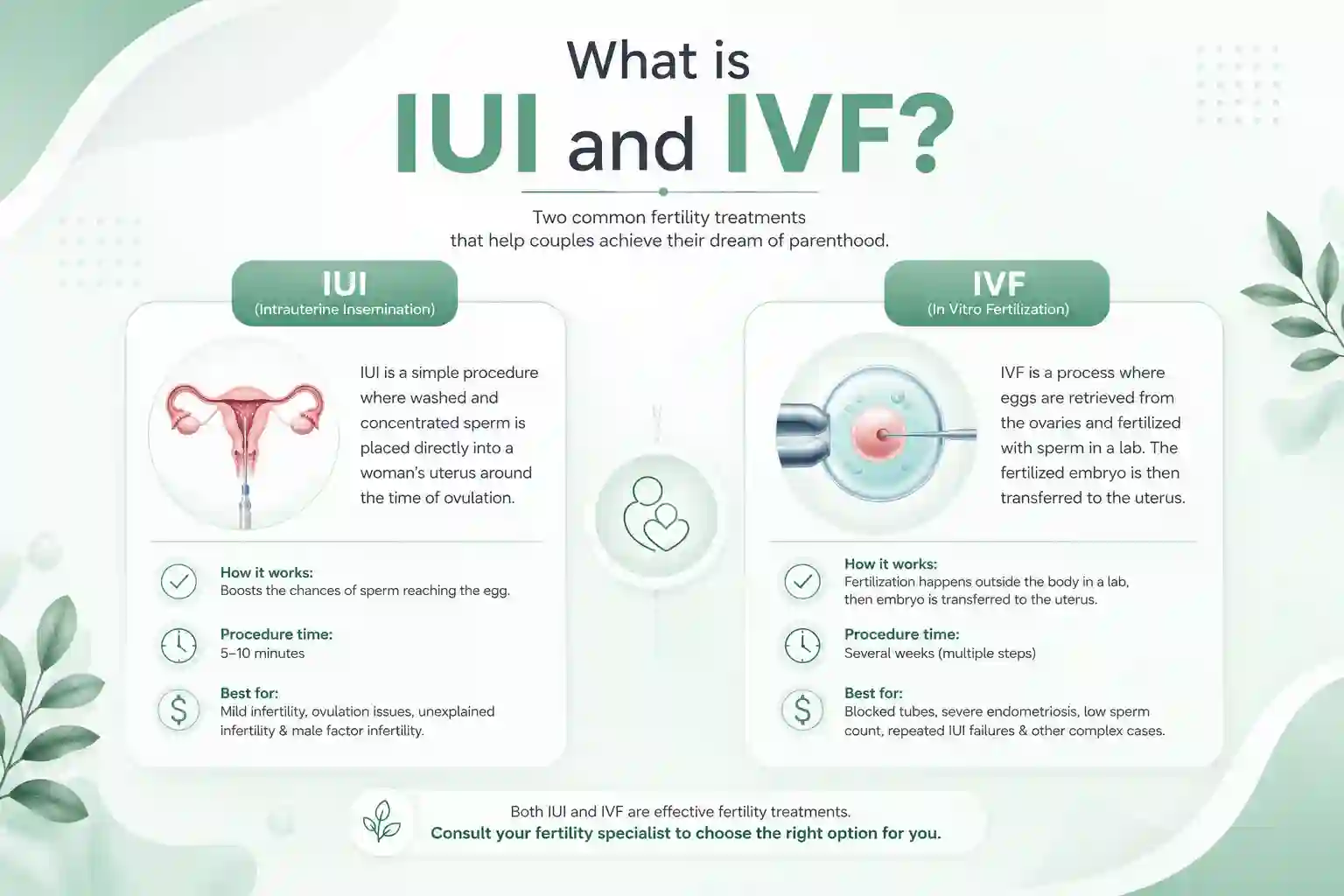
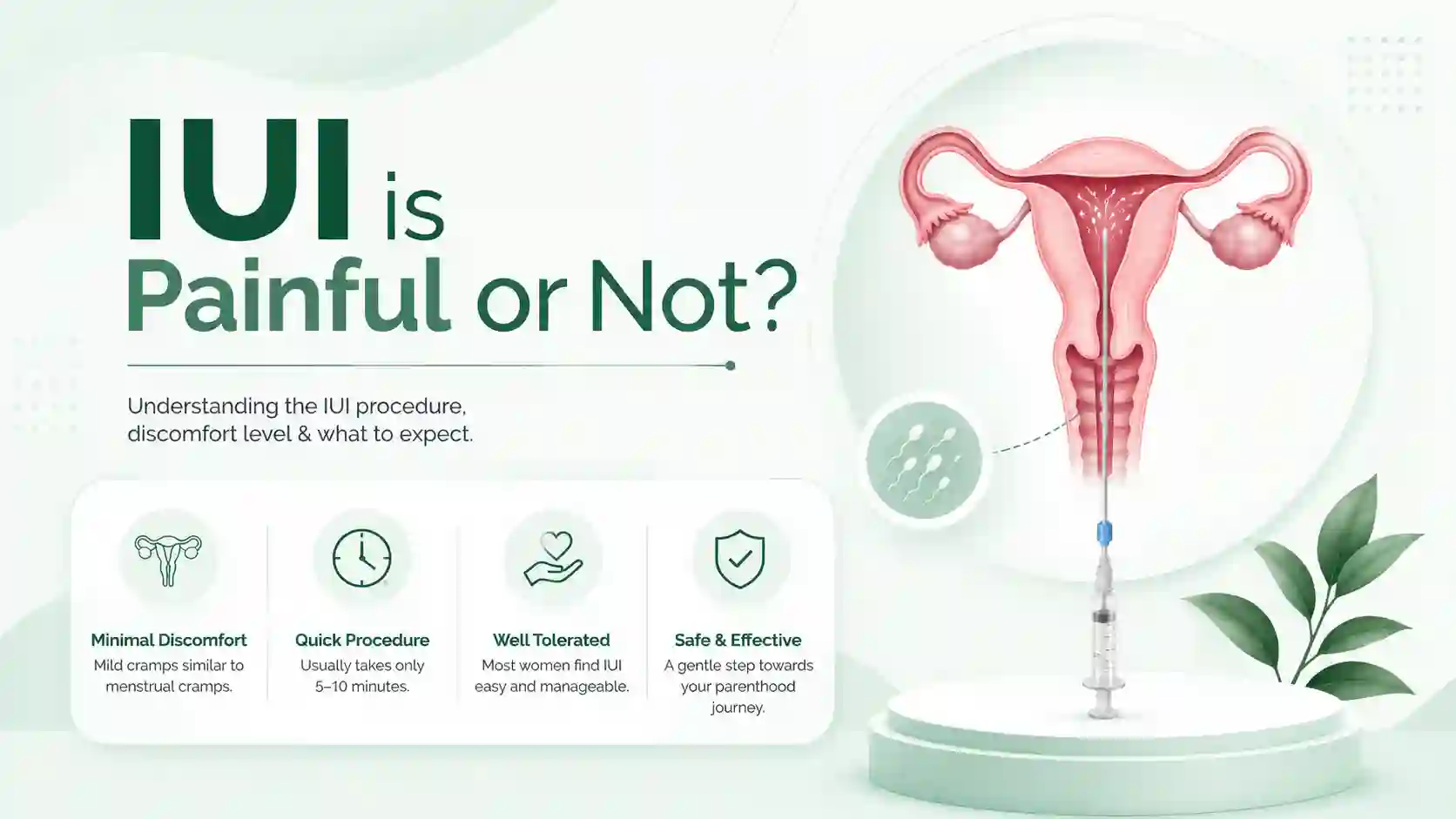
IUI (Intrauterine Insemination) is a simple fertility treatment where sperm is placed directly into the uterus during ovulation.
Key points:
- Fertilization happens inside the body
- Less invasive procedure
- Usually the first step in fertility treatment
What is IVF?
IVF (In Vitro Fertilization) is an advanced treatment where eggs and sperm are combined in a laboratory, and the embryo is transferred into the uterus.
Key points:
- Fertilization happens outside the body
- More controlled and advanced
- Higher success rates
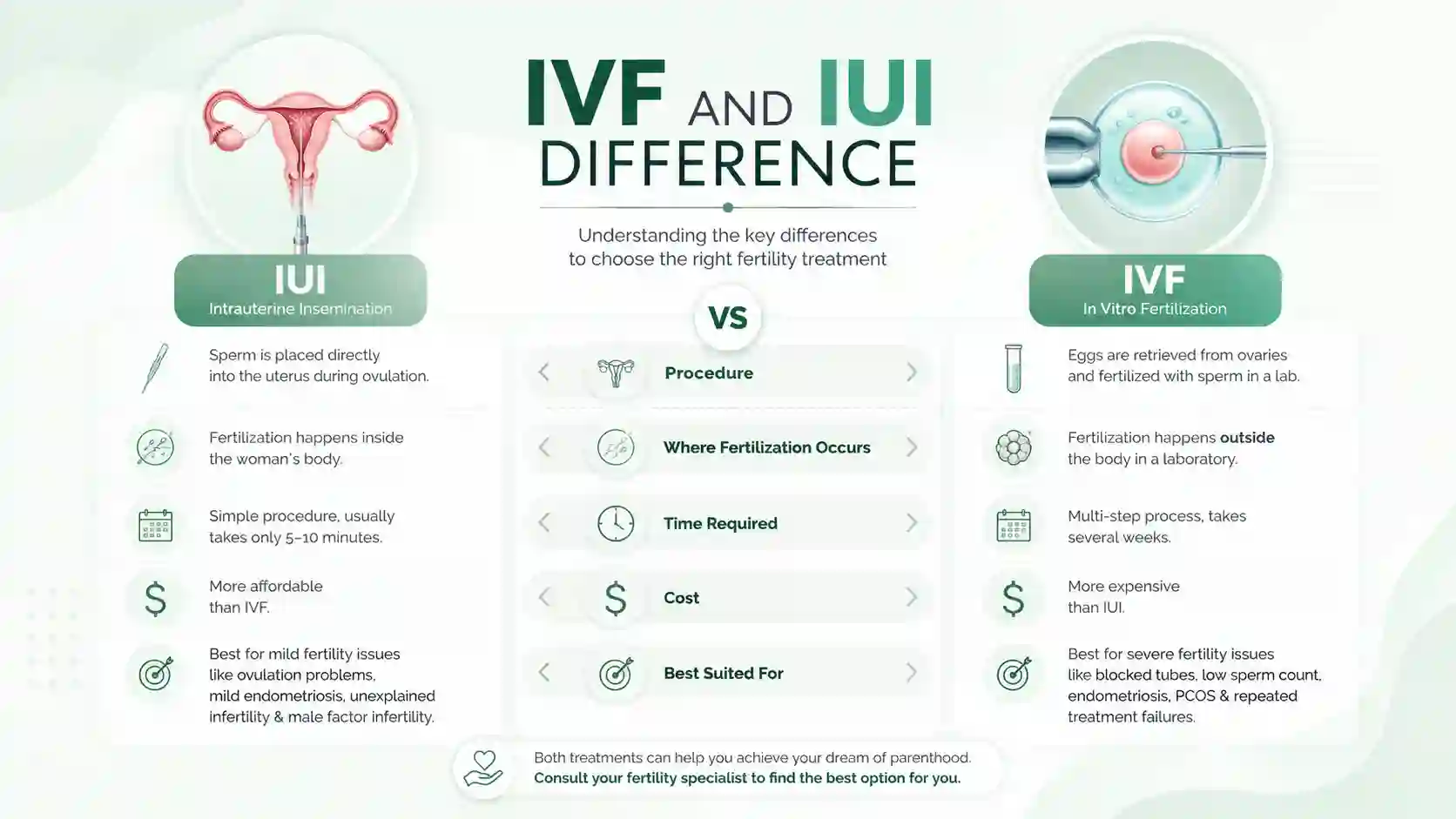
Difference Between IUI and IVF (Quick Comparison)
| Factor | IUI | IVF |
| Fertilization | Inside body | Outside body (lab) |
| Procedure | Simple | More complex |
| Cost | Lower | Higher |
| Success Rate | 10–20% | 30–50% |
| Medications | Minimal | More intensive |
| Time | Short | Longer process |
Difference Between IUI and IVF: Detailed Explanation
1. Process
- IUI: Sperm is directly inserted into the uterus
- IVF: Eggs are retrieved, fertilized in a lab, then transferred
IVF is more advanced and controlled.
2. Success Rate
- IUI: Lower success rate (10–20% per cycle)
- IVF: Higher success rate (30–50% per cycle)
IVF offers better chances, especially in complex cases.
3. Cost
- IUI: More affordable
- IVF: More expensive due to lab procedures
Cost is a major deciding factor for many patients.
4. Medical Complexity
- IUI: Less invasive, minimal monitoring
- IVF: Multiple steps including injections, egg retrieval
IVF requires more medical involvement.
5. When Each is Recommended
IUI is suitable for:
- Mild male infertility
- Unexplained infertility
- Cervical issues
IVF is recommended for:
- Blocked fallopian tubes
- Severe male infertility
- Failed IUI attempts
- Advanced maternal age
Which is Better: IUI or IVF?
There’s no one-size-fits-all answer.
- IUI is often tried first because it’s simpler and cheaper
- IVF is chosen when higher success chances are needed
Your doctor will recommend based on your condition.
Advantages of IUI
- Less expensive
- Less invasive
- Quick procedure
Advantages of IVF
- Higher success rate
- More control over fertilization
- Suitable for complex infertility cases
When to See a Fertility Specialist
You should consult a doctor if:
- You’ve been trying to conceive for over a year
- You’re over 35 and trying for 6 months
- You want to understand IUI vs IVF options
Understanding the difference between IUI and IVF helps you make informed decisions about your fertility journey.
While IUI is a simpler and more affordable option, IVF offers higher success rates and is suitable for more complex cases. A fertility specialist can guide you toward the best treatment based on your individual needs.
FAQs About Difference Between IUI and IVF
Which is more successful, IUI or IVF?
IVF has a higher success rate than IUI.
Is IUI safer than IVF?
Both are safe, but IUI is less invasive.
Can I try IUI before IVF?
Yes, many doctors recommend starting with IUI.
How many IUI cycles before IVF?
Usually 3–4 cycles before moving to IVF.
Is IVF more painful than IUI?
IVF involves more procedures, but discomfort is manageable.