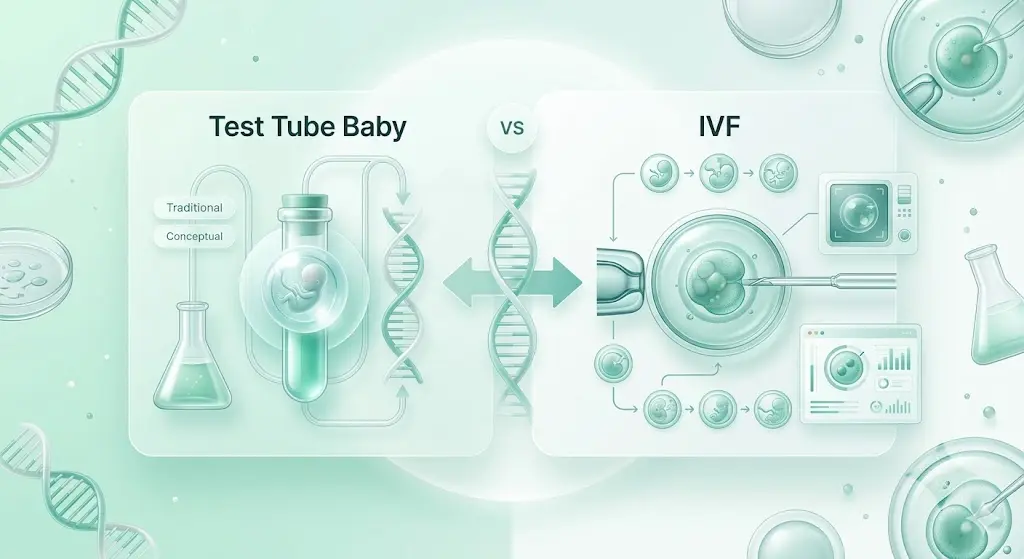
Many people searching for fertility treatment information often come across the terms “test tube baby” and “IVF” and wonder whether they are different procedures. A common question is: test tube baby vs IVF — are they the same thing?
The simple answer is yes. A “test tube baby” is the popular term used to describe a baby conceived through In Vitro Fertilization (IVF). However, there are several misconceptions surrounding these terms, and understanding the science behind IVF can help patients make informed fertility decisions.
This guide explains the relationship between test tube babies and IVF, how the process works, and what prospective parents should know.
What Is Test Tube Baby vs IVF?
When comparing test tube baby vs IVF, it’s important to understand that they refer to the same fertility treatment.
What Is a Test Tube Baby?
A “test tube baby” is a non-medical term used to describe a baby conceived through IVF.
The phrase became popular after the birth of Louise Brown in 1978, the world’s first baby born through IVF treatment.
What Is IVF?
IVF stands for In Vitro Fertilization.
In IVF:
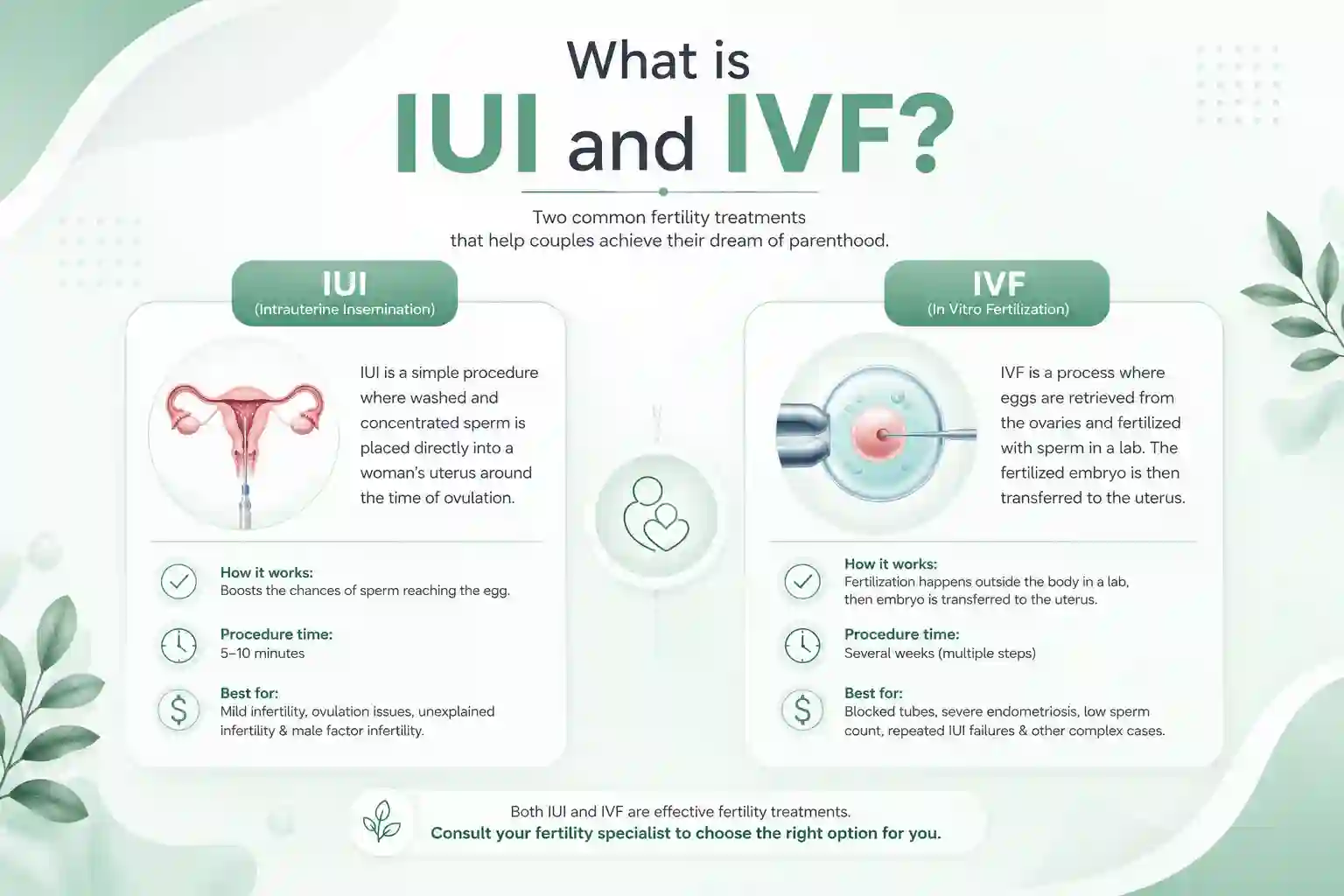
- Eggs are collected from the ovaries.
- Sperm is collected from the male partner or donor.
- Fertilization occurs in a laboratory.
- Embryos develop for several days.
- A healthy embryo is transferred into the uterus.
If pregnancy occurs, the baby is often referred to as a “test tube baby.”
Therefore, there is no medical difference between a test tube baby and IVF.
Why Is Test Tube Baby vs IVF Important?
Understanding the difference helps eliminate confusion and common myths.
Many people mistakenly believe:
- Test tube babies are different from IVF babies.
- Babies grow inside test tubes.
- IVF babies are less healthy than naturally conceived babies.
These misconceptions can create unnecessary anxiety for patients considering fertility treatment.
Knowing that both terms describe the same process can help families better understand reproductive medicine.
How Does Test Tube Baby vs IVF Work?
The process follows the standard IVF treatment pathway.
Step 1: Fertility Evaluation
Doctors assess fertility through:
- Hormone testing
- Ultrasound scans
- Semen analysis
- Medical history review
Step 2: Ovarian Stimulation
Fertility medications stimulate the ovaries to produce multiple mature eggs.
Step 3: Egg Retrieval
Doctors collect eggs from the ovaries using a minimally invasive procedure.
Step 4: Laboratory Fertilization
The eggs and sperm are combined in a fertility laboratory.
In some cases, ICSI (Intracytoplasmic Sperm Injection) is used.
Step 5: Embryo Development
Embryos are monitored for several days.
Step 6: Embryo Transfer
A healthy embryo is transferred into the uterus.
Step 7: Pregnancy Test
A blood test confirms whether implantation and pregnancy have occurred.
Once pregnancy progresses normally, the baby develops like any other pregnancy.
Benefits of IVF (Test Tube Baby Treatment)
Since test tube baby and IVF are the same, the benefits relate to IVF treatment.
Helps Overcome Infertility
IVF may help patients with:
- Blocked fallopian tubes
- Male infertility
- Endometriosis
- Ovulation disorders
- Unexplained infertility
Better Embryo Selection
Doctors can monitor embryo development before transfer.
Fertility Preservation
Eggs and embryos may be frozen for future use.
Expanded Family-Building Options
IVF can help:
- Single parents
- Same-sex couples
- Patients with medical fertility challenges
Risks, Side Effects, or Limitations
Although IVF has helped millions of families, it has limitations.
Medication Side Effects
Patients may experience:
- Bloating
- Fatigue
- Mood swings
- Breast tenderness
Ovarian Hyperstimulation Syndrome (OHSS)
Rarely, fertility medications can overstimulate the ovaries.
Emotional Stress
The fertility journey can be emotionally demanding.
No Guaranteed Pregnancy
Even advanced IVF treatment cannot guarantee success.
Cost, Timeline, or Success Rate
Typical IVF Timeline
| IVF Stage | Duration |
| Fertility testing | 1–2 weeks |
| Ovarian stimulation | 8–14 days |
| Egg retrieval | 1 day |
| Embryo development | 3–5 days |
| Pregnancy testing | 10–14 days after transfer |
A complete IVF cycle generally takes around 4–6 weeks.
IVF Success Rates
Success depends on factors such as:
- Female age
- Egg quality
- Embryo quality
- Sperm health
- Uterine health
Younger patients generally have higher success rates.
Factors Affecting Results
Several factors influence IVF outcomes.
Age
Female age remains one of the strongest predictors of IVF success.
Embryo Quality
Healthy embryos improve implantation potential.
Uterine Health
A healthy uterine lining supports embryo implantation.
Lifestyle Factors
Smoking, obesity, excessive alcohol intake, and poor sleep may negatively affect fertility outcomes.
Fertility Diagnosis
Underlying reproductive conditions can affect treatment success.
Emotional & Patient Perspective
Many patients feel overwhelmed when they first hear terms like “test tube baby.”
Common concerns include:
- Is a test tube baby different from a natural baby?
- Are IVF babies healthy?
- Will the pregnancy be normal?
The reassuring answer is that once implantation occurs, pregnancy typically progresses in the same way as any other pregnancy.
Most IVF-conceived children grow and develop normally.
The emotional aspects of fertility treatment often involve:
- Hope
- Anxiety
- Financial concerns
- Fear of failure
Support from fertility specialists, counselors, and loved ones can help throughout the journey.
Tips, Recommendations, or Preparation Guide
If you are considering IVF treatment, these tips may help:
- Choose an experienced fertility clinic
- Follow medication instructions carefully
- Maintain a healthy lifestyle
- Ask questions about treatment options
- Understand realistic success expectations
- Seek emotional support when needed
Education and preparation can make the fertility journey less stressful.
When to See a Fertility Specialist
You should consider consulting a fertility specialist if:
- You have been trying to conceive for over one year
- You are over age 35 and struggling to conceive
- You have irregular menstrual cycles
- You experienced recurrent miscarriages
- Male infertility concerns exist
- You have known reproductive health conditions
Early fertility evaluation may improve treatment planning and outcomes.
When comparing test tube baby vs IVF, there is actually no difference. “Test tube baby” is simply a popular, non-medical term used to describe a baby conceived through In Vitro Fertilization (IVF). The baby does not grow in a test tube; rather, fertilization occurs in a specialized laboratory before the embryo is transferred into the uterus.
Understanding this distinction can help patients separate myths from facts and feel more confident about fertility treatment. IVF continues to be one of the most effective fertility treatments available and has helped millions of families around the world achieve pregnancy.
FAQs About Test Tube Baby vs IVF
Is a test tube baby the same as IVF?
Yes. A test tube baby is simply a baby conceived through IVF treatment.
Why is it called a test tube baby?
The term became popular because fertilization occurs outside the body in a laboratory, although embryos are not actually grown in test tubes.
Are IVF babies healthy?
Most IVF-conceived babies are healthy and develop normally.
Is IVF different from a natural pregnancy?
After embryo implantation, pregnancy generally progresses similarly to a naturally conceived pregnancy.
Who was the first test tube baby?
Louise Brown, born in 1978, was the world’s first baby conceived through IVF.