If you’re undergoing In Vitro Fertilization (IVF), you may wonder whether your diet can influence treatment outcomes. One of the most common questions patients ask is, “What foods should I avoid during IVF?” While no specific food can guarantee pregnancy or determine whether IVF will be successful, maintaining a healthy diet and avoiding certain foods may support your overall reproductive health and reduce unnecessary risks.
The IVF foods to avoid are primarily those that may increase the risk of foodborne illness, excessive inflammation, or poor overall health. Fertility specialists generally recommend following a balanced, nutrient-rich diet before ovarian stimulation, during the IVF cycle, and after embryo transfer.
This guide explains which foods to limit or avoid during IVF treatment, healthier alternatives, and practical nutrition tips to support your fertility journey.
Why Is Diet Important During IVF?
Nutrition plays an important role in overall health and may help support your body throughout IVF treatment.
A healthy diet may:
- Support reproductive health
- Provide essential vitamins and minerals
- Help maintain a healthy body weight
- Reduce the risk of foodborne illness
- Promote healthy pregnancy habits
Although diet supports general well-being, no single food has been proven to improve IVF success rates.
IVF Foods to Avoid
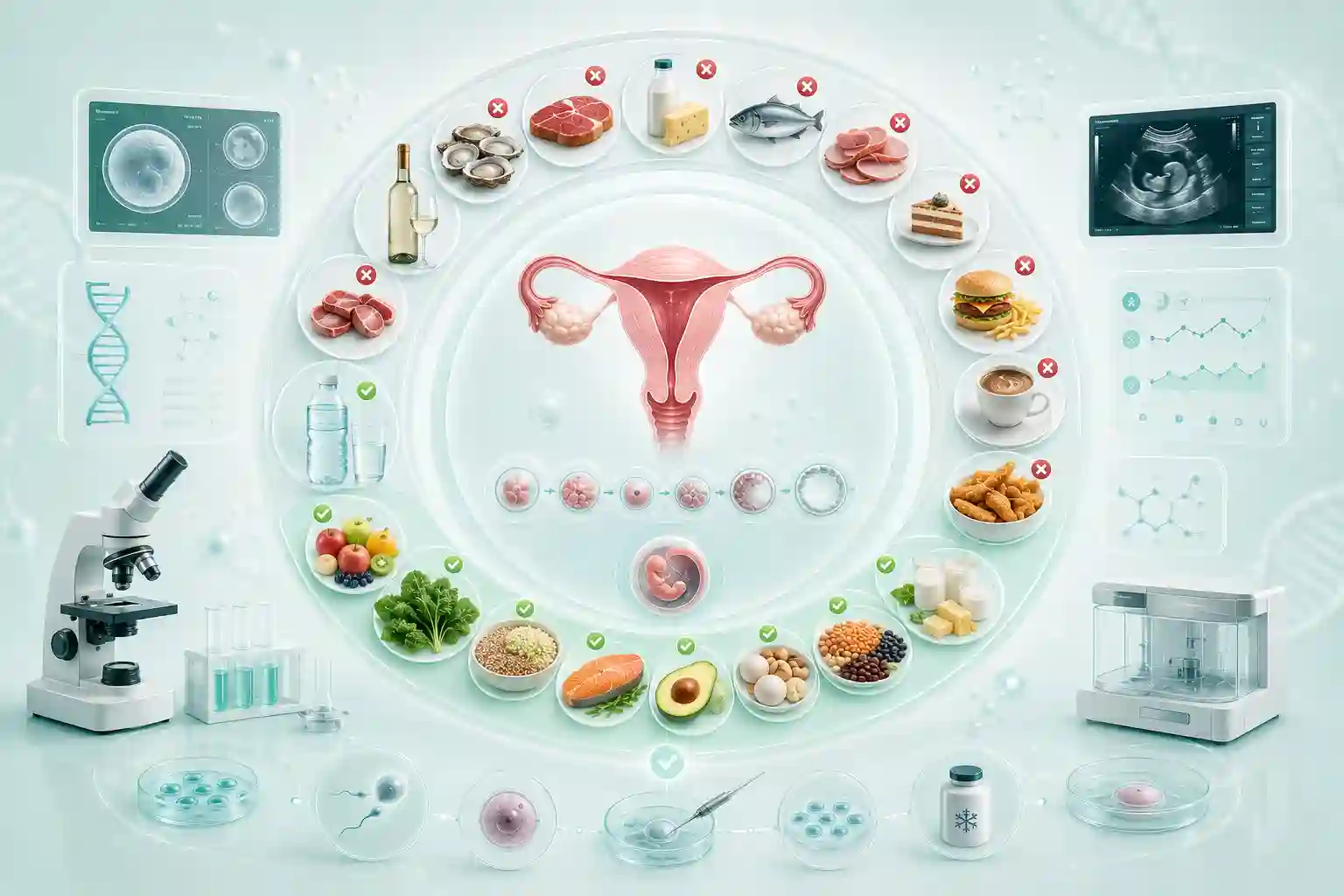
Alcohol
Most fertility specialists recommend avoiding alcohol before and during IVF treatment because it may negatively affect reproductive health and early pregnancy.
Raw or Undercooked Meat
Avoid meat that is not fully cooked because it may contain harmful bacteria or parasites.
Examples include:
- Rare steak
- Undercooked chicken
- Raw meat preparations
Raw Seafood
Avoid raw fish and shellfish, including:
- Raw sushi
- Oysters
- Clams
- Mussels
These foods may carry bacteria or parasites that increase the risk of foodborne illness.
High-Mercury Fish
Limit or avoid fish that contain high levels of mercury, including:
- Shark
- Swordfish
- King mackerel
- Tilefish
Choose lower-mercury fish such as salmon, sardines, or trout instead.
Unpasteurized Dairy Products
Avoid milk, cheese, and dairy products made from unpasteurized milk because they may contain harmful bacteria.
Raw or Undercooked Eggs
Foods containing raw eggs may increase the risk of Salmonella infection.
Examples include:
- Homemade mayonnaise
- Homemade cookie dough
- Certain desserts
- Raw batter
Highly Processed Foods
Limit foods that are:
- High in added sugar
- High in trans fats
- Highly processed
- Low in nutritional value
These foods should not replace a balanced diet rich in whole foods.
Sugary Drinks
Limit:
- Soft drinks
- Energy drinks
- Sweetened fruit beverages
Excess added sugar provides little nutritional value.
Excessive Caffeine
Moderate caffeine intake is generally considered acceptable for many people, but excessive amounts should be avoided.
Discuss the appropriate daily caffeine intake with your fertility specialist.
Smoking and Recreational Drugs
Although not foods, tobacco products and recreational drugs can negatively affect fertility and should be avoided during IVF treatment.
Foods to Include During IVF
Instead of focusing only on foods to avoid, include nutrient-rich foods such as:
Fruits
- Berries
- Apples
- Oranges
- Bananas
- Kiwi
Vegetables
- Spinach
- Broccoli
- Carrots
- Bell peppers
- Tomatoes
Lean Proteins
- Chicken
- Turkey
- Eggs (fully cooked)
- Lentils
- Beans
- Tofu
Whole Grains
- Brown rice
- Oats
- Whole wheat bread
- Quinoa
Healthy Fats
- Avocados
- Olive oil
- Nuts
- Seeds
Dairy or Calcium-Rich Alternatives
Choose pasteurized dairy products or fortified alternatives as recommended by your healthcare provider.
Benefits of Healthy Eating During IVF
Following a balanced diet may help:
- Support overall reproductive health
- Maintain stable energy levels
- Promote healthy body weight
- Improve nutritional intake
- Encourage healthy habits before pregnancy
Healthy eating supports your body throughout treatment, although it cannot guarantee pregnancy.
Risks, Side Effects, or Limitations
It is important to understand that:
- No specific food has been proven to increase IVF success.
- No single food causes IVF failure.
- Dietary advice should be individualized if you have diabetes, food allergies, celiac disease, or other medical conditions.
Always discuss personalized nutrition recommendations with your fertility specialist or a registered dietitian.
Factors That Affect IVF Success
Diet is only one part of successful fertility treatment.
Other important factors include:
Female Age
Age remains one of the strongest predictors of IVF success.
Egg Quality
Healthy eggs improve embryo development.
Sperm Quality
Healthy sperm contributes to successful fertilization.
Embryo Quality
Higher-quality embryos have greater implantation potential.
Uterine Health
A healthy uterine lining supports embryo implantation.
Lifestyle Habits
Regular physical activity, healthy body weight, adequate sleep, stress management, and avoiding smoking all support reproductive health.
Emotional & Patient Perspective
It’s common to feel that every meal could affect your IVF outcome.
Many patients become anxious about accidentally eating the “wrong” food.
Fortunately, there is no evidence that one meal or one particular food determines whether IVF will succeed or fail. Instead of aiming for perfection, focus on a balanced diet, healthy lifestyle habits, and following your fertility specialist’s advice.
Tips for Healthy Eating During IVF
To support your treatment:
- Eat regular, balanced meals.
- Drink plenty of water.
- Wash fruits and vegetables thoroughly.
- Cook meat, seafood, and eggs completely.
- Choose whole foods whenever possible.
- Limit processed foods and sugary drinks.
- Continue prenatal vitamins if recommended.
- Follow any dietary instructions provided by your fertility clinic.
When to See a Fertility Specialist
Consult your fertility specialist if:
- You have questions about your diet during IVF.
- You have food allergies or special dietary needs.
- You experience severe nausea or vomiting.
- You cannot maintain adequate nutrition.
- You have concerns about supplements or herbal products.
Personalized nutritional advice can help support your treatment.
Knowing the IVF foods to avoid can help you make healthier choices throughout your fertility treatment. While avoiding alcohol, raw or undercooked foods, unpasteurized dairy products, high-mercury fish, excessive caffeine, and highly processed foods may support your overall health, no specific diet can guarantee IVF success. The best approach is to follow a balanced, nutrient-rich eating plan, maintain a healthy lifestyle, and closely follow your fertility specialist’s recommendations throughout your IVF journey.
FAQs About IVF Foods to Avoid
1. What foods should I avoid during IVF treatment?
Avoid alcohol, raw or undercooked meat and seafood, unpasteurized dairy products, raw eggs, high-mercury fish, highly processed foods, and excessive caffeine.
2. Can diet improve IVF success?
A healthy diet supports overall reproductive health, but no specific food has been scientifically proven to increase IVF success rates.
3. Can I drink coffee during IVF?
Moderate caffeine intake may be acceptable, but excessive caffeine should be avoided. Ask your fertility specialist about the amount that is appropriate for you.
4. Is spicy food harmful during IVF?
There is no strong scientific evidence that spicy foods reduce IVF success. If spicy foods cause digestive discomfort, you may prefer to limit them.
5. Can I eat eggs during IVF?
Yes. Fully cooked eggs are a good source of protein and are generally considered safe during IVF treatment.
6. Should I take prenatal vitamins during IVF?
Many fertility specialists recommend prenatal vitamins containing folic acid before and during IVF treatment. Follow your specialist’s recommendations.
7. Can I eat fast food during IVF?
Occasional fast food is unlikely to determine your treatment outcome, but a diet based mainly on whole, nutrient-rich foods is generally recommended to support your overall health during IVF.