After undergoing fertility treatment, one of the first things patients want to know is: “When is my baby due?”
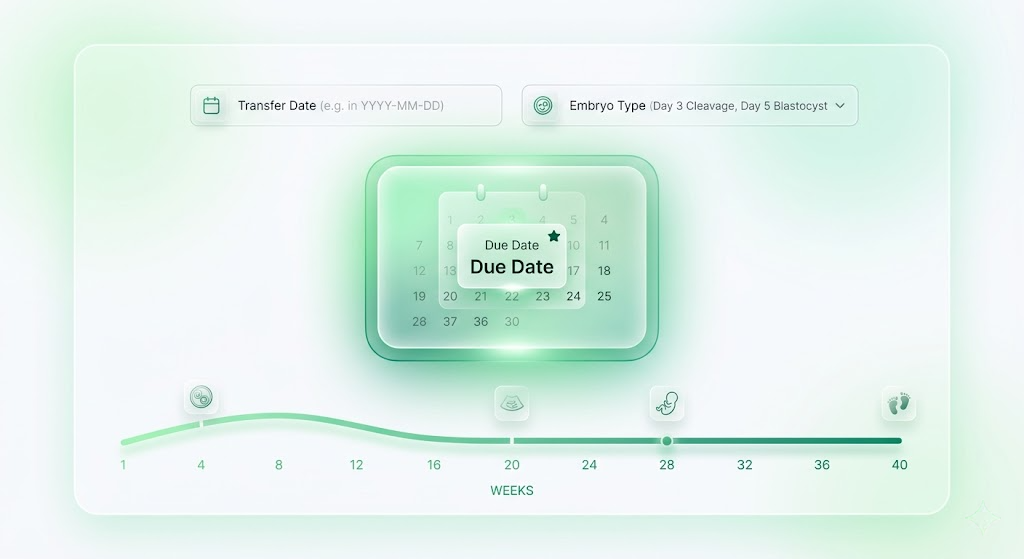
An IVF calculator helps you estimate your pregnancy timeline and expected due date using your embryo transfer details.
What is an IVF Calculator?
An IVF calculator is a tool designed to calculate:
- Your estimated due date
- Pregnancy weeks
- Key milestones during pregnancy
It uses specific IVF data like the embryo transfer date instead of the last menstrual period, making it more accurate.
Why Use an IVF Calculator?
Using an IVF calculator helps you:
- Get a precise due date
- Track pregnancy progress
- Plan medical checkups
- Reduce uncertainty after IVF
Because IVF timing is controlled, calculations are more reliable.
How Does an IVF Calculator Work?
The IVF calculator is based on:
- Embryo transfer date
- Embryo age (Day 3 or Day 5)
Calculation Method:
- Day 3 transfer → Add 263 days
- Day 5 transfer → Add 261 days
This gives your estimated due date.
Example IVF Calculator Result
Let’s say:
- Embryo transfer date: January 10
- Day 5 embryo
Add 261 days → Estimated due date: October 28
This is how an IVF calculator predicts your delivery date.
IVF Pregnancy Timeline Using Calculator
First Trimester (Weeks 1–12)
- Implantation and early development
- Pregnancy confirmation
- First ultrasound
Second Trimester (Weeks 13–26)
- Baby growth and movement
- Routine anomaly scan
Third Trimester (Weeks 27–40)
- Rapid development
- Regular monitoring
- Delivery preparation
Is IVF Calculator Accurate?
Yes, an IVF calculator is highly accurate because:
- Exact fertilization timing is known
- No guesswork like natural conception
- Doctors rely on this method for planning
However, minor adjustments may occur based on ultrasound results.
When Should You Use an IVF Calculator?
You can use an IVF calculator:
- After embryo transfer
- After a positive pregnancy test
- During early pregnancy planning
It helps you stay informed throughout your journey.
Limitations of IVF Calculator
While accurate, it may vary slightly due to:
- Implantation timing differences
- Multiple pregnancies (twins, triplets)
- Medical conditions
Always follow your doctor’s guidance.
When to See a Doctor
Even with an IVF calculator, regular medical care is essential. Contact your doctor if:
- You experience unusual symptoms
- You have concerns about pregnancy progress
- You need confirmation through ultrasound
An IVF calculator is a simple yet powerful tool that helps you estimate your due date and understand your pregnancy timeline with clarity.
While it gives a reliable estimate, your doctor’s evaluation remains the most important for tracking your baby’s development.
If you’ve recently undergone IVF, consulting a fertility specialist will ensure a smooth and well-monitored pregnancy journey.
FAQs About IVF Calculator
What does an IVF calculator do?
It estimates your due date and pregnancy timeline using embryo transfer details.
Is IVF calculator accurate?
Yes, it is more accurate than regular pregnancy calculators.
Can I use a normal pregnancy calculator for IVF?
No, IVF requires a different calculation method.
What is used in IVF calculation?
Embryo transfer date and embryo age (Day 3 or Day 5).
When should I start using IVF calculator?
Right after embryo transfer or pregnancy confirmation.