When natural conception is difficult, fertility treatments can offer hope to individuals and couples trying to build a family. One of the most frequently asked questions is IUI vs IVF—which treatment is better, and how do you know which one is right for you?
Both intrauterine insemination (IUI) and in vitro fertilization (IVF) are widely used fertility treatments, but they differ in procedure, complexity, cost, and success rates. While IUI is often the first treatment recommended for certain fertility conditions, IVF may be advised for more complex cases. Understanding these differences can help you have informed discussions with your fertility specialist.
What Is IUI vs IVF?
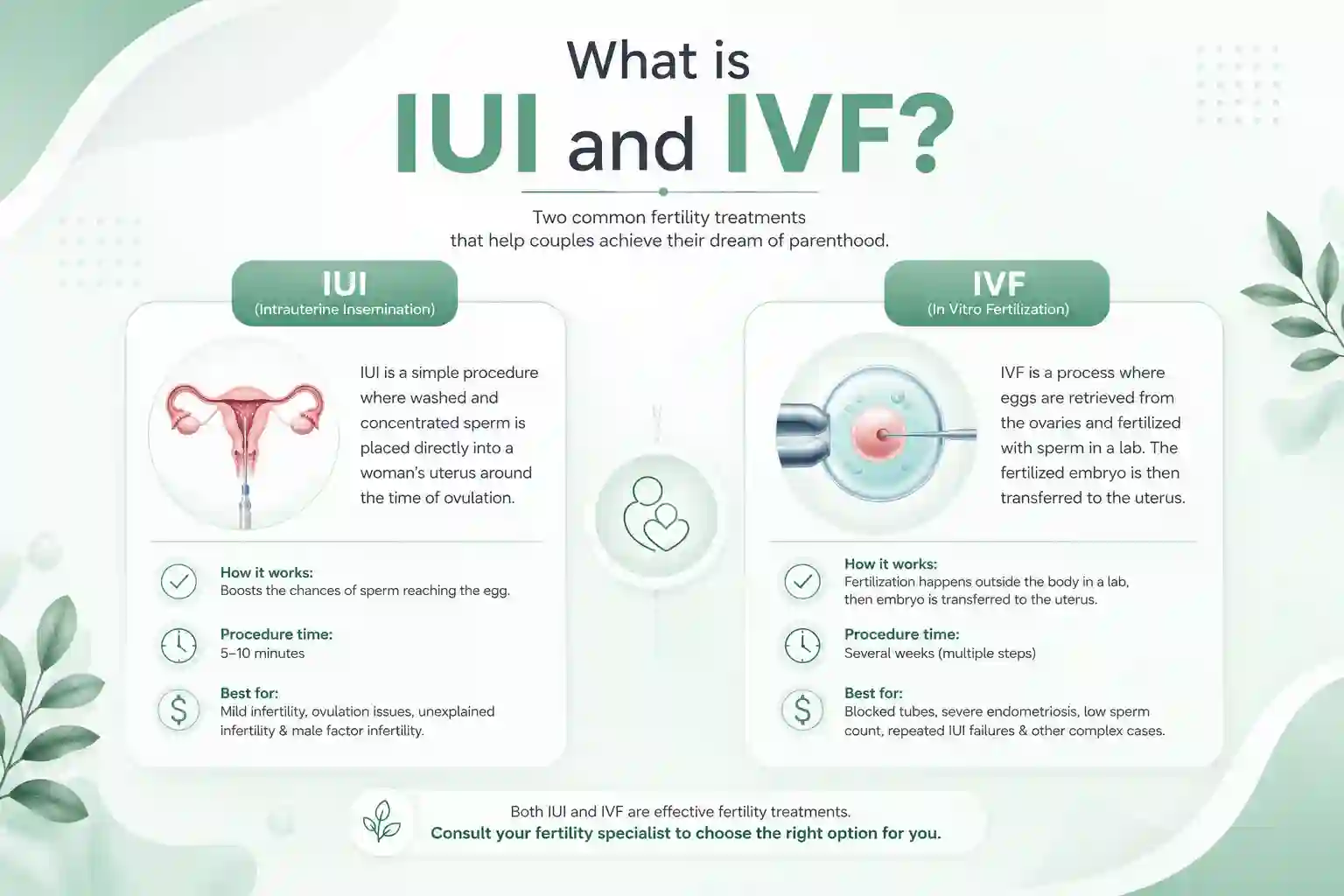
IUI vs IVF compares two assisted reproductive treatments designed to help achieve pregnancy.
What Is IUI?
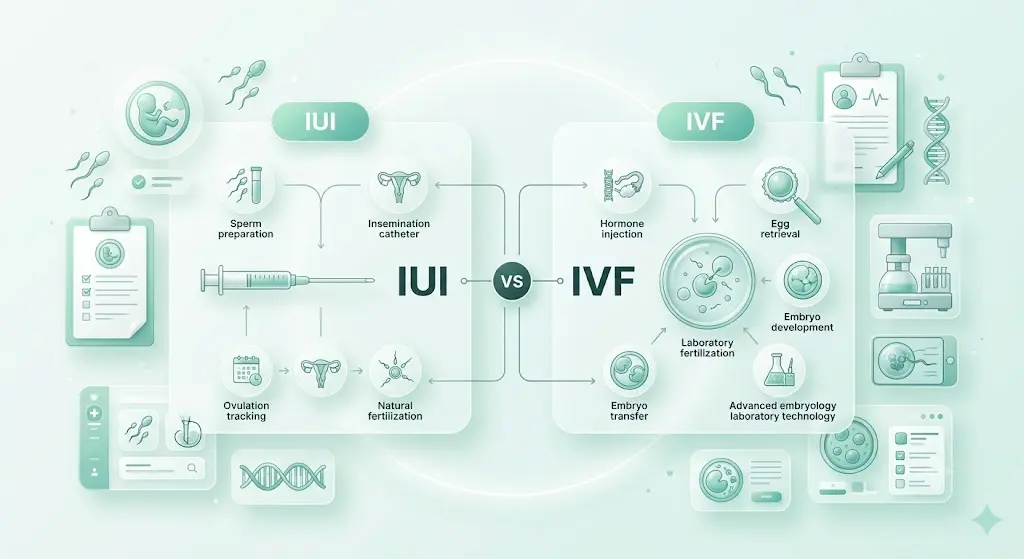
Intrauterine insemination (IUI) is a procedure in which specially prepared sperm is placed directly into the uterus around the time of ovulation. Fertilization still occurs naturally inside the body.
What Is IVF?
In vitro fertilization (IVF) involves retrieving eggs from the ovaries, fertilizing them with sperm in a laboratory, growing embryos, and transferring an embryo into the uterus.
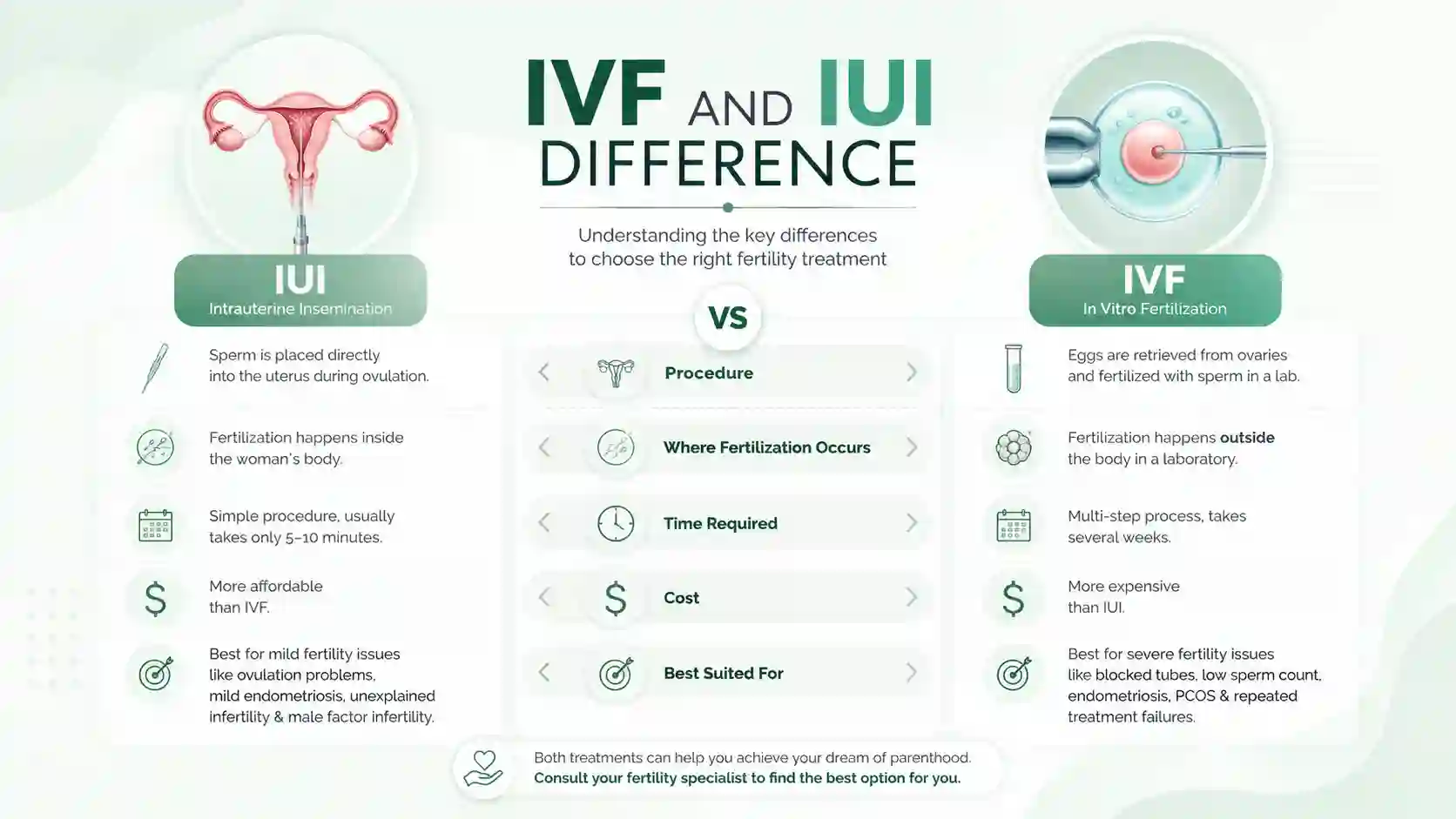
The main difference is that fertilization happens inside the body with IUI but outside the body during IVF.
Why Is Understanding IUI vs IVF Important?
Understanding IUI vs IVF helps patients choose the most appropriate treatment based on their medical condition and fertility goals.
Comparing the two treatments allows you to understand:
- Which procedure is recommended for your diagnosis
- Differences in success rates
- Cost considerations
- Treatment timelines
- Potential risks and benefits
- The likelihood of needing multiple treatment cycles
Your fertility specialist will recommend the most suitable option after a complete fertility evaluation.
How Do IUI and IVF Work?
IUI Procedure
The IUI process generally includes:
Step 1: Fertility Evaluation
Hormone testing, ultrasound examinations, and semen analysis help determine whether IUI is appropriate.
Step 2: Ovulation Monitoring
Natural or medication-assisted ovulation is carefully monitored.
Step 3: Sperm Preparation
The semen sample is processed in the laboratory to concentrate healthy sperm.
Step 4: Insemination
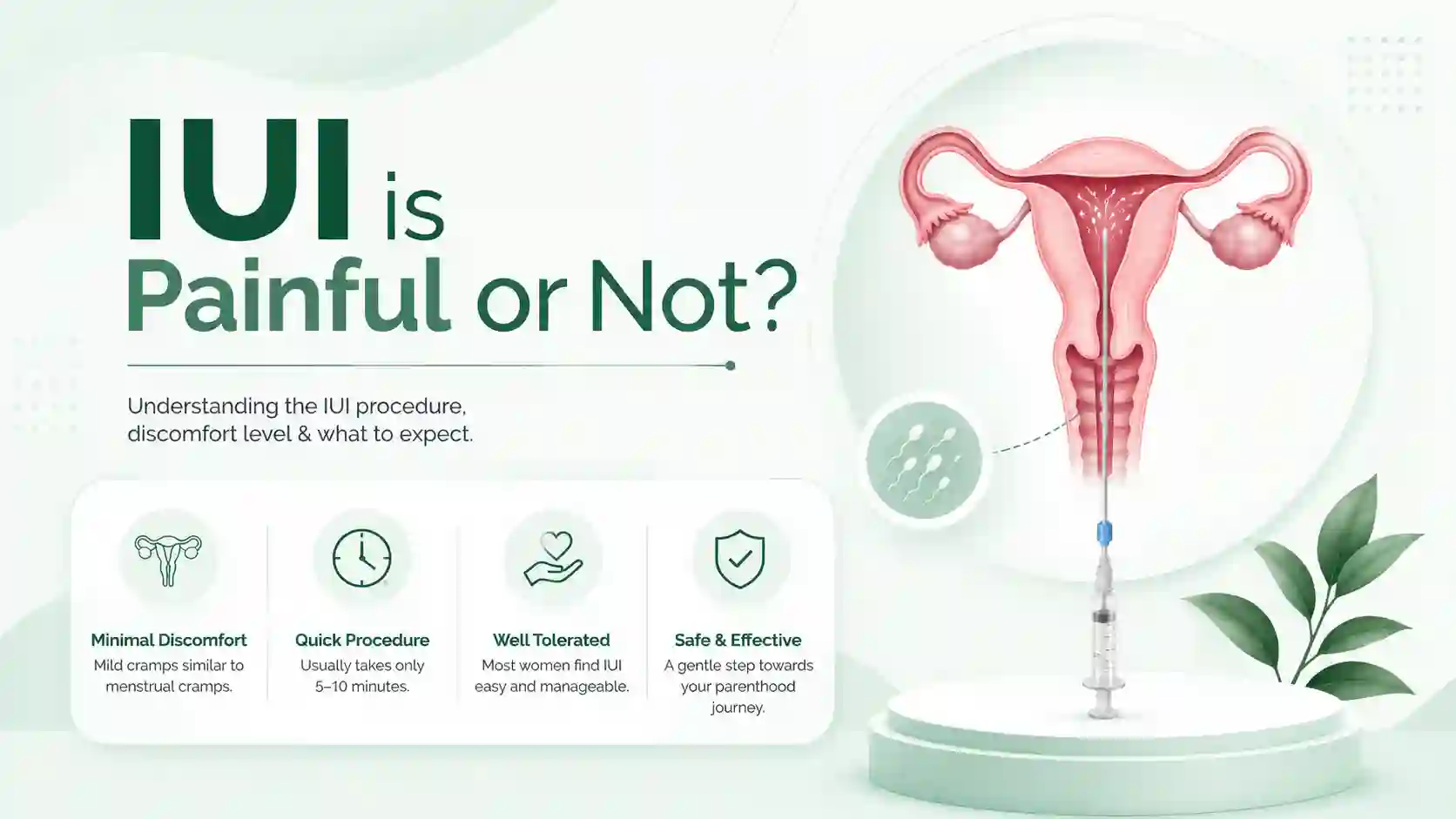
Prepared sperm is placed directly into the uterus using a thin catheter.
Step 5: Pregnancy Test
A pregnancy test is performed approximately two weeks later.
IVF Procedure
The IVF process includes:
Step 1: Ovarian Stimulation
Fertility medications stimulate the ovaries to produce multiple mature eggs.
Step 2: Egg Retrieval
Mature eggs are collected through a minimally invasive procedure.
Step 3: Fertilization
Eggs and sperm are combined in a laboratory, sometimes using intracytoplasmic sperm injection (ICSI).
Step 4: Embryo Culture
Embryos develop in the laboratory for several days.
Step 5: Embryo Transfer
A selected embryo is transferred into the uterus.
Step 6: Pregnancy Test
A blood test confirms whether implantation has occurred.
Benefits of IUI vs IVF
Both treatments offer important advantages depending on the patient’s needs.
Benefits of IUI
- Less invasive procedure
- Usually lower treatment cost
- No egg retrieval required
- Short procedure time
- Minimal recovery
Benefits of IVF
- Higher pregnancy rates for many infertility conditions
- Suitable for severe male factor infertility
- Can bypass blocked fallopian tubes
- Allows embryo freezing
- Supports preimplantation genetic testing (PGT) when medically indicated
- Greater control over fertilization and embryo selection
Risks, Side Effects, or Limitations
IUI Risks
Possible risks include:
- Mild cramping
- Light spotting
- Multiple pregnancy if fertility medications are used
- Lower success rates compared with IVF for some conditions
IVF Risks
Possible risks include:
- Ovarian Hyperstimulation Syndrome (OHSS)
- Egg retrieval complications
- Multiple pregnancy if multiple embryos are transferred
- Emotional and physical demands
- Higher treatment costs
Neither treatment guarantees pregnancy.
Cost, Timeline, and Success Rate
Cost
IUI is generally less expensive than IVF because it requires fewer medications, less laboratory work, and no egg retrieval.
IVF typically involves higher costs due to:
- Ovarian stimulation medications
- Egg retrieval
- Laboratory fertilization
- Embryo culture
- Additional procedures, such as embryo freezing or genetic testing
Timeline
A typical IUI cycle usually takes two to three weeks.
An IVF cycle generally takes about four to six weeks.
Success Rate
Success depends on factors such as:
- Female age
- Cause of infertility
- Egg quality
- Sperm quality
- Overall reproductive health
In many situations, IVF offers higher pregnancy rates per treatment cycle than IUI, particularly for more complex infertility cases.
Factors Affecting Results
Several factors influence the success of both IUI and IVF.
Female Age
Age significantly affects fertility and treatment outcomes.
Cause of Infertility
The underlying diagnosis often determines whether IUI or IVF is more appropriate.
Sperm Quality
Sperm count, movement, and shape influence fertilization success.
Ovulation
Regular ovulation improves the chances of pregnancy with IUI.
Embryo Quality
For IVF, healthy embryos are associated with better implantation rates.
Emotional & Patient Perspective
Fertility treatment can be emotionally challenging regardless of the method chosen.
Patients often experience:
- Hope and excitement
- Anxiety during treatment
- Stress during the waiting period
- Emotional disappointment if pregnancy is not achieved
Support from fertility specialists, counselors, partners, and family members can help throughout the process.
Tips for Choosing Between IUI and IVF
If you are deciding between IUI vs IVF, consider these recommendations:
- Complete a thorough fertility evaluation.
- Discuss the cause of infertility with your specialist.
- Consider your age and ovarian reserve.
- Understand the expected success rates for your situation.
- Review treatment costs and financial considerations.
- Ask about the recommended number of treatment cycles.
- Make decisions based on medical advice rather than cost alone.
Choosing the right treatment is a personalized decision that should be guided by your fertility specialist.
When to See a Fertility Specialist
Consider consulting a fertility specialist if:
- You are under 35 and have been trying to conceive for one year.
- You are 35 or older and have been trying for six months.
- You have irregular menstrual cycles.
- You have endometriosis or PCOS.
- You have experienced recurrent pregnancy loss.
- There are concerns about sperm quality.
- You have known tubal disease or blocked fallopian tubes.
Early evaluation helps determine whether IUI, IVF, or another fertility treatment is most appropriate.
Understanding IUI vs IVF is an essential step in choosing the right fertility treatment. IUI is generally less invasive, less expensive, and suitable for selected fertility conditions, while IVF offers higher success rates for many complex infertility cases and provides additional treatment options such as embryo freezing and genetic testing. The best choice depends on your age, medical history, fertility diagnosis, and reproductive goals. A qualified fertility specialist can help create a treatment plan tailored to your individual needs.
FAQs About IUI vs IVF
1. What is the main difference between IUI vs IVF?
The main difference is that fertilization occurs inside the body with IUI, while IVF involves fertilization in a laboratory before an embryo is transferred to the uterus.
2. Is IVF more successful than IUI?
For many infertility conditions, IVF has higher pregnancy rates per treatment cycle than IUI, although success depends on individual factors.
3. Is IUI less expensive than IVF?
Yes. IUI is generally more affordable because it is less complex and requires fewer medical procedures.
4. When is IUI recommended instead of IVF?
IUI may be recommended for unexplained infertility, mild male factor infertility, cervical factor infertility, or ovulation disorders when the fallopian tubes are open.
5. When is IVF recommended instead of IUI?
IVF is commonly recommended for blocked fallopian tubes, severe male factor infertility, advanced maternal age, recurrent failed IUI cycles, or certain genetic concerns.
6. How many IUI cycles should I try before IVF?
The recommended number varies depending on age and fertility diagnosis. Many specialists reassess treatment if pregnancy has not occurred after several well-timed IUI cycles.
7. Which is better, IUI or IVF?
Neither treatment is universally better. The most appropriate option depends on the underlying cause of infertility, age, reproductive health, and recommendations from a fertility specialist.