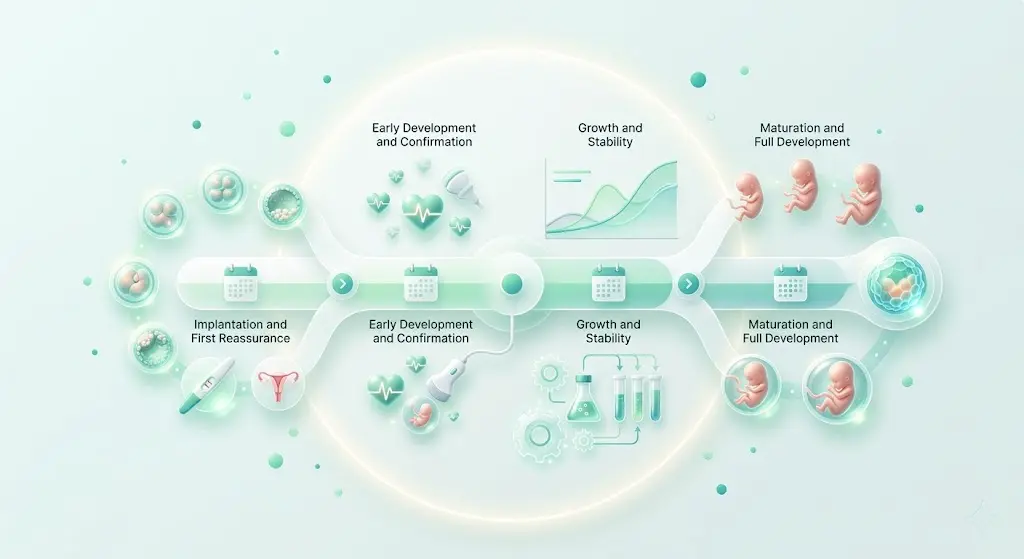
One of the biggest concerns for couples after successful fertility treatment is understanding after how many weeks IVF pregnancy is safe. The early weeks after embryo transfer can feel emotionally stressful because many patients worry about miscarriage, implantation problems, and pregnancy development.
Although every pregnancy is different, understanding IVF pregnancy milestones can help patients feel more informed and reassured during the journey.
Is IVF Pregnancy Different from Natural Pregnancy?
After successful implantation, an IVF pregnancy develops similarly to a natural pregnancy. However:
- IVF pregnancies are usually monitored more closely during the early weeks
- Hormone medications and fertility history may increase emotional stress
Doctors often schedule frequent blood tests and ultrasounds to monitor pregnancy progression carefully.
After How Many Weeks IVF Pregnancy Is Safe?
There is no exact week when pregnancy becomes completely “safe,” but miscarriage risk decreases significantly as pregnancy progresses.
First 12 Weeks Are Most Sensitive
The first trimester, especially:
- The first 12 weeks
is considered the most delicate phase of pregnancy.
During this time:
- Implantation stabilizes
- Placenta develops
- Hormone levels rise
Most early pregnancy losses happen during the first trimester.
Why the First Trimester Is Important
The early weeks are critical because:
- The embryo is developing rapidly
- Organs begin forming
- Pregnancy hormones must increase properly
Doctors closely monitor IVF pregnancies during this period to ensure healthy development.
IVF Pregnancy Milestones
Understanding pregnancy milestones helps explain why many doctors feel more reassured after certain weeks.
Important IVF Pregnancy Milestones
Key stages during early IVF pregnancy progression.
0510468122028
| Week | Milestone Level |
| 4 | 1 |
| 6 | 2 |
| 8 | 3 |
| 12 | 5 |
| 20 | 7 |
| 28 | 9 |
6 to 7 Weeks: Heartbeat Detection
One major milestone in IVF pregnancy is:
- Detecting the fetal heartbeat through ultrasound
This usually happens around:
- 6 to 7 weeks pregnancy
Seeing a heartbeat significantly lowers miscarriage risk.
12 Weeks: Lower Miscarriage Risk
Many fertility specialists consider pregnancy more stable after:
- 12 weeks (end of first trimester)
At this stage:
- Placenta function improves
- Major early developmental risks decrease
- Miscarriage risk becomes much lower
This is why many couples feel more emotionally relaxed after the first trimester.
20 Weeks: Mid-Pregnancy Milestone
Around 20 weeks:
- Detailed anatomy scans evaluate fetal growth and development
Pregnancy becomes more established during the second trimester.
Factors Affecting IVF Pregnancy Safety
Several factors influence IVF pregnancy stability.
Age
Advanced maternal age may increase:
- Miscarriage risk
- Chromosomal abnormalities
Embryo Quality
Healthy embryos improve:
- Implantation success
- Pregnancy progression
Uterine Health
A healthy uterine lining supports embryo development.
Lifestyle Factors
Smoking, stress, obesity, and poor nutrition may negatively affect pregnancy outcomes.
Symptoms to Watch During Early IVF Pregnancy
Mild symptoms are common during early pregnancy, including:
- Fatigue
- Mild cramping
- Breast tenderness
- Nausea
However, patients should contact their doctor if they experience:
- Heavy bleeding
- Severe abdominal pain
- Fever
- Severe dizziness
Emotional Stress During Early IVF Pregnancy
Many couples feel anxious during early IVF pregnancy because of:
- Previous fertility struggles
- Failed IVF cycles
- Fear of miscarriage
Emotional support and regular medical follow-up can help reduce stress during this stage.
Tips for a Healthy IVF Pregnancy
Patients can support pregnancy health by:
- Following medication instructions carefully
- Attending all follow-up appointments
- Eating a balanced diet
- Staying hydrated
- Avoiding smoking and alcohol
- Getting enough rest
Always follow your doctor’s advice during pregnancy.
When to Contact Your Doctor
You should immediately contact your fertility specialist if you experience:
- Heavy bleeding
- Severe pain
- Sudden swelling
- Breathing difficulty
- Fever
Prompt medical care is important for pregnancy safety.
Understanding after how many weeks IVF pregnancy is safe can help reduce anxiety during the early stages of pregnancy. While no pregnancy is completely risk-free, the chances of miscarriage decrease significantly after hearing the heartbeat and especially after completing the first 12 weeks.
Regular monitoring, healthy lifestyle habits, and close communication with your fertility specialist are essential for supporting a healthy IVF pregnancy.
FAQs About IVF Pregnancy Safety
After how many weeks is IVF pregnancy considered safer?
Risk decreases significantly after 12 weeks.
Is miscarriage common in IVF pregnancy?
The risk is similar to natural pregnancy and depends on several factors.
Why are the first 12 weeks important?
This is when most early pregnancy losses occur.
When is the heartbeat usually seen in IVF pregnancy?
Around 6 to 7 weeks pregnancy.
Does age affect IVF pregnancy safety?
Yes, advanced age may increase pregnancy risks.