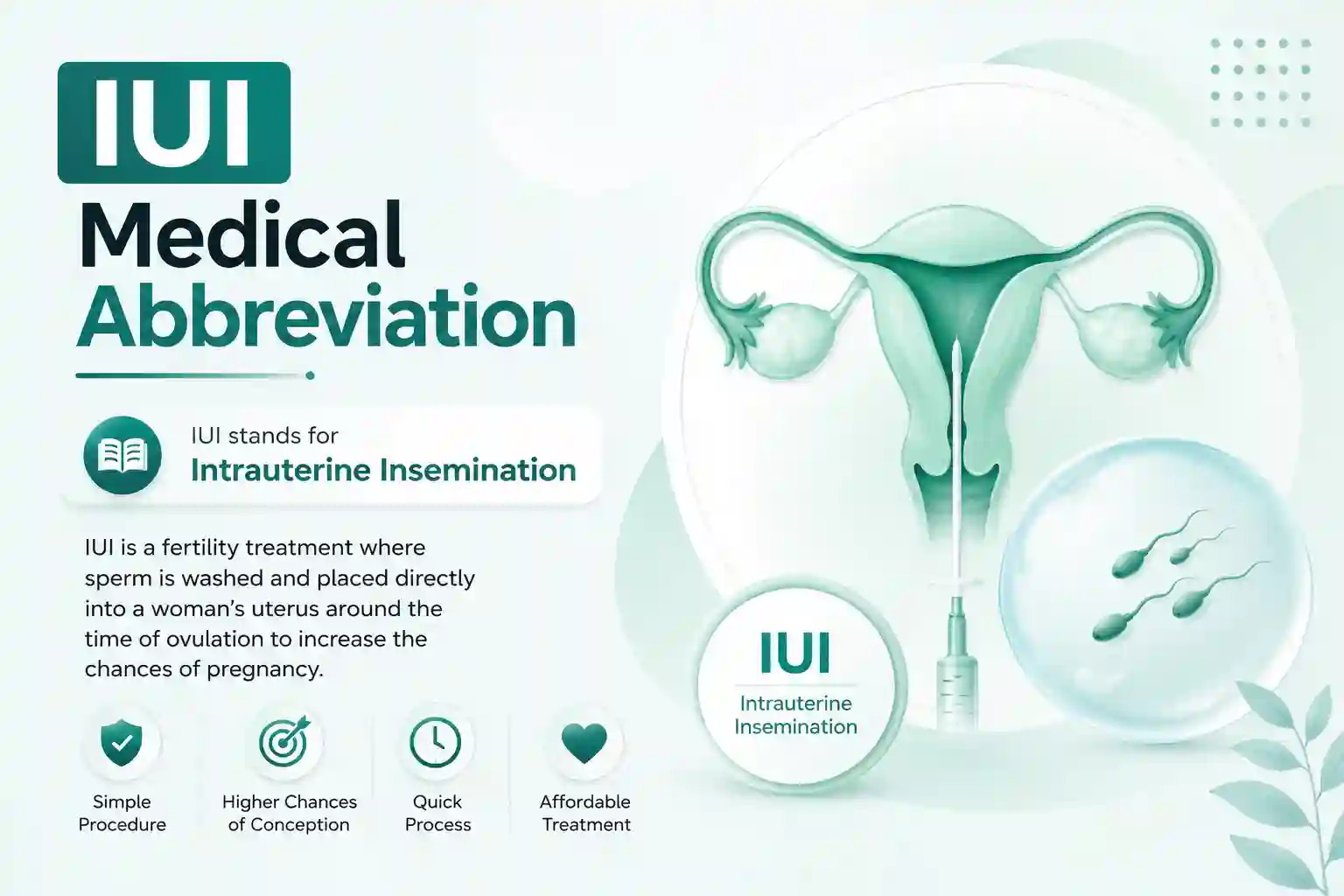
If you’ve come across the term IUI while researching fertility treatments, you may be wondering what the IUI medical abbreviation stands for. In medicine, IUI is the abbreviation for Intrauterine Insemination, a fertility treatment that places specially prepared sperm directly into the uterus around the time of ovulation to improve the chances of pregnancy.
The IUI medical abbreviation is widely used by fertility specialists, gynecologists, and reproductive medicine clinics worldwide. It refers to one of the most common forms of assisted reproductive technology (ART) and is often recommended as an initial treatment for selected infertility conditions.
This guide explains the IUI medical abbreviation, how the procedure works, who may benefit from it, and what to expect during treatment.
What Does the IUI Medical Abbreviation Stand For?
The IUI medical abbreviation stands for Intrauterine Insemination.
Breaking down the term:
- Intra- = Within
- Uterine = Related to the uterus
- Insemination = Placement of sperm into the female reproductive tract
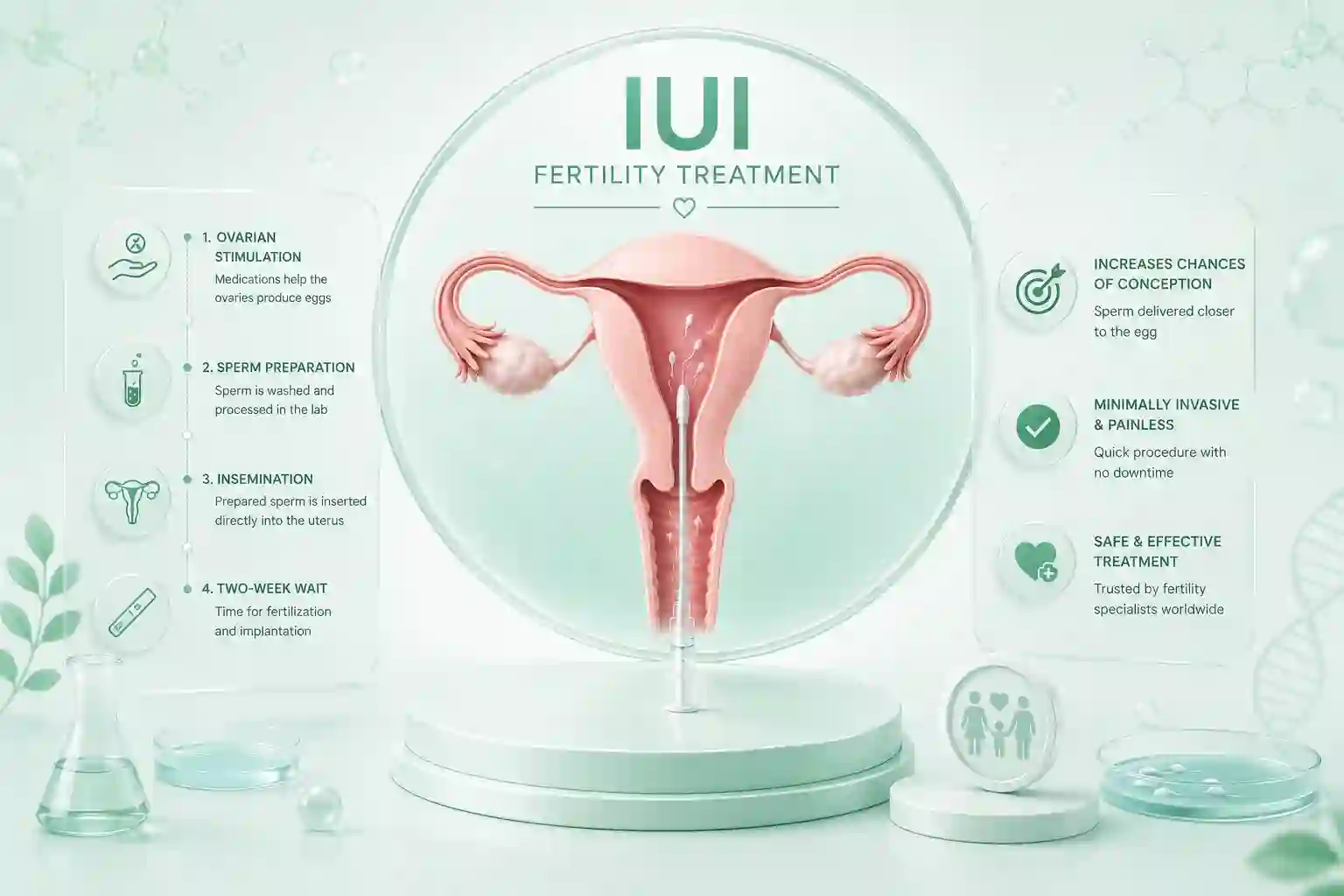
In IUI, specially prepared (washed) sperm are placed directly into the uterus using a thin catheter during the fertile window, increasing the number of motile sperm that reach the fallopian tubes where fertilization normally occurs.
What Is Intrauterine Insemination (IUI)?
Intrauterine Insemination (IUI) is a minimally invasive fertility procedure designed to increase the likelihood of sperm reaching the egg.
Unlike In Vitro Fertilization (IVF):
- Fertilization occurs naturally inside the body.
- No egg retrieval is required.
- No laboratory fertilization takes place.
- The procedure is typically completed during an outpatient visit.
Who May Benefit from IUI?
A fertility specialist may recommend IUI for people with:
- Unexplained infertility
- Mild male factor infertility
- Ovulation disorders
- Cervical factor infertility
- Ejaculation difficulties
- Couples using donor sperm
IUI may not be the most appropriate option for severe male factor infertility or blocked fallopian tubes, where IVF may offer better success rates.
How Does the IUI Procedure Work?
A typical IUI cycle includes the following steps:
1. Fertility Evaluation
Your fertility specialist performs tests such as:
- Hormone blood tests
- Pelvic ultrasound
- Semen analysis
- Fallopian tube evaluation
2. Ovulation Monitoring
Ovulation is monitored using:
- Ultrasound
- Blood tests
- Ovulation predictor kits
Some patients also receive fertility medications to stimulate egg development.
3. Sperm Washing
A semen sample is processed in the laboratory to:
- Remove seminal fluid
- Concentrate healthy motile sperm
- Prepare the sample for insemination
4. Insemination
A thin catheter is inserted through the cervix, and the washed sperm are placed directly into the uterus.
The procedure usually takes only a few minutes.
5. Pregnancy Test
Approximately 14 days after IUI, a beta-hCG blood test is performed to determine whether pregnancy has occurred.
Benefits of IUI
Some advantages of IUI include:
- Less invasive than IVF.
- Lower treatment cost.
- Short outpatient procedure.
- Minimal recovery time.
- Can be combined with fertility medications.
- Suitable for selected infertility conditions.
Risks, Side Effects, or Limitations
Although IUI is generally considered safe, it has some limitations.
Possible risks include:
- Mild cramping during or after the procedure.
- Light spotting.
- Temporary pelvic discomfort.
- Multiple pregnancy when fertility medications are used.
- Lower pregnancy rates than IVF.
Pregnancy cannot be guaranteed, and multiple IUI cycles may be recommended before considering other treatments.
Factors Affecting IUI Success
The success of IUI depends on several factors, including:
Female Age
Egg quality generally declines with age, affecting pregnancy rates.
Ovulation Timing
Proper timing of insemination is one of the most important factors for success.
Sperm Quality
Healthy sperm count, motility, and morphology improve the chances of fertilization.
Fallopian Tube Health
At least one open fallopian tube is generally required because fertilization occurs naturally within the body.
Underlying Cause of Infertility
The reason for infertility significantly influences treatment outcomes.
Emotional & Patient Perspective
Hearing the IUI medical abbreviation for the first time can make fertility treatment seem confusing. Understanding that IUI simply means Intrauterine Insemination and learning how the procedure works can make the process feel less overwhelming. Many patients begin their fertility journey with IUI because it is relatively simple, minimally invasive, and often recommended before more advanced treatments such as IVF.
Tips Before Starting IUI
Before beginning treatment:
- Complete all recommended fertility testing.
- Follow your medication schedule carefully.
- Attend monitoring appointments.
- Maintain a healthy lifestyle.
- Ask your fertility specialist any questions about the procedure and expected outcomes.
When to See a Fertility Specialist
Consult a fertility specialist if:
- You have been trying to conceive for one year (or six months if you are 35 years or older).
- You have irregular ovulation.
- You have abnormal semen analysis results.
- You have experienced recurrent pregnancy loss.
- You want to discuss whether IUI is appropriate for your situation.
The IUI medical abbreviation stands for Intrauterine Insemination, a commonly used fertility treatment in which washed, healthy sperm are placed directly into the uterus around the time of ovulation. IUI is less invasive and generally more affordable than IVF, making it a common first-line treatment for selected fertility conditions. Whether IUI is the right choice depends on factors such as age, fertility diagnosis, sperm quality, and overall reproductive health. A fertility specialist can help determine the most appropriate treatment based on your individual needs.
FAQs About IUI Medical Abbreviation
1. What is the IUI medical abbreviation?
The IUI medical abbreviation stands for Intrauterine Insemination.
2. What does intrauterine insemination mean?
It is a fertility procedure in which specially prepared sperm are placed directly into the uterus around the time of ovulation to increase the chance of fertilization.
3. Is IUI the same as IVF?
No. In IUI, fertilization occurs naturally inside the body. In IVF, eggs are fertilized with sperm in a laboratory before an embryo is transferred to the uterus.
4. Who is a good candidate for IUI?
IUI may be suitable for people with unexplained infertility, mild male factor infertility, ovulation disorders, cervical factor infertility, or those using donor sperm.
5. Is IUI painful?
Most patients experience little or no pain during the procedure. Mild cramping or slight discomfort may occur temporarily.
6. How long does an IUI procedure take?
The insemination itself usually takes about 5–10 minutes, although the total clinic visit may take longer.
7. What is the pregnancy test after IUI?
A beta-hCG blood test is typically performed around 14 days after the procedure to determine whether pregnancy has occurred.