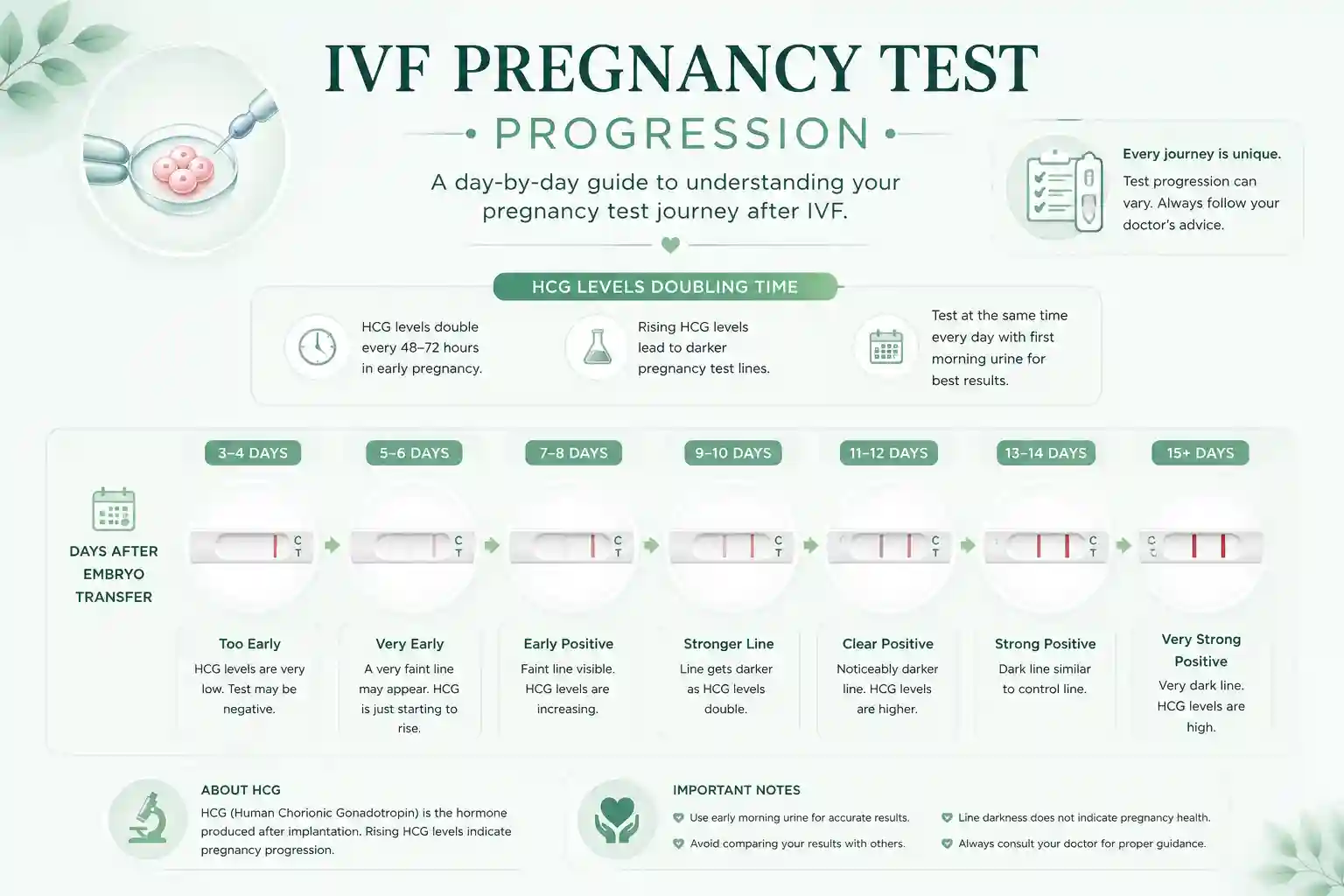
Waiting for a pregnancy test after In Vitro Fertilization (IVF) can be one of the most emotional parts of the fertility journey. Many patients track their IVF pregnancy test progression by taking home pregnancy tests over several days to observe whether the test line becomes darker as pregnancy hormones increase.
An IVF pregnancy test progression can provide reassurance, but home pregnancy tests are not a definitive way to assess the health or viability of a pregnancy. The most reliable method for confirming pregnancy after IVF is a beta human chorionic gonadotropin (beta-hCG) blood test, followed by repeat testing and ultrasound when appropriate.
This guide explains IVF pregnancy test progression, expected timelines, how pregnancy test lines may change, and when to contact your fertility specialist.
What Is IVF Pregnancy Test Progression?
IVF pregnancy test progression refers to the gradual change in pregnancy test results after embryo transfer as hCG (human chorionic gonadotropin) levels rise.
Many patients notice:
- A faint positive line that becomes darker over several days.
- Increasing digital test sensitivity over time.
- Rising beta-hCG levels on blood tests.
However, the appearance of test lines varies depending on the brand of test, urine concentration, and the timing of testing.
When Should You Take a Pregnancy Test After IVF?
The timing depends on the type of embryo transferred.
After a Day-5 Blastocyst Transfer
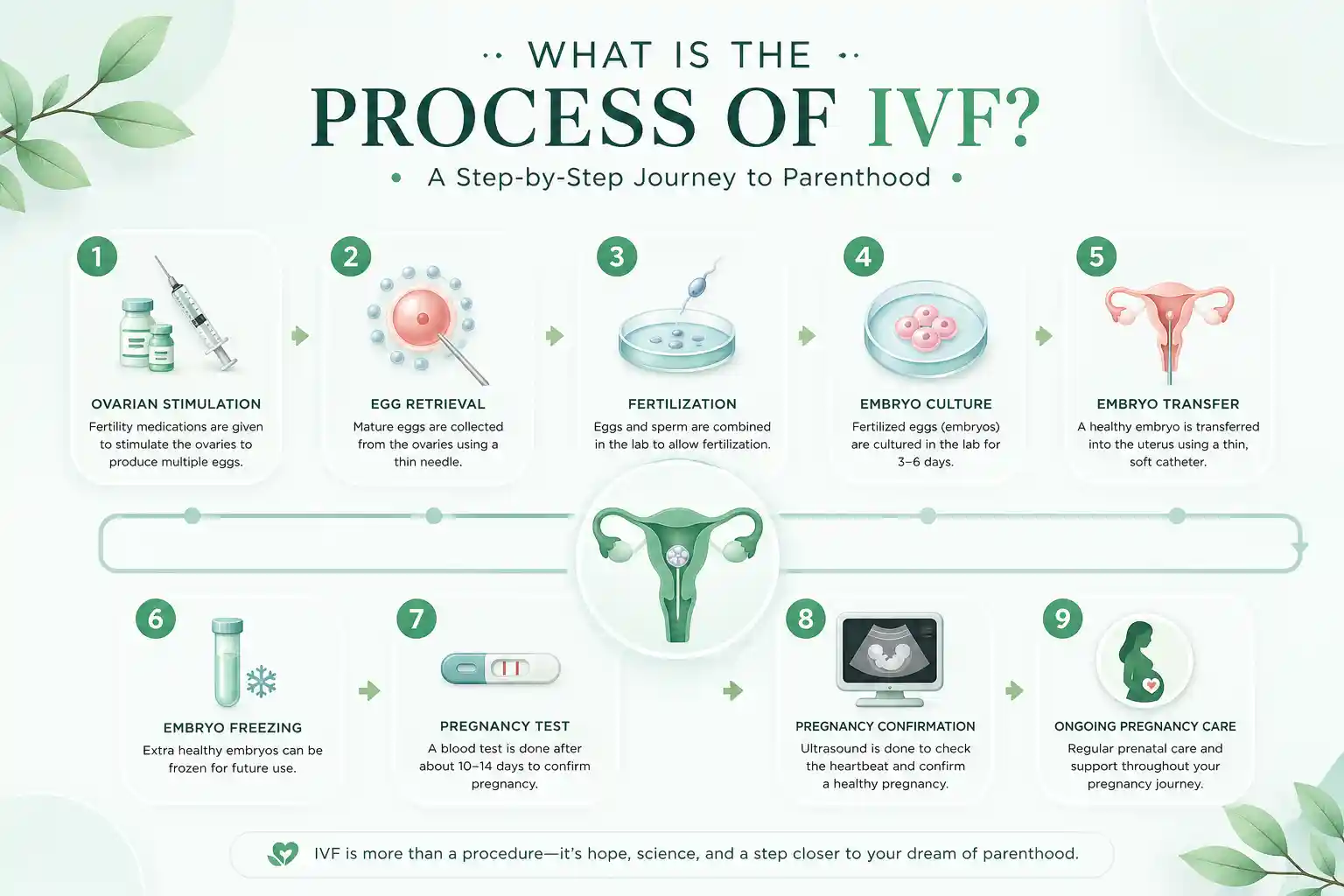
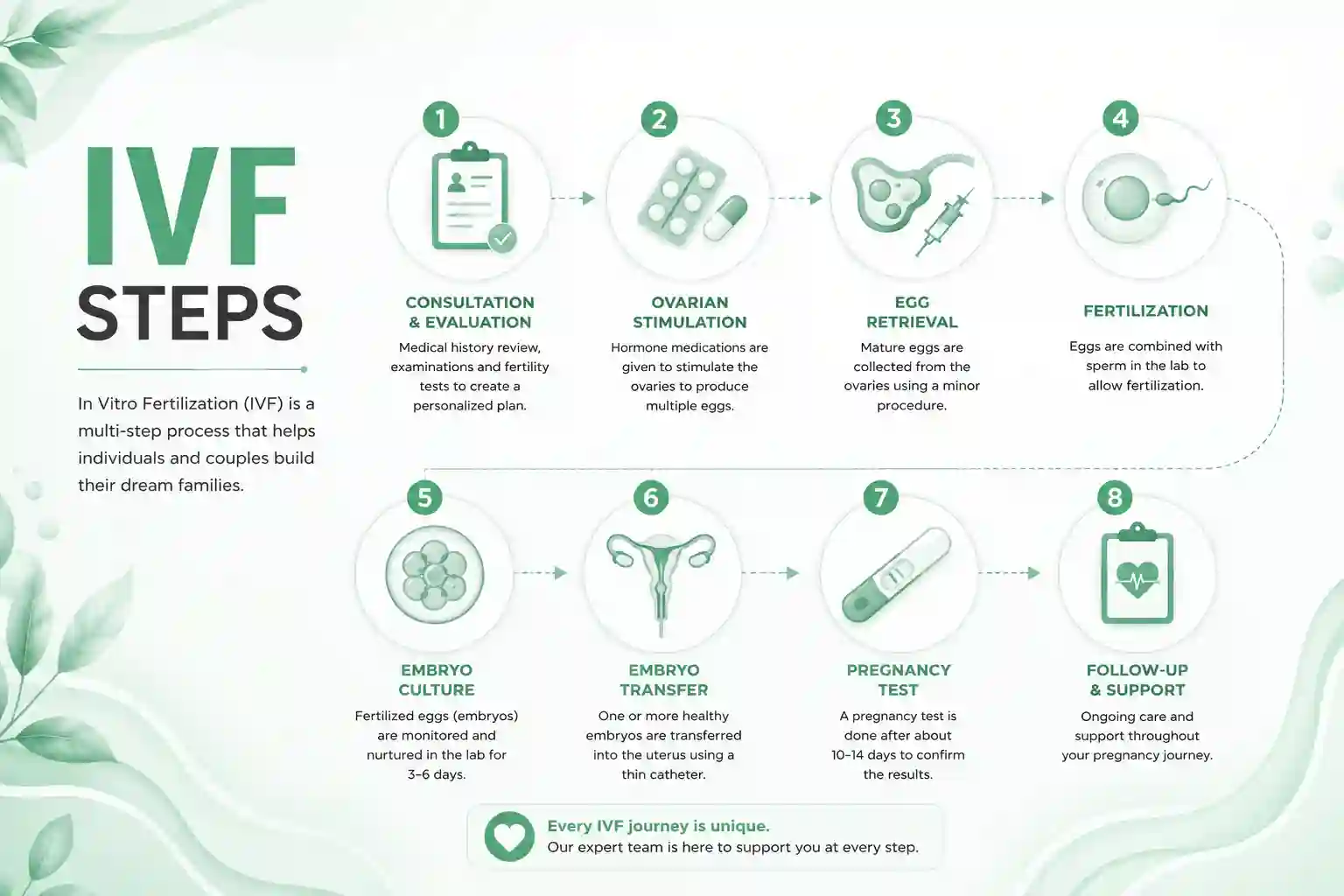
Most fertility clinics recommend a beta-hCG blood test about 9–14 days after embryo transfer.
After a Day-3 Embryo Transfer
A pregnancy blood test is commonly performed 11–14 days after embryo transfer.
Testing too early can produce misleading results because hCG levels may still be too low to detect or may be temporarily influenced by an hCG trigger injection used during treatment.
Typical IVF Pregnancy Test Progression
Although every pregnancy develops differently, a typical IVF pregnancy test progression may look like this:
| Days After Embryo Transfer | Possible Home Test Result |
| 5–7 Days | Usually too early; often negative |
| 8–9 Days | Very faint positive may appear in some pregnancies |
| 10–12 Days | Positive line may become more noticeable |
| 13–14 Days | Many successful pregnancies show a clearer positive result |
| After Blood Test | Rising beta-hCG levels help confirm pregnancy progression |
This timeline is only a general guide. Individual results can vary.
What Does a Darker Pregnancy Test Line Mean?
During an IVF pregnancy test progression, a darker line often suggests that hCG levels are increasing.
However, line darkness can also be affected by:
- Time of day
- Urine concentration
- Test sensitivity
- Manufacturing differences between test brands
For these reasons, fertility specialists rely on quantitative blood tests rather than home test line progression alone.
What If the Test Line Does Not Get Darker?
A pregnancy test line that remains the same or becomes lighter does not always indicate a problem.
Possible explanations include:
- Variations in urine concentration.
- Differences between test kits.
- Testing at different times of the day.
- Normal variation in early hCG production.
If you are concerned, follow your clinic’s schedule for beta-hCG blood testing rather than relying solely on home tests.
Beta-hCG Blood Test After IVF
A beta-hCG blood test is considered the most accurate way to evaluate early pregnancy after IVF.
Your fertility specialist may:
- Measure your initial beta-hCG level.
- Repeat the blood test after approximately 48 hours.
- Assess whether hCG is rising appropriately.
- Schedule an early ultrasound once pregnancy reaches the appropriate stage.
Blood tests provide much more reliable information than home pregnancy tests.
Benefits of Following the Recommended Testing Schedule
Following your clinic’s testing plan offers several advantages:
- More accurate pregnancy confirmation.
- Reduced confusion caused by early testing.
- Appropriate monitoring of hCG levels.
- Timely medical follow-up if needed.
- Better planning for early pregnancy care.
Risks, Side Effects, or Limitations
Tracking IVF pregnancy test progression with home tests has limitations.
These include:
- False-negative results if testing too early.
- False-positive results from residual hCG trigger medication.
- Differences in test sensitivity.
- Anxiety caused by comparing line darkness.
Home pregnancy tests should never replace medical follow-up.
Factors Affecting IVF Pregnancy Test Progression
Several factors influence IVF pregnancy test progression.
Timing of Implantation
Embryos implant at different times, affecting when hCG begins to rise.
Embryo Type
Day-5 blastocyst transfers and Day-3 embryo transfers may have different testing timelines.
Test Sensitivity
Some home pregnancy tests detect lower hCG levels than others.
Hydration
Drinking large amounts of fluid before testing can dilute urine and produce a lighter test line.
hCG Trigger Injection
Residual hCG from fertility medications may temporarily affect early pregnancy test results.
Emotional & Patient Perspective
The days between embryo transfer and the pregnancy test—often called the “two-week wait”—can feel overwhelming. Many patients check home pregnancy tests daily, hoping to see reassuring changes in their IVF pregnancy test progression.
While this is understandable, it’s important to remember that pregnancy tests are only one part of the picture. A faint line can still lead to a healthy pregnancy, and line darkness alone cannot predict pregnancy success. Following your fertility clinic’s testing schedule and relying on beta-hCG blood tests can provide the most accurate information while reducing unnecessary stress.
Tips for Monitoring IVF Pregnancy Test Progression
To make home testing more consistent:
- Test on the recommended day whenever possible.
- Use the same brand of pregnancy test each time.
- Test with first-morning urine if using home tests.
- Avoid comparing results with other people’s tests.
- Follow your fertility clinic’s instructions for beta-hCG testing.
- Contact your clinic if you have concerns or unusual symptoms.
When to Contact Your Fertility Specialist
Seek medical advice if you experience:
- Heavy vaginal bleeding.
- Severe abdominal pain.
- Persistent dizziness.
- Severe pelvic pain.
- Difficulty breathing.
- Any symptoms that concern you.
Your fertility team can determine whether additional testing or evaluation is needed.
IVF pregnancy test progression can provide early signs that pregnancy hormones are increasing, but home pregnancy tests have important limitations. The timing and darkness of test lines vary between individuals and do not reliably indicate pregnancy health or viability. A beta-hCG blood test, followed by repeat testing and early ultrasound when appropriate, remains the most accurate way to confirm and monitor pregnancy after IVF. Following your fertility specialist’s guidance can help ensure appropriate care during this important stage of your fertility journey.
FAQs About IVF Pregnancy Test Progression
1. What is IVF pregnancy test progression?
IVF pregnancy test progression refers to the way pregnancy test results change over time after embryo transfer as hCG levels rise.
2. When should I take a pregnancy test after IVF?
Most fertility clinics recommend a beta-hCG blood test about 9–14 days after a Day-5 embryo transfer or 11–14 days after a Day-3 embryo transfer.
3. Does a darker pregnancy test line mean the pregnancy is healthy?
Not necessarily. A darker line often reflects increasing hCG levels, but it cannot confirm pregnancy viability. Blood tests and ultrasound provide more reliable information.
4. Can I get a false-positive pregnancy test after IVF?
Yes. If you received an hCG trigger injection, residual medication may temporarily produce a positive result if you test too early.
5. Why is my pregnancy test still faint after IVF?
A faint positive may occur because implantation happened later, hCG levels are still low, urine is diluted, or the test has a different sensitivity. Follow-up blood testing is the most accurate way to assess pregnancy.
6. Should I test every day after embryo transfer?
Daily home testing is not medically necessary and may increase anxiety. Following your fertility clinic’s recommended testing schedule is generally the best approach.
7. What is the most accurate pregnancy test after IVF?
A quantitative beta-hCG blood test performed at your fertility clinic is the most accurate method for confirming and monitoring pregnancy after IVF.