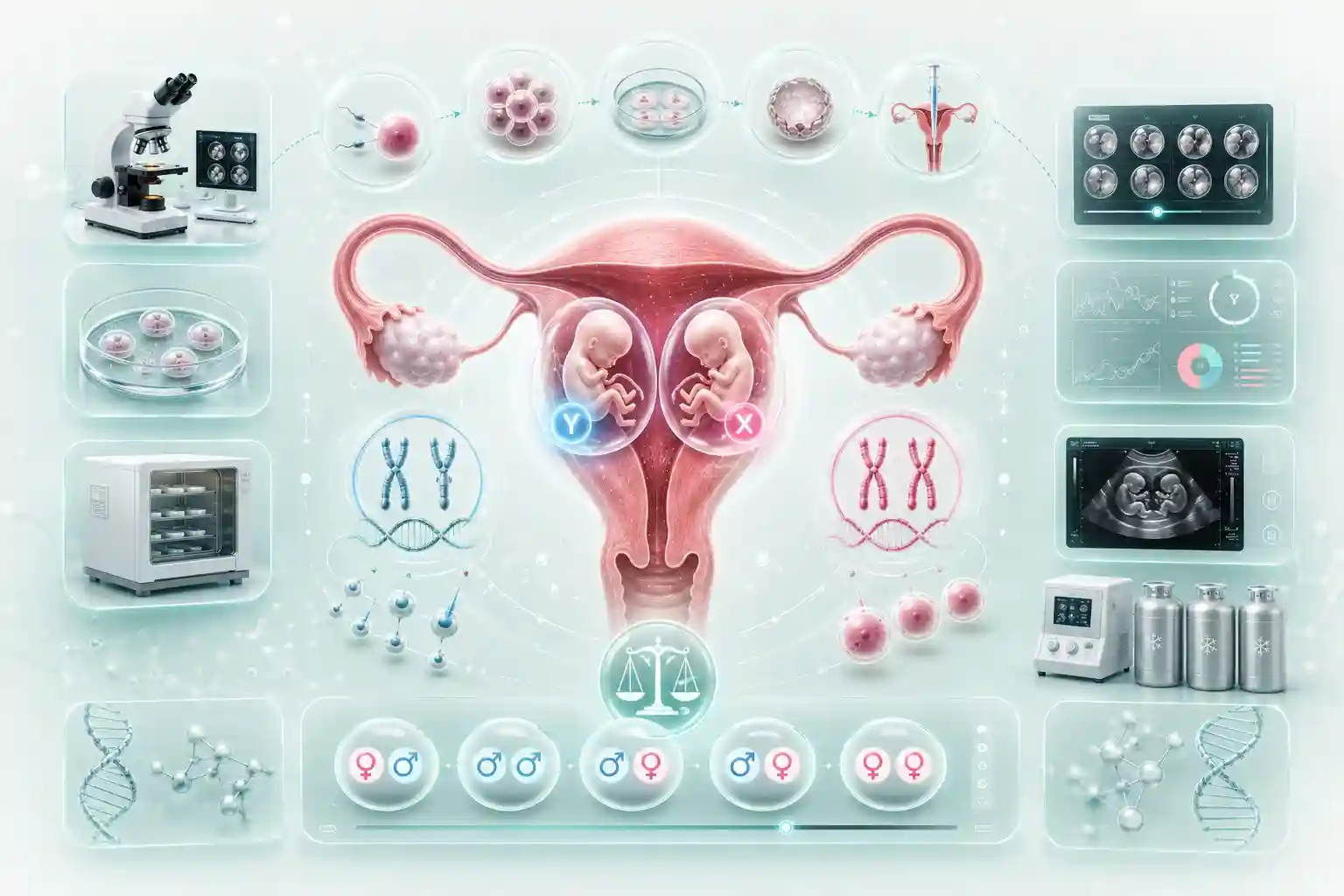
Many couples considering In Vitro Fertilization (IVF) wonder about the IVF twins chances of boy and girl. It’s a common question, especially for those hoping to have twins or curious about whether IVF can influence a baby’s gender. While IVF has changed the way infertility is treated, it does not naturally guarantee the birth of a boy, a girl, or boy-girl twins.
The possibility of having one boy and one girl through IVF depends on several biological and medical factors, including the number of embryos transferred, whether both embryos implant successfully, and the chromosomes of each embryo. In this article, we’ll explain the IVF twins chances of boy and girl, how baby sex is determined, the role of genetic testing, and what you should realistically expect from IVF treatment.
Can IVF Increase the Chances of Twins?
Compared with natural conception, IVF may increase the likelihood of a twin pregnancy in some situations. This usually happens when two embryos are transferred and both implant successfully in the uterus.
However, modern fertility practice increasingly recommends Single Embryo Transfer (SET) for many patients. SET aims to achieve a healthy singleton pregnancy while reducing the risks associated with multiple pregnancies.
The number of embryos transferred depends on several factors, including:
- Age of the woman
- Embryo quality
- Previous IVF history
- Medical condition
- Recommendations of the fertility specialist
Although IVF can increase the possibility of twins under certain circumstances, it does not automatically increase the IVF twins chances of boy and girl.
How Is a Baby’s Sex Determined?
The baby’s biological sex is determined at fertilization.
- The mother’s egg always contributes an X chromosome.
- The father’s sperm contributes either an X chromosome or a Y chromosome.
This means:
- XX = Girl
- XY = Boy
Whether conception occurs naturally or through IVF, the same biological process determines the baby’s chromosomal sex.
Can IVF Naturally Increase the Chances of Having One Boy and One Girl Twins?
No.
IVF itself does not naturally increase the chance of having one boy and one girl twins.
If two embryos are transferred without selecting embryos based on sex:
- Both embryos could be boys.
- Both embryos could be girls.
- One could be a boy and the other a girl.
Each embryo develops independently, and IVF alone does not influence whether an embryo will be male or female.
How Can Boy-Girl Twins Occur During IVF?
Boy-girl twins are possible only when:
- Two separate embryos implant successfully.
- One embryo has XX chromosomes (girl).
- The other embryo has XY chromosomes (boy).
These are called fraternal (dizygotic) twins because they develop from two different embryos.
In contrast, identical twins develop when one embryo splits after fertilization. Since they come from the same embryo, identical twins almost always have the same chromosomal sex.
What Is PGT and Does It Identify the Sex of Embryos?
Preimplantation Genetic Testing (PGT) is a laboratory procedure performed on embryos before transfer.
PGT is primarily used to:
- Screen for certain chromosomal abnormalities
- Help identify embryos with the correct number of chromosomes
- Reduce the risk of transferring embryos with specific genetic conditions in selected situations
Because PGT analyzes chromosomes, it can also identify whether an embryo is XX or XY.
However, using PGT solely for choosing a baby’s sex is not permitted in many countries unless there is a medical reason, such as reducing the risk of certain sex-linked genetic disorders.
Always follow the laws and regulations in your country and the advice of your fertility specialist.
What Are the Chances of Having Boy-Girl Twins with IVF?
There is no fixed percentage that applies to everyone.
The likelihood depends on factors such as:
- The number of embryos transferred
- Whether both embryos implant
- The chromosomal sex of each embryo
- Maternal age
- Embryo quality
- Overall reproductive health
If two embryos of different chromosomal sexes are transferred and both implant successfully, a boy and a girl twin pregnancy is possible. However, IVF itself does not increase the natural probability that one embryo will be male and the other female.
Factors That Influence Twin Pregnancy in IVF
Several factors affect whether twins occur during IVF.
Number of Embryos Transferred
Transferring more than one embryo increases the chance of twins but also increases the risk of pregnancy complications.
Embryo Quality
High-quality embryos generally have a better chance of implantation, although implantation cannot be guaranteed.
Maternal Age
Age influences egg quality, embryo quality, and overall IVF success rates.
Uterine Health
A healthy uterus supports implantation and pregnancy, but many individual factors contribute to treatment outcomes.
Fertility Clinic Protocol
Many clinics now recommend transferring a single embryo whenever appropriate to reduce the risks associated with twin pregnancies.
Is Having Twins Through IVF Riskier?
Twin pregnancies are generally considered higher-risk pregnancies than singleton pregnancies.
Possible risks include:
- Premature birth
- Low birth weight
- Gestational diabetes
- Pregnancy-induced hypertension
- Preeclampsia
- Increased likelihood of cesarean delivery
Because of these risks, fertility specialists carefully consider the number of embryos transferred during IVF.
Can IVF Guarantee a Boy or Girl?
No.
IVF cannot naturally guarantee whether you will have a boy or a girl.
Although PGT can identify an embryo’s chromosomal sex, embryo selection based solely on sex is legally restricted or prohibited in many countries and is generally reserved for specific medical indications where permitted.
Always discuss available options with your fertility specialist.
Myths vs Facts
Myth: IVF always produces twins.
Fact: Most IVF pregnancies result in a single baby, especially with Single Embryo Transfer.
Myth: IVF naturally increases the chance of having a boy.
Fact: There is no reliable evidence that IVF itself favors male or female embryos.
Myth: IVF can guarantee boy-girl twins.
Fact: IVF cannot naturally guarantee boy-girl twins.
Myth: Every embryo transfer results in pregnancy.
Fact: Successful implantation depends on many biological and medical factors.
Myth: Twin pregnancy is always better than a single pregnancy.
Fact: While many families welcome twins, twin pregnancies generally carry higher medical risks and require closer monitoring.
Tips for Couples Considering IVF
If you’re planning IVF treatment:
- Maintain a healthy body weight.
- Eat a balanced, nutritious diet.
- Avoid smoking and alcohol.
- Take medications only as prescribed.
- Attend all scheduled appointments.
- Ask your fertility specialist about the number of embryos recommended for transfer.
- Understand the potential risks and benefits of twin pregnancy before treatment begins.
When Should You Speak With a Fertility Specialist?
Consult a fertility specialist if you:
- Are planning IVF treatment
- Have experienced repeated IVF failure
- Have recurrent pregnancy loss
- Want to understand embryo transfer options
- Have questions about PGT or genetic testing
- Need personalized guidance based on your fertility history
A fertility specialist can explain which treatment options are appropriate for your individual circumstances.
In summary, the IVF twins chances of boy and girl depend on whether two embryos implant successfully and on the chromosomal sex of each embryo. IVF itself does not naturally increase or guarantee the chances of having one boy and one girl twins. The safest approach is to follow your fertility specialist’s recommendations and focus on a healthy pregnancy rather than a specific gender outcome.
Frequently Asked Questions (FAQs)
1. What are the IVF twins chances of boy and girl?
The IVF twins chances of boy and girl depend on the number of embryos transferred, whether both implant successfully, and the chromosomal sex of each embryo. IVF itself does not naturally increase or guarantee the chances of having one boy and one girl twins.
2. Can IVF guarantee the sex of a baby?
No. IVF alone cannot guarantee a baby’s sex. In some cases, PGT can identify the chromosomal sex of embryos, but its use for sex selection is legally restricted in many countries.
3. Are boy-girl twins identical?
No. Boy-girl twins are fraternal (dizygotic) twins that develop from two separate embryos.
4. Does transferring two embryos always result in twins?
No. One embryo may implant, both may implant, or neither may implant.
5. Is twin pregnancy common after IVF?
The chance depends on factors such as the number of embryos transferred, maternal age, embryo quality, and clinic protocols. Many clinics now favor single embryo transfer to reduce multiple pregnancy risks.
6. Is twin pregnancy riskier than a single pregnancy?
Yes. Twin pregnancies generally have a higher risk of complications such as premature birth, low birth weight, and pregnancy-related hypertension.
7. Can PGT determine whether an embryo is male or female?
Yes. PGT can identify an embryo’s chromosomal sex as part of chromosome analysis, although its use for non-medical sex selection may not be permitted depending on local laws.
8. Should I request two embryos to increase my chances of twins?
Not necessarily. The number of embryos transferred should always be decided with your fertility specialist after considering your age, embryo quality, medical history, and the potential risks of multiple pregnancy.