After undergoing intrauterine insemination (IUI), one of the biggest questions during the two-week wait is, “What is the earliest positive pregnancy test after IUI?” It’s understandable to want answers as soon as possible, but testing too early can lead to confusion, false-negative results, or even false-positive results if a trigger injection containing hCG was used.
The earliest positive pregnancy test after IUI depends on several factors, including when ovulation occurred, when implantation took place, and how quickly your body begins producing the pregnancy hormone human chorionic gonadotropin (hCG). This guide explains the pregnancy timeline, when a positive test may be possible, and why waiting for the recommended testing day provides the most reliable results.
What Is the Earliest Positive Pregnancy Test After IUI?
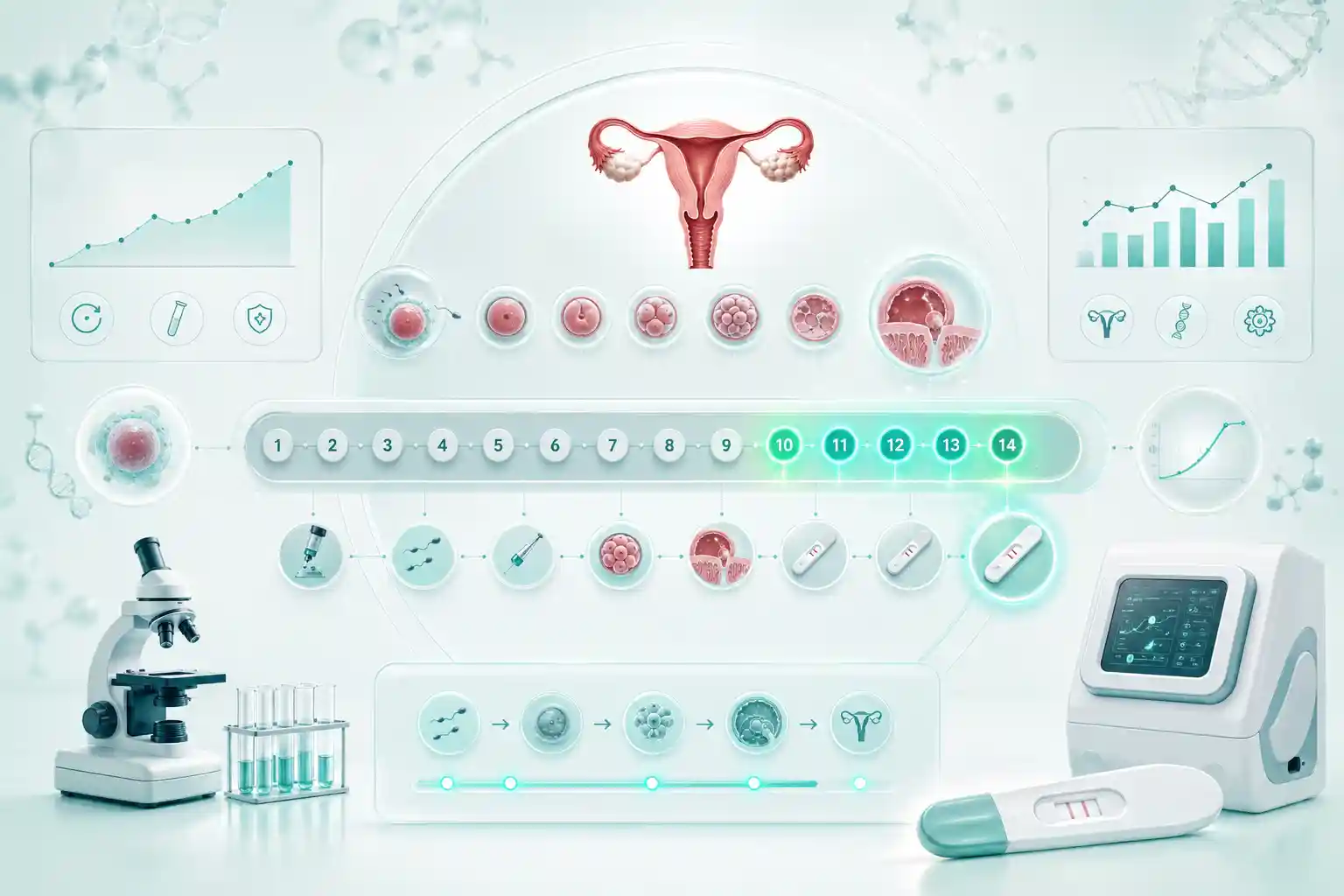
The earliest positive pregnancy test after IUI may occur around 10–12 days after the procedure for some people using highly sensitive home pregnancy tests.
However, this varies because:
- Ovulation does not occur at exactly the same time for everyone.
- Implantation timing differs from one pregnancy to another.
- hCG production begins only after implantation.
- hCG levels rise at different rates in different pregnancies.
Because of these differences, many pregnancies are not detectable this early.
Why Does Timing Matter?
Pregnancy tests detect human chorionic gonadotropin (hCG), a hormone produced after the embryo implants into the uterine lining.
Testing before enough hCG has been produced may result in:
- False-negative results
- Unnecessary anxiety
- Repeat testing over several days
If you received an hCG trigger injection before IUI, testing too soon may also detect the medication instead of a pregnancy, causing a false-positive result.
How Does Pregnancy Develop After IUI?
Understanding the biological timeline explains why pregnancy testing requires patience.
Step 1: Ovulation
The egg is released naturally or after a trigger injection.
Step 2: Fertilization
Prepared sperm may fertilize the egg inside the fallopian tube.
Step 3: Embryo Development
The fertilized egg divides into multiple cells while traveling toward the uterus.
Step 4: Implantation
Several days after fertilization, the embryo may implant into the uterine lining.
Step 5: hCG Production
Only after implantation does the body begin producing hCG, the hormone detected by pregnancy tests.
Pregnancy Test Timeline After IUI
Although every pregnancy is different, a typical timeline looks like this:
Days 1–5 After IUI
- Fertilization may occur.
- The embryo develops.
- Pregnancy tests will not detect pregnancy.
Days 6–10 After IUI
- Implantation may begin.
- hCG production starts only after implantation.
Most pregnancy tests are still negative during this stage.
Days 10–12 After IUI
Some highly sensitive home pregnancy tests may detect pregnancy in certain women.
However, many healthy pregnancies still produce negative results during this period.
Days 13–14 After IUI
This is when pregnancy testing becomes much more reliable.
Most fertility specialists recommend testing about 14 days after IUI.
Beyond 14 Days
If pregnancy has occurred, hCG levels usually continue rising, making testing more accurate.
Factors That Affect the Earliest Positive Pregnancy Test After IUI
Several factors influence when pregnancy becomes detectable.
Implantation Timing
Earlier implantation may lead to an earlier positive test, while later implantation delays hCG production.
hCG Levels
Every pregnancy produces hCG at a slightly different rate.
Trigger Injection
If an hCG trigger shot was used, residual medication may remain in the body for several days and interfere with early testing.
Test Sensitivity
Some home pregnancy tests detect lower hCG levels than others.
Individual Variation
Each person’s hormonal response is unique, so testing timelines differ.
Benefits of Waiting Until the Recommended Testing Day
Waiting until your fertility specialist’s recommended testing date can:
- Reduce false-negative results.
- Reduce false-positive results from trigger injections.
- Decrease unnecessary emotional stress.
- Provide more reliable information.
- Avoid repeated testing.
Although waiting can be difficult, it often prevents confusion.
Risks, Side Effects, or Limitations
Pregnancy symptoms are not reliable indicators of a positive pregnancy test.
Many symptoms—including:
- Breast tenderness
- Fatigue
- Mild cramping
- Bloating
- Mood changes
may be caused by progesterone supplements or fertility medications rather than pregnancy.
Only a properly timed pregnancy test can confirm pregnancy.
Emotional & Patient Perspective
The two-week wait after IUI is often emotionally challenging.
Many people experience:
- Hope
- Excitement
- Anxiety
- Frequent symptom checking
- The temptation to test early
Remember that a negative test at 10 or 11 days after IUI does not necessarily mean treatment has failed. Many healthy pregnancies are not detectable until several days later.
Tips for Pregnancy Testing After IUI
To obtain the most reliable result:
- Follow your fertility specialist’s instructions.
- Wait until the recommended testing day whenever possible.
- Use the first morning urine if taking a home test.
- Avoid repeated testing every day.
- Ask your fertility clinic whether a blood hCG test is recommended.
- Continue prescribed medications unless instructed otherwise.
When to See a Fertility Specialist
Contact your fertility clinic if:
- Your pregnancy test is positive.
- Your menstrual period is significantly delayed despite repeated negative tests.
- You experience severe abdominal pain.
- You have heavy vaginal bleeding.
- You develop fever or significant abdominal swelling.
- You have questions about your pregnancy test results.
Your fertility specialist can determine whether additional testing or follow-up is needed.
The earliest positive pregnancy test after IUI may occur around 10–12 days after the procedure in some pregnancies, but many women will not receive an accurate positive result until 13–14 days after IUI or later. Implantation timing, hCG production, trigger injections, and individual hormonal differences all influence when pregnancy becomes detectable. For the most reliable result and to reduce unnecessary stress, it is generally best to follow your fertility specialist’s recommendation and wait until the appropriate testing day.
FAQs About the Earliest Positive Pregnancy Test After IUI
1. What is the earliest positive pregnancy test after IUI?
Some highly sensitive home pregnancy tests may detect pregnancy around 10–12 days after IUI, but many pregnancies are not detectable until later.
2. Is testing 10 days after IUI too early?
For many people, yes. A negative result at 10 days after IUI does not necessarily mean you are not pregnant.
3. When do fertility specialists usually recommend pregnancy testing?
Most fertility specialists recommend testing approximately 14 days after IUI for the most reliable result.
4. Can the trigger injection cause a false-positive pregnancy test?
Yes. If your trigger injection contained hCG, testing too early may detect the medication instead of a pregnancy.
5. Can implantation timing affect when I get a positive pregnancy test?
Yes. Earlier implantation may result in an earlier positive test, while later implantation delays hCG production.
6. Should I repeat a negative pregnancy test?
If you tested early, your fertility specialist may recommend repeating the test after a few days or performing a blood hCG test.
7. What should I do after a positive pregnancy test?
Contact your fertility clinic to arrange follow-up care, which may include a blood hCG test and an early pregnancy ultrasound.