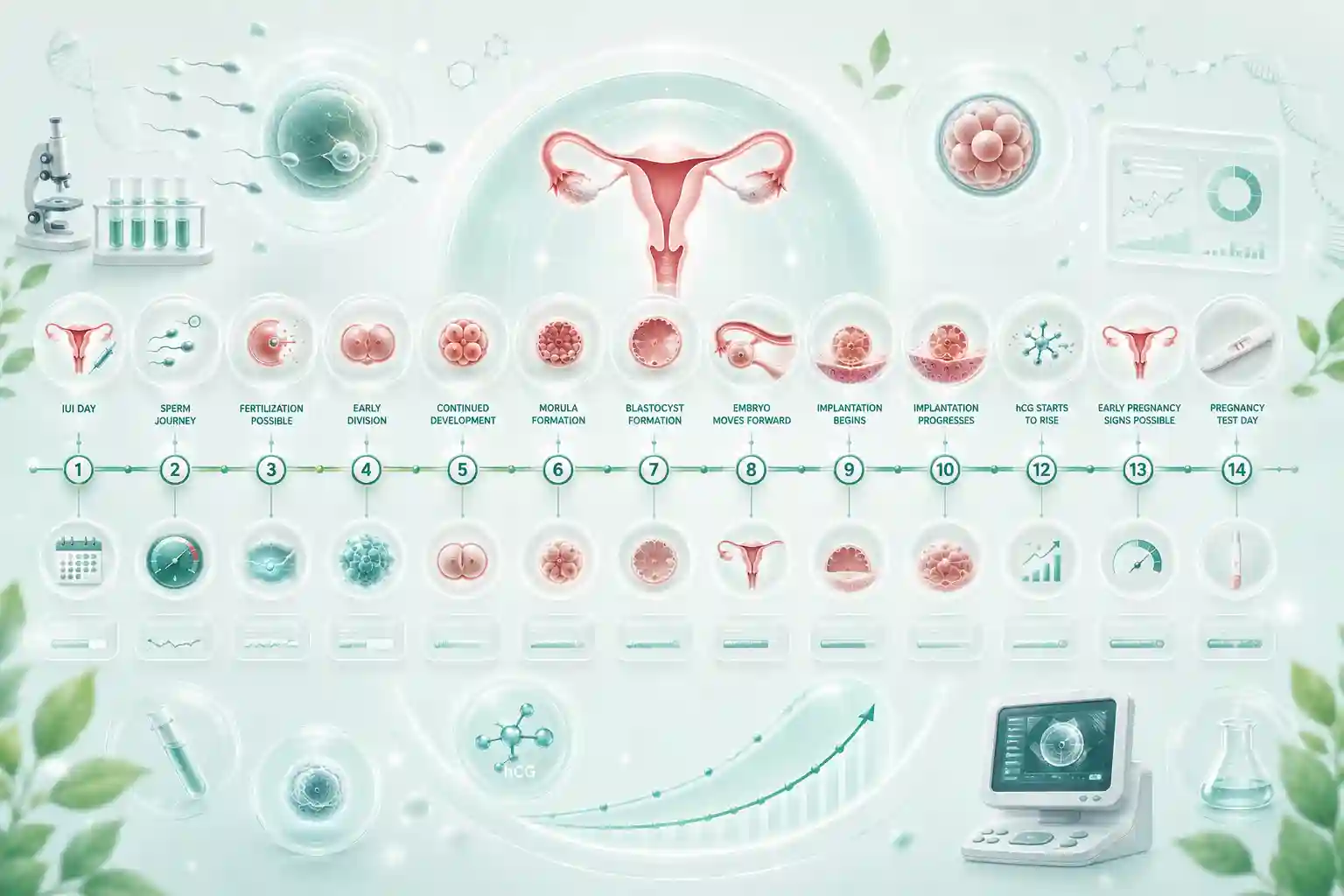
One of the most common questions after fertility treatment is “What happens after IUI day by day?” The two-week wait between intrauterine insemination (IUI) and your pregnancy test can feel long and emotionally challenging. During this time, many people closely monitor their bodies for signs of pregnancy and wonder what is happening inside the uterus each day.
While every pregnancy develops differently, there is a general biological timeline that explains what typically happens after IUI. Understanding this process can help you manage expectations, reduce unnecessary anxiety, and know when symptoms are considered normal.
What Happens After IUI?
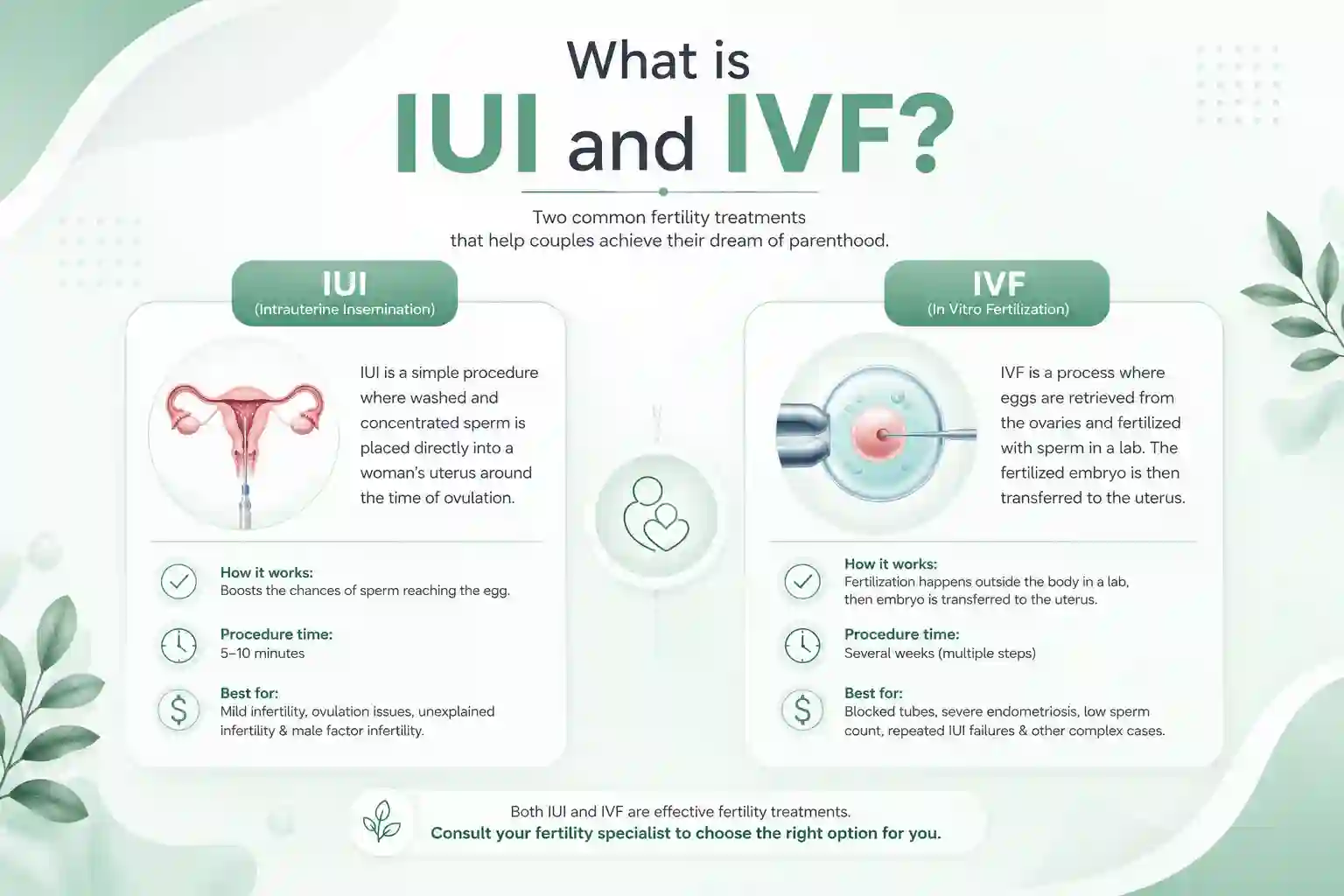
After an IUI procedure, specially prepared sperm is placed directly into the uterus around the time of ovulation.
If conditions are favorable:
- The sperm travels toward the fallopian tube.
- Fertilization may occur.
- The embryo develops while traveling to the uterus.
- Implantation may take place.
- Pregnancy hormones begin to rise.
Each stage occurs over several days, although the exact timing varies from person to person.
Why Is It Helpful to Understand the Day-by-Day Timeline?
Knowing what happens after IUI day by day can help you:
- Understand normal biological changes.
- Reduce unnecessary stress.
- Avoid testing too early.
- Recognize common symptoms.
- Know when to contact your fertility specialist.
Remember that symptoms—or the absence of symptoms—cannot reliably predict whether IUI has been successful.
What Happens After IUI Day by Day?
Day 1 After IUI
The insemination has been completed.
During the first 24 hours:
- Sperm begin moving toward the fallopian tubes.
- Fertilization may occur if an egg is available.
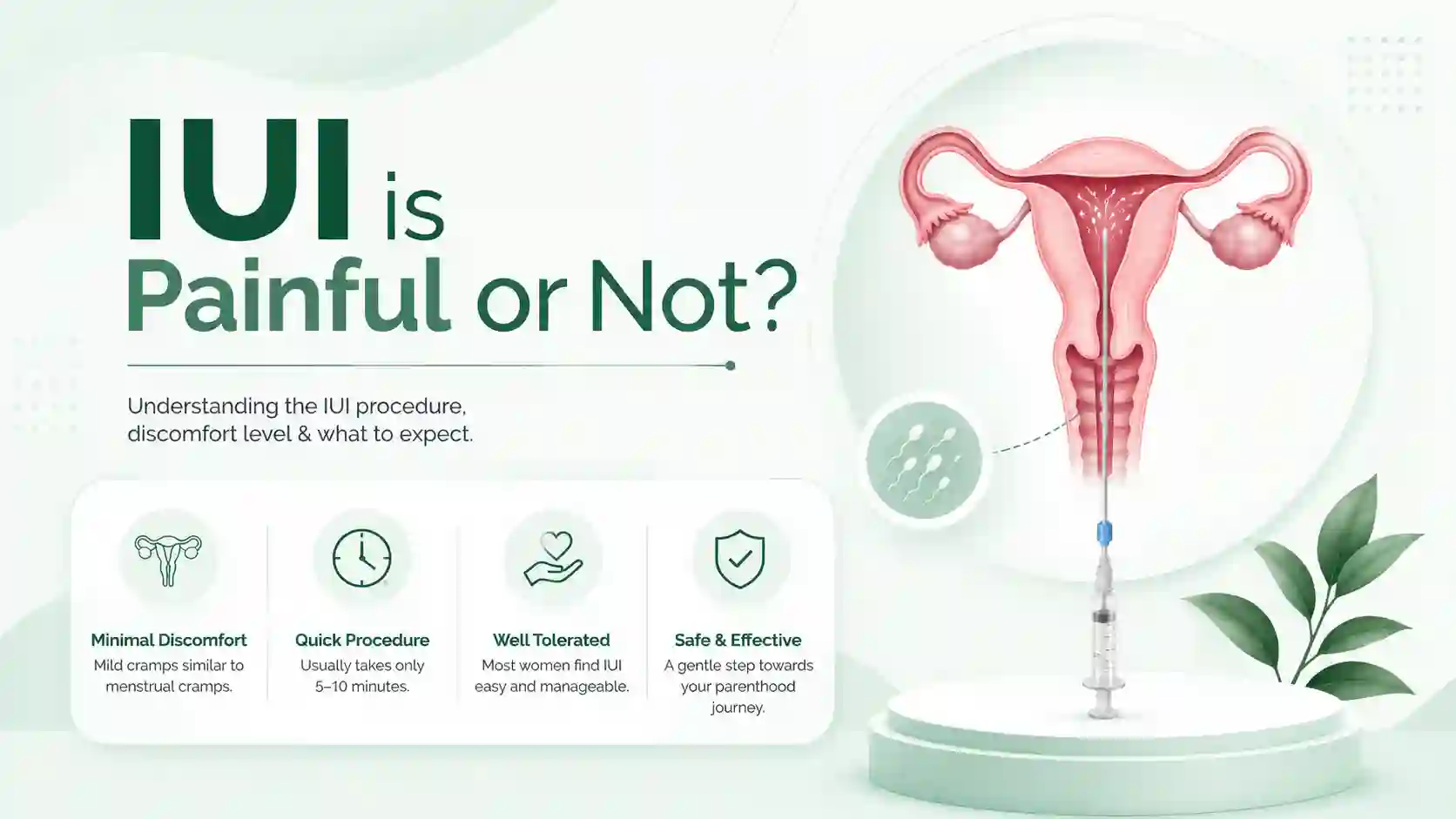
- Some women notice mild cramping or light spotting from the procedure.
These symptoms are usually temporary.
Days 2–3 After IUI
If fertilization occurs:
- The fertilized egg begins dividing into multiple cells.
- The developing embryo continues traveling through the fallopian tube.
Most people notice few or no symptoms during this stage.
Days 4–5 After IUI
The embryo continues developing as it approaches the uterus.
Possible symptoms include:
- Mild bloating
- Fatigue
- Breast tenderness
These symptoms are often caused by progesterone or fertility medications rather than pregnancy.
Days 6–8 After IUI
For many pregnancies, implantation may begin during this period.
Some women report:
- Mild cramping
- Light pink or brown spotting
- Increased fatigue
However, many successful pregnancies occur without implantation symptoms.
Days 9–10 After IUI
If implantation has occurred:
- The body begins producing human chorionic gonadotropin (hCG).
- Hormone levels are usually still low.
Possible symptoms include:
- Breast tenderness
- Mild bloating
- Fatigue
- Mood changes
Many people still have no noticeable symptoms.
Days 11–12 After IUI
Pregnancy hormone levels continue increasing if implantation has occurred.
Some women notice:
- Frequent urination
- Mild nausea
- Heightened sense of smell
- Increased vaginal discharge
These symptoms vary widely.
Days 13–14 After IUI
By this stage:
- hCG levels may be high enough for pregnancy testing.
- Most fertility specialists recommend taking a blood or urine pregnancy test around 14 days after IUI.
Testing earlier can produce false-negative or false-positive results.
Common Symptoms During the Two-Week Wait
Some women experience:
- Mild cramping
- Breast tenderness
- Fatigue
- Bloating
- Light spotting
- Mood changes
- Increased vaginal discharge
- Mild nausea
Others experience no symptoms at all and still have successful pregnancies.
Benefits of Understanding the Timeline
Knowing what typically happens after IUI can help you:
- Set realistic expectations.
- Reduce unnecessary anxiety.
- Avoid comparing your experience with others.
- Better understand your fertility specialist’s recommendations.
- Feel more prepared during the two-week wait.
Risks, Side Effects, or Limitations
Symptoms after IUI are not reliable indicators of pregnancy.
Many symptoms result from:
- Progesterone supplements
- Ovulation trigger injections
- Natural hormonal changes
- Premenstrual symptoms
- Emotional stress
For this reason, only a pregnancy test can confirm whether IUI has been successful.
Factors Affecting Pregnancy After IUI
Several important factors influence treatment success.
Female Age
Age affects egg quality and ovarian reserve.
Ovulation Timing
Accurate timing is essential for fertilization.
Sperm Quality
Healthy sperm count, motility, and morphology improve the likelihood of conception.
Cause of Infertility
Different fertility diagnoses respond differently to IUI.
Overall Health
Healthy lifestyle habits support reproductive health during treatment.
Emotional & Patient Perspective
The two-week wait is often one of the most emotionally challenging parts of fertility treatment.
Many patients experience:
- Hope
- Anxiety
- Constant symptom checking
- Fear of disappointment
- Uncertainty
Try to remember that every pregnancy develops differently. Some successful pregnancies produce early symptoms, while others do not.
Focusing on self-care instead of daily symptom analysis can make this period easier to manage.
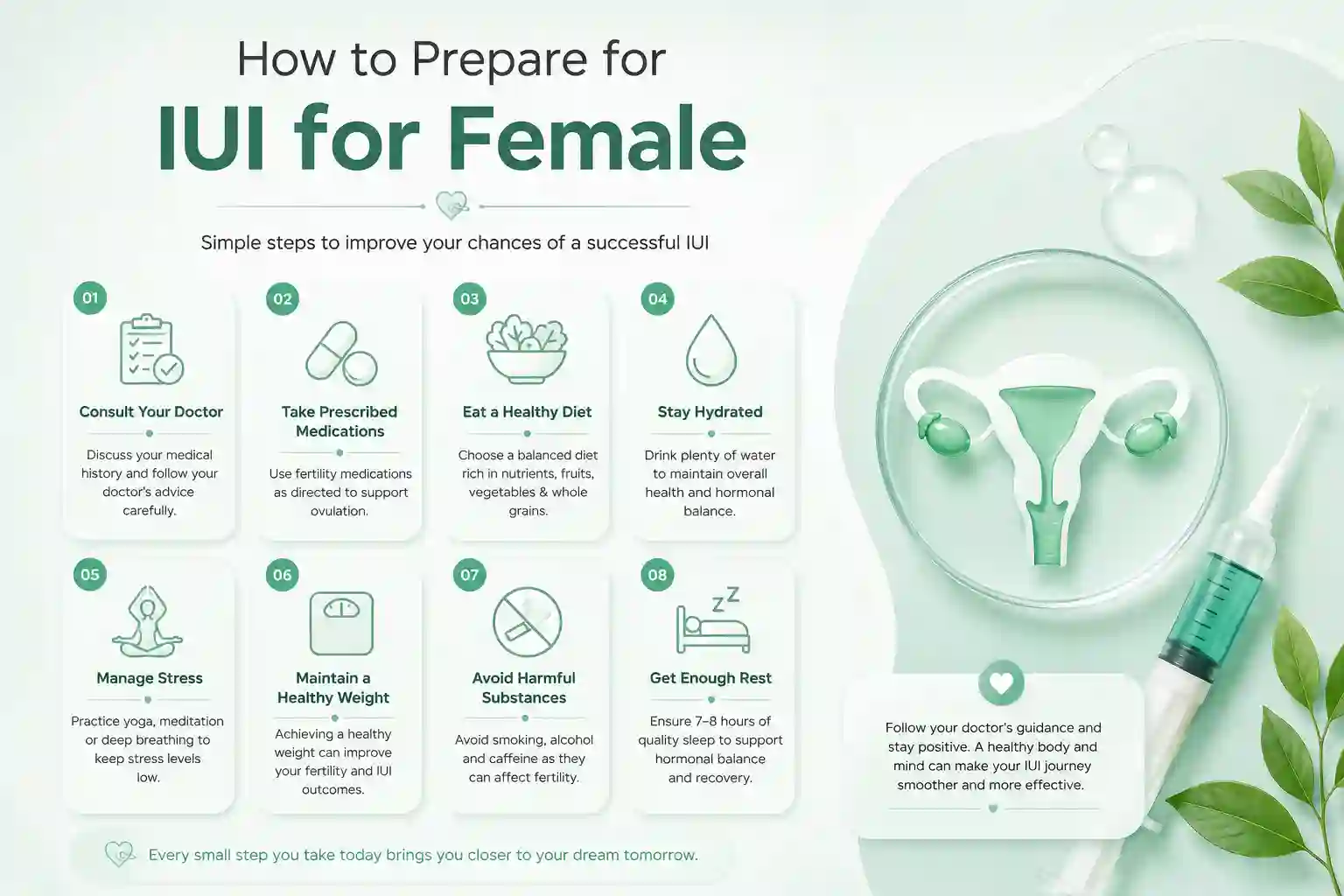
Tips During the Two-Week Wait
After IUI:
- Continue medications exactly as prescribed.
- Eat a healthy, balanced diet.
- Stay hydrated.
- Get adequate sleep.
- Continue light daily activities unless advised otherwise.
- Avoid smoking and alcohol.
- Resist taking early pregnancy tests.
- Follow all recommendations from your fertility specialist.
When to See a Fertility Specialist
Contact your fertility specialist if you experience:
- Severe abdominal pain
- Heavy vaginal bleeding
- Fever
- Persistent vomiting
- Difficulty breathing
- Significant abdominal swelling
- Any symptoms that concern you
Prompt evaluation helps identify uncommon complications.
Understanding what happens after IUI day by day can help reduce uncertainty during the two-week wait. From fertilization and embryo development to implantation and rising pregnancy hormones, each stage follows a natural biological process. Mild cramping, fatigue, breast tenderness, bloating, or even no symptoms at all can all be normal. Because early symptoms vary widely and may also be caused by fertility medications, the most reliable way to confirm pregnancy is to wait until the recommended testing day and follow your fertility specialist’s guidance.
FAQs About What Happens After IUI Day by Day
1. What happens on the first day after IUI?
Sperm begin traveling toward the fallopian tubes, where fertilization may occur if an egg is present. Mild cramping or light spotting from the procedure is also possible.
2. When does implantation usually happen after IUI?
Implantation often occurs several days after fertilization, commonly around the second week after IUI, although the exact timing varies from person to person.
3. Is it normal to have no symptoms after IUI?
Yes. Many successful pregnancies occur without noticeable symptoms during the two-week wait.
4. Can I take a pregnancy test before 14 days after IUI?
Testing too early may produce inaccurate results. Most fertility specialists recommend waiting about 14 days after IUI.
5. Is mild cramping after IUI normal?
Yes. Mild cramping may occur because of the procedure, implantation, or hormonal changes.
6. Can fertility medications cause pregnancy-like symptoms?
Yes. Progesterone supplements and ovulation medications commonly cause bloating, breast tenderness, fatigue, and mood changes.
7. When should I contact my fertility clinic after IUI?
Seek medical advice if you experience severe abdominal pain, heavy bleeding, fever, persistent vomiting, significant abdominal swelling, or any symptoms that concern you.