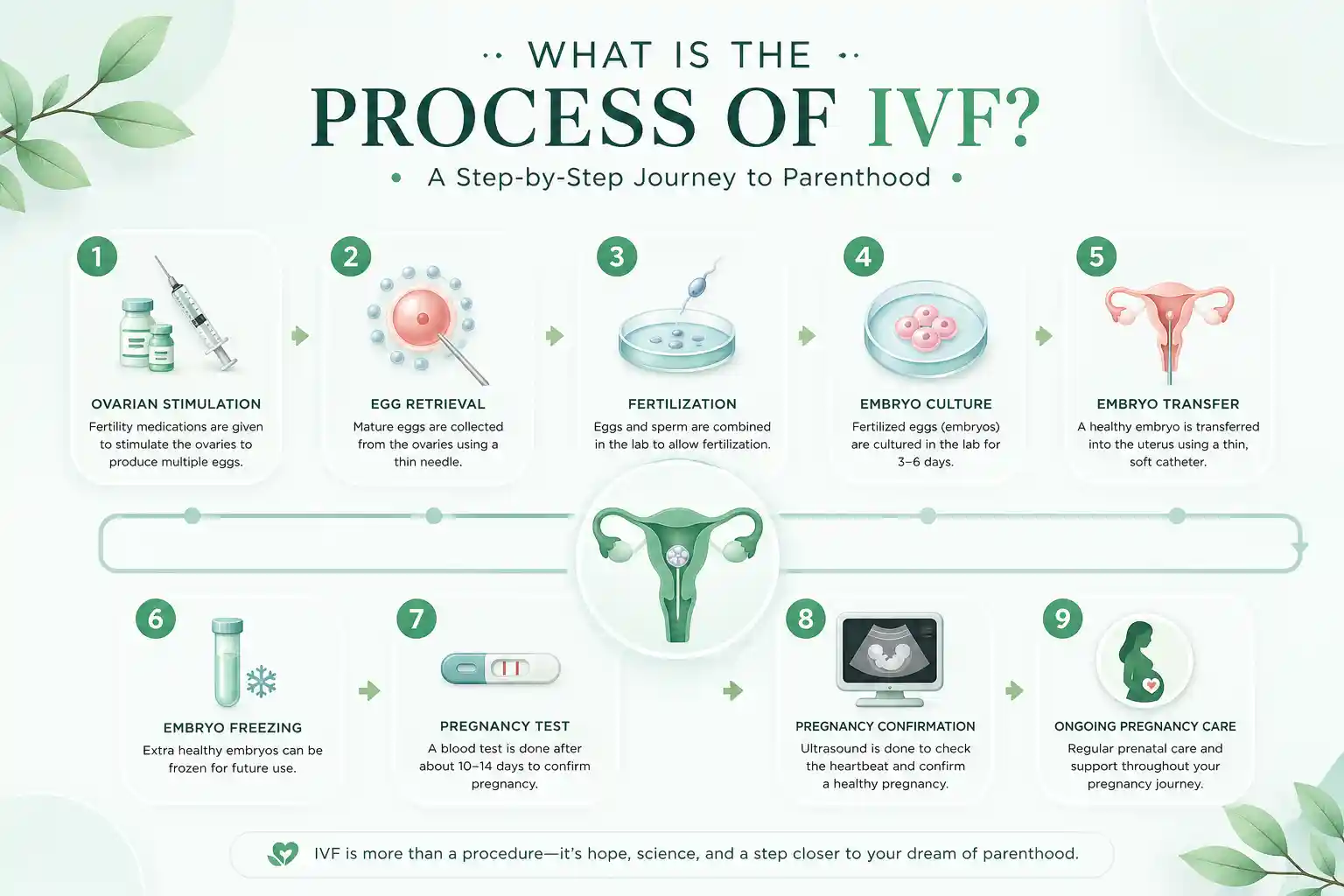
If you’re considering fertility treatment, you may be wondering, what is the process of IVF? In Vitro Fertilization (IVF) is one of the most widely used assisted reproductive technologies (ART) and involves a series of carefully coordinated steps to help achieve pregnancy.
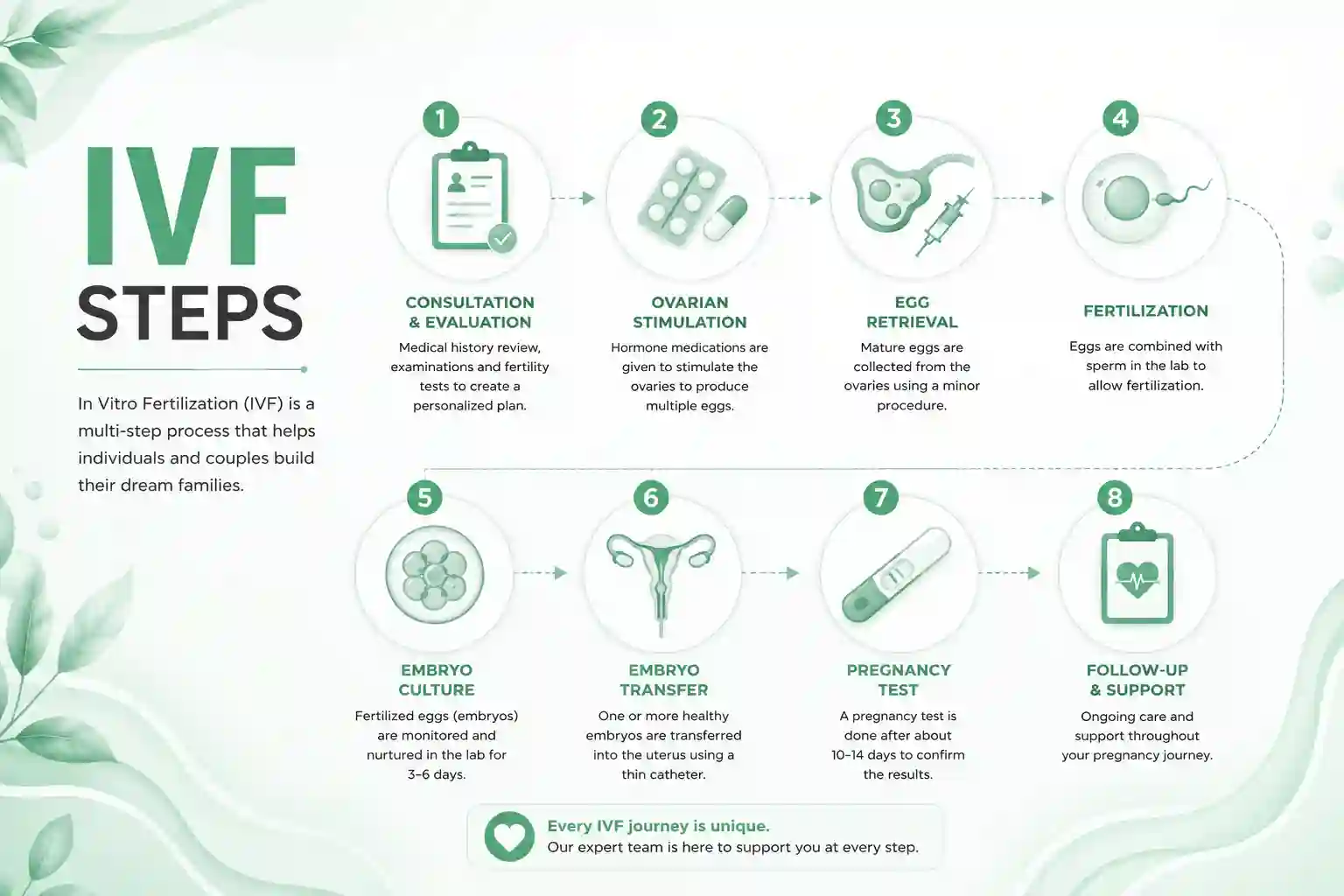
The answer to what is the process of IVF begins with a fertility evaluation and continues through ovarian stimulation, egg retrieval, fertilization in a laboratory, embryo development, embryo transfer, and pregnancy testing. Every IVF treatment plan is personalized based on factors such as age, fertility diagnosis, ovarian reserve, and overall reproductive health.
This guide explains what is the process of IVF, what happens during each stage, and what patients can expect throughout the IVF journey.
What Is IVF?
Before understanding what is the process of IVF, it’s helpful to know what IVF is.
In Vitro Fertilization (IVF) is a fertility treatment in which mature eggs are collected from the ovaries and fertilized with sperm in a specialized laboratory. The resulting embryo is monitored for several days before being transferred into the uterus, where implantation and pregnancy may occur.
IVF may be recommended for people with:
- Blocked or damaged fallopian tubes
- Male factor infertility
- Ovulation disorders
- Endometriosis
- Unexplained infertility
- Certain genetic conditions requiring embryo testing
What Is the Process of IVF Step by Step?
Step 1: Initial Fertility Consultation
The first step in what is the process of IVF is a consultation with a fertility specialist.
During this visit, your doctor will review:
- Medical history
- Menstrual history
- Previous pregnancies
- Previous fertility treatments
- Lifestyle factors
- Current medications
This information helps create an individualized treatment plan.
Step 2: Fertility Testing
Before IVF begins, several diagnostic tests are usually performed.
For the female partner, these may include:
- Hormone blood tests
- Pelvic ultrasound
- Ovarian reserve assessment
- Uterine evaluation
For the male partner:
- Semen analysis
The results help determine the most appropriate IVF protocol.
Step 3: Ovarian Stimulation
A key part of what is the process of IVF involves stimulating the ovaries with fertility medications.
During this stage:
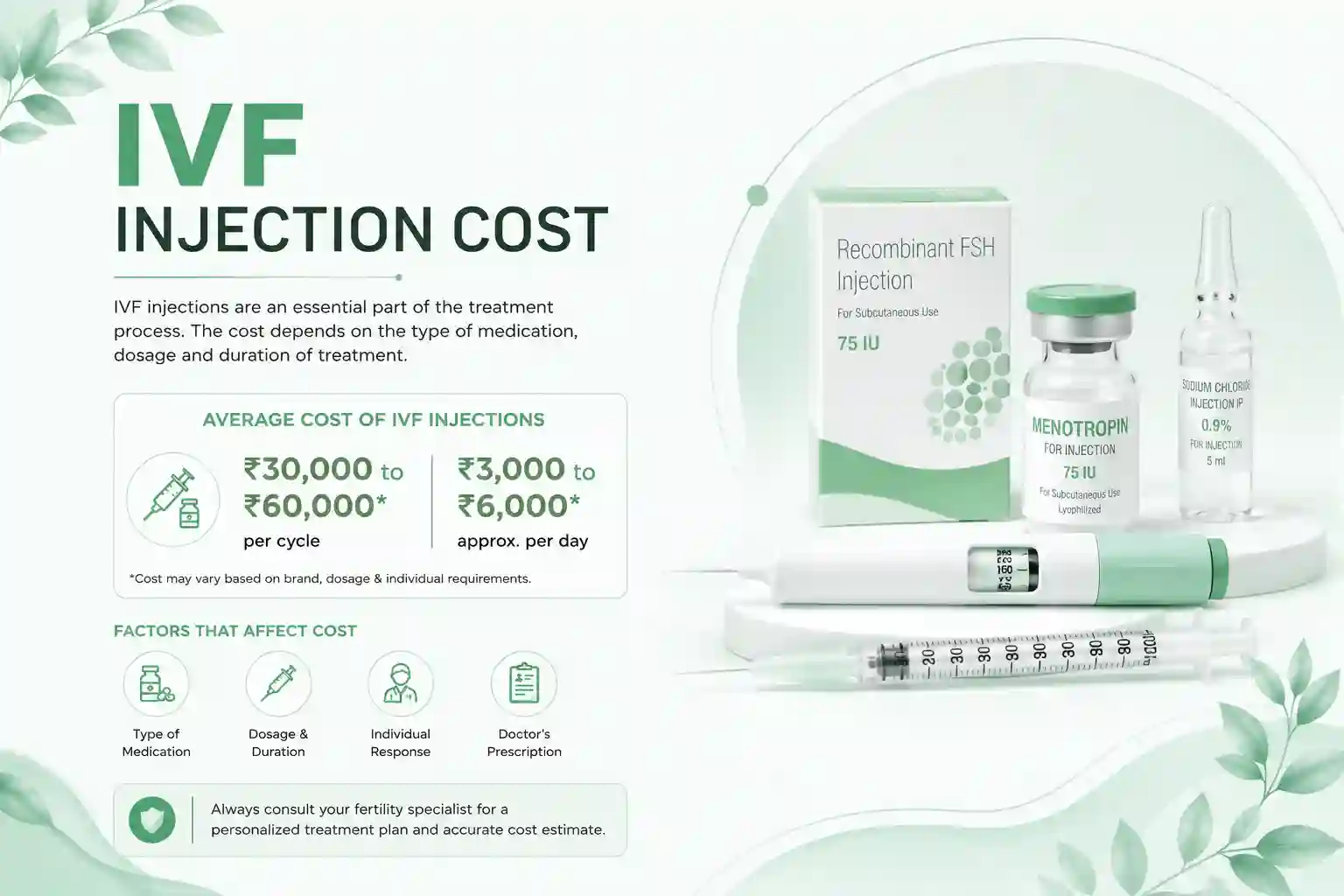
- Daily hormone injections encourage multiple follicles to develop.
- Ultrasound scans monitor follicle growth.
- Blood tests measure hormone levels.
- Medication doses may be adjusted based on your response.
This phase usually lasts 8–14 days.
Step 4: Trigger Injection
When the follicles reach the desired size, a trigger injection is administered to complete egg maturation.
Egg retrieval is generally scheduled 34–36 hours later.
Step 5: Egg Retrieval
Egg retrieval is a minimally invasive procedure performed under sedation or anesthesia.
During the procedure:
- A thin needle is guided through the vaginal wall using ultrasound.
- Mature eggs are collected from the ovaries.
- The procedure usually takes 20–30 minutes.
Most patients return home the same day.
Step 6: Sperm Collection and Preparation
On the day of egg retrieval:
- A semen sample is collected.
- Healthy sperm are separated in the laboratory.
- The best-quality sperm are prepared for fertilization.
Donor sperm may be used when appropriate.
Step 7: Fertilization
The next stage in what is the process of IVF is fertilization.
Depending on your treatment plan:
- Conventional IVF allows eggs and sperm to fertilize naturally in the laboratory.
- Intracytoplasmic Sperm Injection (ICSI) involves injecting a single sperm directly into each mature egg.
Embryologists check for successful fertilization the following day.
Step 8: Embryo Culture
The fertilized eggs develop into embryos over 3–5 days, and sometimes longer, depending on the treatment plan.
During this period:
- Embryologists monitor embryo growth.
- The healthiest embryo(s) are selected for transfer.
- Additional embryos may be frozen if appropriate.
Step 9: Embryo Transfer
Embryo transfer is a simple outpatient procedure.
During embryo transfer:
- A thin catheter is inserted through the cervix.
- The selected embryo is gently placed inside the uterus.
- Ultrasound guidance is commonly used.
The procedure usually takes 10–20 minutes.
Step 10: Progesterone Support
After embryo transfer, progesterone supplementation is commonly prescribed to support the uterine lining and early pregnancy.
Your fertility specialist will explain how long the medication should be continued.
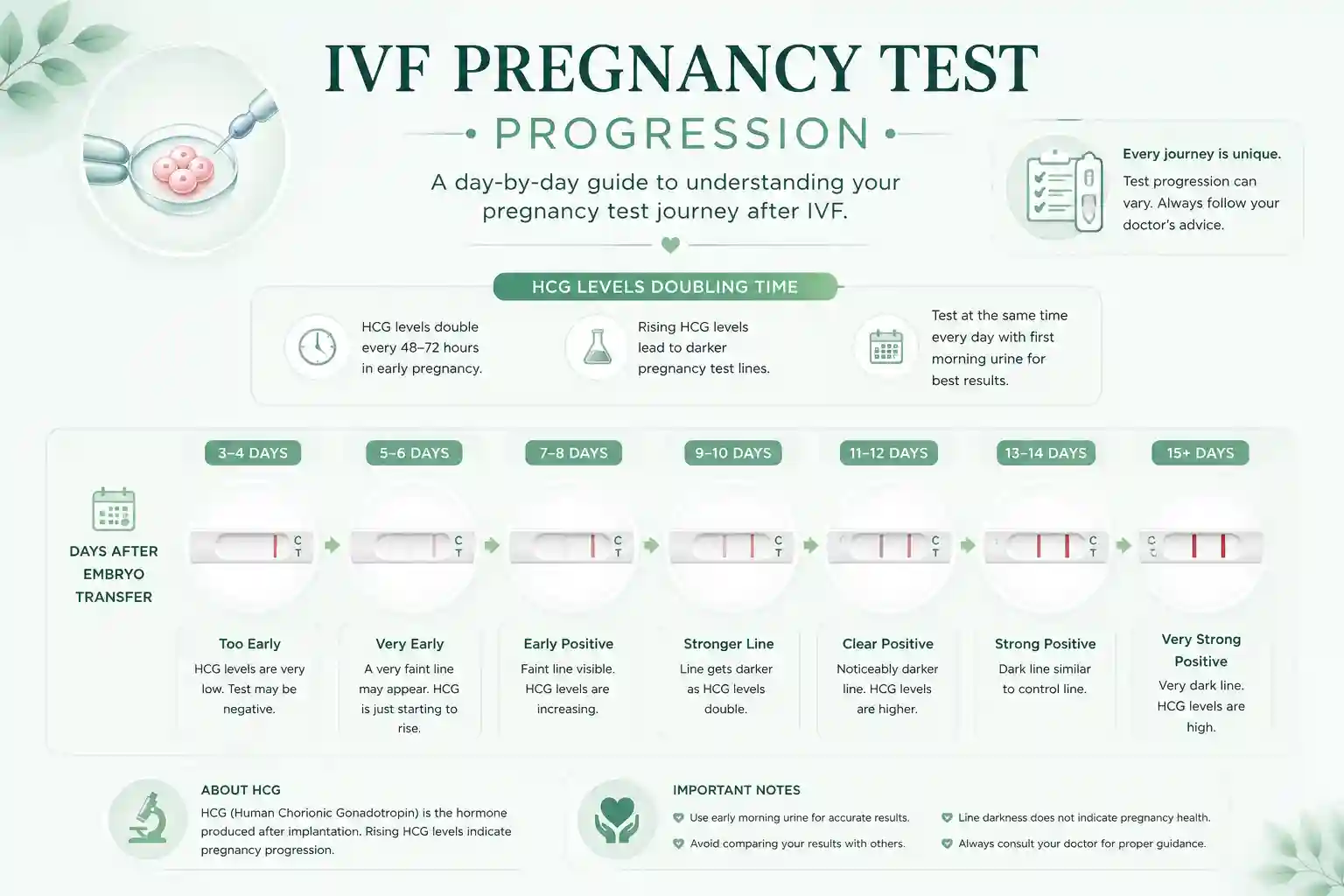
Step 11: Pregnancy Test
The final step in what is the process of IVF is pregnancy testing.
A beta-hCG blood test is usually performed 10–14 days after embryo transfer to determine whether implantation has occurred.
If the test is positive, an ultrasound is scheduled several weeks later to confirm the pregnancy.
How Long Does the Process of IVF Take?
For most patients, a complete IVF cycle takes approximately 4–6 weeks from the start of ovarian stimulation to pregnancy testing.
However, the exact timeline depends on:
- Individual response to medication
- Fresh or frozen embryo transfer
- Additional procedures such as genetic testing
- Personalized treatment protocols
Benefits of IVF
IVF offers several advantages, including:
- Helps overcome many causes of infertility.
- Can bypass blocked fallopian tubes.
- Can be combined with ICSI when indicated.
- Allows embryo freezing for future treatment.
- May include preimplantation genetic testing when medically appropriate.
Risks, Side Effects, or Limitations
Although IVF is widely used and generally safe, patients should understand that:
- Pregnancy cannot be guaranteed.
- Fertility medications may cause temporary side effects.
- Egg retrieval is an invasive procedure.
- Multiple treatment cycles may be required.
- Multiple pregnancy can occur if more than one embryo is transferred.
Your fertility specialist will discuss these risks before treatment begins.
Factors Affecting IVF Success
Several medical factors influence the success of the IVF process.
Female Age
Egg quality generally declines with age, affecting pregnancy rates.
Embryo Quality
Healthy embryos have a greater chance of successful implantation.
Sperm Quality
Healthy sperm improves the likelihood of successful fertilization.
Uterine Health
A receptive uterine lining supports embryo implantation.
Underlying Fertility Condition
The cause of infertility influences treatment planning and outcomes.
Emotional & Patient Perspective
Understanding what is the process of IVF can make treatment feel less overwhelming. IVF involves multiple appointments, hormone injections, laboratory procedures, and a waiting period before pregnancy testing. These stages can bring a mix of hope, excitement, and anxiety.
Maintaining open communication with your fertility team, asking questions, and seeking emotional support when needed can help you navigate the IVF journey with greater confidence.
Tips During the IVF Process
To prepare for treatment:
- Take medications exactly as prescribed.
- Attend every monitoring appointment.
- Eat a balanced diet.
- Stay hydrated.
- Avoid smoking and excessive alcohol.
- Follow your fertility specialist’s recommendations regarding physical activity.
- Discuss any concerns with your healthcare team.
When to See a Fertility Specialist
Consider consulting a fertility specialist if:
- You have been trying to conceive for one year (or six months if you are 35 years or older).
- You have experienced recurrent pregnancy loss.
- You have known infertility.
- You have blocked fallopian tubes or severe male factor infertility.
- You want to explore IVF as a treatment option.
If you’re asking what is the process of IVF, it involves a carefully planned sequence of steps: fertility consultation, diagnostic testing, ovarian stimulation, trigger injection, egg retrieval, sperm preparation, laboratory fertilization, embryo culture, embryo transfer, progesterone support, and pregnancy testing. Each stage is designed to optimize the chances of fertilization and implantation. While IVF cannot guarantee pregnancy, it remains one of the most effective fertility treatments available for many causes of infertility. Working closely with your fertility specialist and following your personalized treatment plan can help you move through the IVF process with confidence.
FAQs About What Is the Process of IVF
1. What is the process of IVF?
The process of IVF includes fertility evaluation, ovarian stimulation, egg retrieval, laboratory fertilization, embryo culture, embryo transfer, progesterone support, and pregnancy testing.
2. How long does the IVF process take?
A complete IVF cycle generally takes 4–6 weeks, although the timeline varies depending on the treatment plan and individual response.
3. Is the IVF process painful?
Most patients experience mild discomfort from hormone injections and temporary cramping after egg retrieval. Egg retrieval is typically performed under sedation or anesthesia.
4. What happens after embryo transfer?
After embryo transfer, progesterone support is usually continued, and a beta-hCG blood test is performed about 10–14 days later to determine whether pregnancy has occurred.
5. Can IVF be combined with ICSI?
Yes. ICSI is often performed during an IVF cycle, particularly when male factor infertility is present.
6. How many embryos are transferred during IVF?
The number of embryos transferred depends on factors such as age, embryo quality, medical history, and fertility specialist recommendations. Many clinics now recommend Single Embryo Transfer (SET) when appropriate.
7. Does the IVF process guarantee pregnancy?
No. IVF improves the chance of pregnancy for many individuals, but success depends on factors such as age, embryo quality, uterine health, sperm quality, and the underlying cause of infertility.