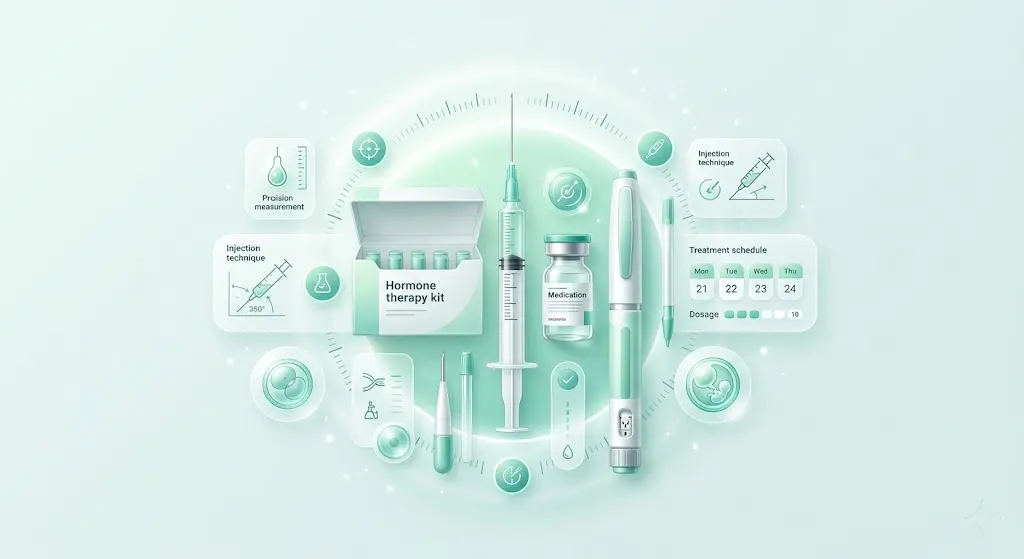
Starting an IVF journey often brings many questions, and one of the most common is about IVF needle size. Many patients worry that IVF injections will be extremely painful because they involve needles. In reality, most IVF medications are designed to be administered with very small, thin needles that are generally well tolerated.
Understanding the different types of IVF needles, why they are used, and how to give injections correctly can help reduce anxiety and make the treatment process feel more manageable.
What Is IVF Needle Size?
IVF needle size refers to the length and thickness (gauge) of the needles used to administer fertility medications or perform certain IVF procedures.
Different stages of IVF require different types of needles depending on the medication and method of administration.
The two most common categories are:
- Subcutaneous (under-the-skin) injection needles
- Intramuscular (into-the-muscle) injection needles
Most daily fertility injections use fine, short needles designed to minimize discomfort.
Why Is IVF Needle Size Important?
Understanding IVF needle size helps patients feel more confident about treatment.
The correct needle size is important because it:
- Delivers medication to the correct tissue
- Improves medication absorption
- Reduces discomfort
- Minimizes bruising
- Helps ensure effective treatment
Using the needle recommended by your fertility clinic is essential for safe and accurate medication administration.
How Does IVF Injection Work?
Most IVF medications are self-administered at home following instructions from the fertility team.
Step 1: Prepare the Medication
Wash your hands thoroughly and prepare the prescribed medication according to the manufacturer’s instructions.
Step 2: Select the Correct Needle
Use only the needle supplied or recommended for your specific medication.
Step 3: Choose the Injection Site
For subcutaneous injections, common sites include:
- Lower abdomen
- Outer thigh (for some medications)
For intramuscular injections, the upper outer buttock or thigh may be recommended.
Step 4: Administer the Injection
Insert the needle at the angle instructed by your healthcare provider and slowly inject the medication.
Step 5: Dispose of the Needle Safely
Place all used needles immediately into an approved sharps container.
Common IVF Needle Sizes
The exact IVF needle size varies depending on the medication prescribed.
Subcutaneous Needles
These are commonly used for medications such as follicle-stimulating hormone (FSH) and GnRH antagonists.
Typical characteristics include:
- Very thin needle
- Short length
- Usually causes only mild discomfort
Intramuscular Needles
Some progesterone medications require intramuscular injections.
These needles are generally:
- Longer than subcutaneous needles
- Slightly thicker
- Used to reach muscle tissue
Your fertility clinic will provide the appropriate equipment and instructions.
Benefits of Modern IVF Needles
Advances in medical technology have made IVF injections easier than in the past.
Benefits include:
- Smaller needle diameter
- Less pain during injection
- Easier self-administration
- Improved patient comfort
- More accurate medication delivery
Many fertility medications are also available in user-friendly injection pens.
Risks, Side Effects, or Limitations
Most IVF injections are well tolerated.
Common side effects include:
- Mild redness
- Bruising
- Temporary soreness
- Minor swelling
- Tenderness at the injection site
Less commonly, patients may experience:
- Allergic reactions
- Infection at the injection site
- Significant pain or swelling
Contact your fertility clinic if you notice severe redness, fever, persistent swelling, or unusual symptoms.
Timeline and Frequency of IVF Injections
The number of injections varies depending on the treatment protocol.
Generally:
- Daily injections continue for approximately 8 to 14 days during ovarian stimulation.
- Additional medications may be added later in the cycle.
- Progesterone injections may continue after embryo transfer if recommended.
Your fertility specialist will create a schedule tailored to your treatment plan.
Factors Affecting Injection Comfort
Several factors influence how comfortable IVF injections feel.
Needle Size
Smaller, finer needles usually cause less discomfort.
Injection Technique
Correct technique can reduce bruising and soreness.
Medication Temperature
Some medications are more comfortable when allowed to reach room temperature before injection, if advised by the manufacturer.
Relaxed Muscles
Staying relaxed during the injection may reduce discomfort.
Injection Site Rotation
Changing injection sites helps prevent irritation and skin tenderness.
Emotional & Patient Perspective
Fear of needles is common among people beginning IVF treatment.
Patients often worry about:
- Giving injections correctly
- Pain during treatment
- Bruising
- Daily injection routines
Many people report that the anticipation is often more stressful than the injections themselves. With practice, the process usually becomes easier and more familiar.
Seeking guidance from your fertility nurse or specialist can help build confidence.
Tips for Easier IVF Injections
These practical tips may improve comfort during treatment:
- Follow your medication schedule carefully.
- Wash your hands before every injection.
- Rotate injection sites as instructed.
- Avoid rubbing the area immediately afterward.
- Use a new sterile needle for every injection.
- Dispose of needles safely in a sharps container.
- Ask your fertility clinic for a demonstration if you are unsure about the technique.
Never change the needle size or injection method without medical advice.
When to See a Fertility Specialist
Contact your fertility specialist if you experience:
- Severe pain during injection
- Persistent swelling
- Signs of infection
- Difficulty administering medication
- Missed doses
- Questions about needle size or injection technique
Prompt communication can help prevent treatment interruptions and ensure medications are used correctly.
Understanding IVF needle size can make fertility treatment feel less intimidating. Most IVF medications use very small, thin needles designed to reduce discomfort while delivering medication effectively. The exact needle size depends on the medication and whether it is given under the skin or into a muscle.
If you are unsure about any aspect of your IVF injections, your fertility team can demonstrate the correct technique and answer your questions. Proper training and following your prescribed protocol can help make the IVF process safer and more comfortable.
FAQs About IVF Needle Size
1. Are IVF needles large?
No. Most IVF medications use very small, thin needles that are designed to minimize discomfort.
2. Do all IVF injections use the same needle size?
No. Needle size varies depending on the medication and whether it is given subcutaneously or intramuscularly.
3. Are IVF injections painful?
Most patients describe IVF injections as causing mild discomfort rather than significant pain, although individual experiences vary.
4. Can I choose a different IVF needle size?
No. You should always use the needle size recommended by your fertility clinic or medication manufacturer.
5. Why are some IVF needles longer than others?
Longer needles are typically used for intramuscular injections to ensure the medication reaches the muscle tissue.
6. How can I make IVF injections less painful?
Using proper injection technique, rotating injection sites, relaxing the muscles, and following your clinic’s instructions can help reduce discomfort.
7. When should I contact my fertility clinic about injection problems?
Seek medical advice if you experience severe pain, significant swelling, signs of infection, persistent bleeding, or difficulty administering your medication.