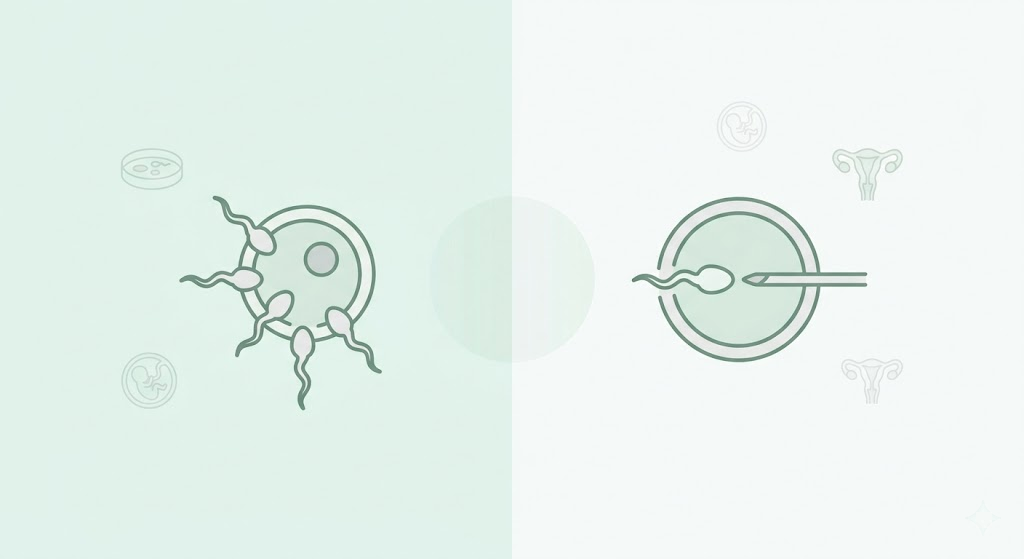
If you’re exploring fertility treatment, you may be asking: “What is the difference between ICSI vs IVF?”
Both methods are part of assisted reproduction, but they differ in how fertilization happens. Understanding ICSI vs IVF can help you choose the right treatment with your doctor.
What is IVF?
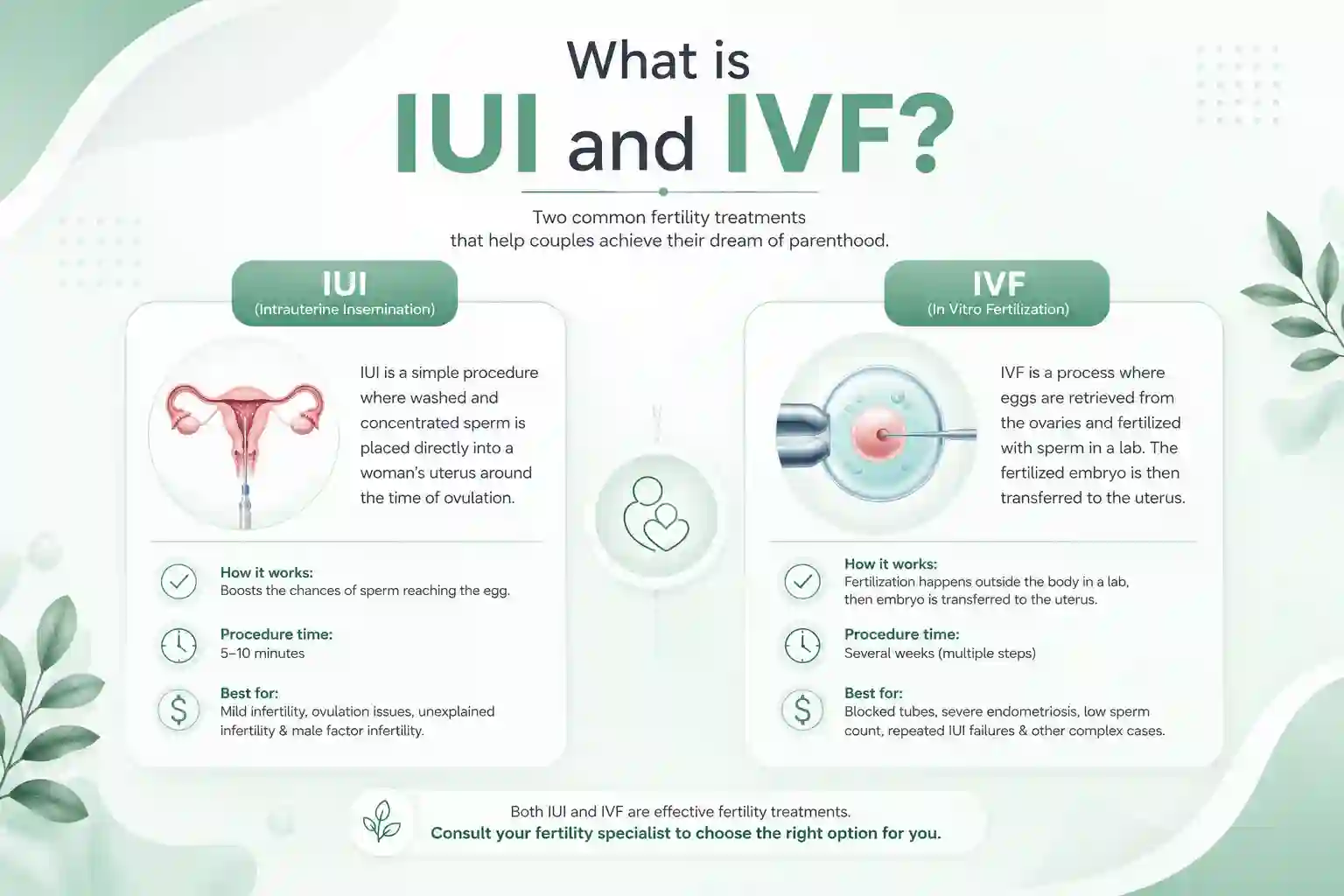
IVF (In Vitro Fertilization) is a process where:
- Eggs are collected from the ovaries
- Sperm is added to the eggs in a lab
- Fertilization happens naturally in a controlled environment
It relies on sperm to penetrate the egg on its own.
What is ICSI?
ICSI (Intracytoplasmic Sperm Injection) is a specialized IVF technique where:
- A single sperm is injected directly into an egg
- Fertilization is assisted manually
It is mainly used in cases of male infertility.
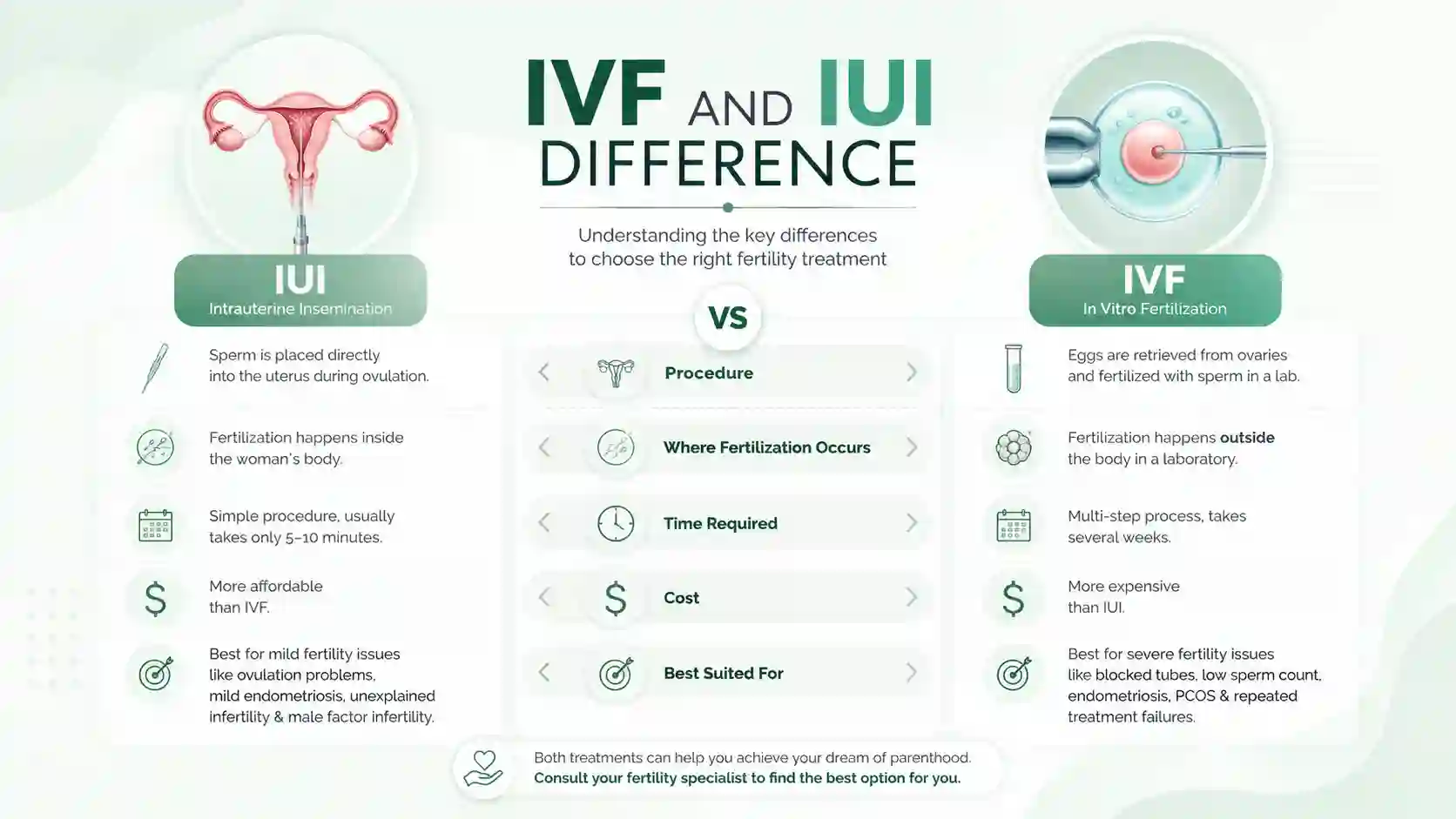
ICSI vs IVF: Key Differences
| Factor | IVF | ICSI |
| Fertilization Method | Natural (in lab) | Direct sperm injection |
| Best For | General infertility | Male infertility |
| Complexity | Standard | More advanced |
| Cost | Lower | Slightly higher |
| Success Rate | Good | Often higher in male factor cases |
ICSI vs IVF: Detailed Comparison
1. Fertilization Process
- IVF: Multiple sperm are placed around the egg
- ICSI: One sperm is injected directly into the egg
ICSI gives more control over fertilization.
2. When Each is Recommended
IVF is recommended for:
- Blocked fallopian tubes
- Ovulation problems
- Unexplained infertility
ICSI is recommended for:
- Low sperm count
- Poor sperm motility
- Previous fertilization failure
3. Success Rate
- IVF success: 30%–50% per cycle
- ICSI success: Similar or slightly higher in male infertility cases
Success depends more on egg quality and age.
4. Cost Difference
- IVF: More affordable
- ICSI: Additional cost due to advanced lab procedure
5. Risk and Safety
Both IVF and ICSI are:
- Generally safe
- Well-established procedures
- Closely monitored by specialists
Which is Better: ICSI or IVF?
There is no one-size-fits-all answer:
- IVF is usually the first choice for many patients
- ICSI is preferred when sperm-related issues exist
Your doctor will recommend based on your condition.
Advantages of IVF
- Less complex
- Lower cost
- Effective for many infertility cases
Advantages of ICSI
- Useful in severe male infertility
- Higher fertilization control
- Reduces risk of fertilization failure
When to See a Fertility Specialist
You should consult a doctor if:
- You’ve been trying to conceive for over a year
- You’re over 35 and trying for 6 months
- You have known fertility issues
Understanding ICSI vs IVF helps you make informed decisions about your fertility treatment.
While IVF is a standard and effective option, ICSI provides additional support in cases of male infertility. A personalized consultation is the best way to determine which method is right for you.
FAQs About ICSI vs IVF
What is the main difference between ICSI and IVF?
ICSI involves direct sperm injection, while IVF allows natural fertilization in a lab.
Which is more successful, ICSI or IVF?
ICSI may be better in male infertility cases.
Is ICSI more expensive than IVF?
Yes, slightly higher due to advanced technique.
Can I choose ICSI instead of IVF?
Only if recommended by your doctor.
Is ICSI safer than IVF?
Both are safe when performed properly.