After a successful IVF cycle, one of the first questions is: “When will my baby be born?”
An IVF due date calculator helps you estimate your baby’s due date based on your embryo transfer date—giving you a clear and accurate pregnancy timeline.
What is an IVF Due Date Calculator?
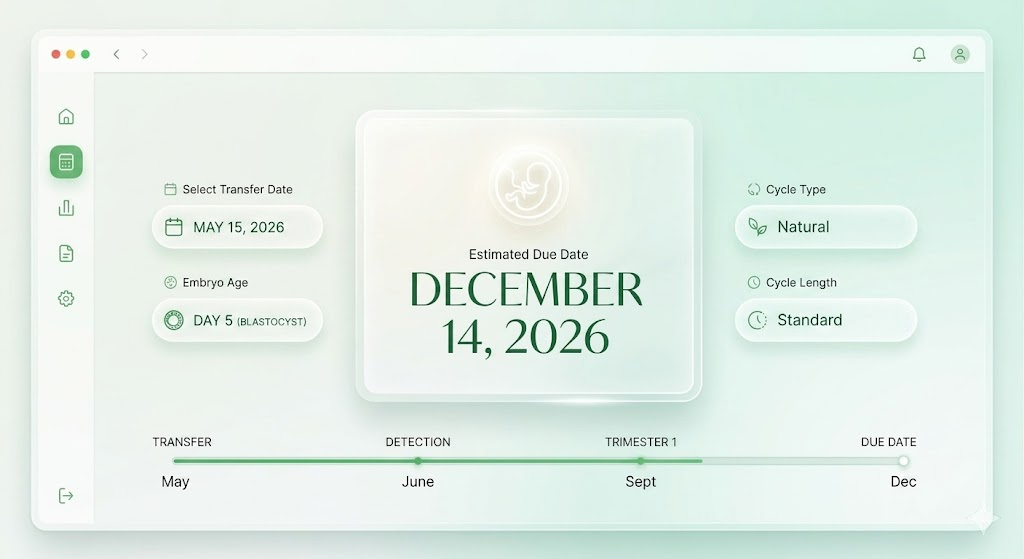
An IVF due date calculator is a simple method used to predict your baby’s expected delivery date using:
- Embryo transfer date
- Embryo age (Day 3 or Day 5)
Unlike natural pregnancy, IVF provides precise timing, making due date estimation more accurate.
Why IVF Due Date Calculation is Important
Knowing your due date helps you:
- Track fetal growth properly
- Schedule scans and checkups
- Prepare for delivery
- Reduce uncertainty during pregnancy
Accurate dating is especially important in IVF pregnancies because everything is medically monitored.
How to Calculate IVF Due Date
The IVF due date calculator works based on embryo transfer timing:
Day 3 Embryo Transfer
- Add 263 days to your transfer date
Day 5 Embryo Transfer (Blastocyst)
- Add 261 days to your transfer date
This gives your estimated due date.
Example IVF Due Date Calculation
Let’s say:
- Embryo transfer date: April 1
- Day 5 embryo transfer
Add 261 days → Estimated due date: December 18
This is how an IVF due date calculator works in real life.
IVF Pregnancy Timeline Overview
Weeks 1–12 (First Trimester)
- Implantation and early development
- Pregnancy confirmation
- Initial scans
Weeks 13–26 (Second Trimester)
- Baby growth and organ development
- Reduced early symptoms
- Detailed anomaly scan
Weeks 27–40 (Third Trimester)
- Rapid weight gain of baby
- Frequent doctor visits
- Delivery preparation
Is IVF Due Date More Accurate?
Yes. IVF due dates are considered more precise because:
- Exact fertilization timing is known
- No reliance on last menstrual period
- Less variation compared to natural conception
Doctors often rely on IVF calculations for better monitoring.
Can IVF Due Date Change?
In some cases, your doctor may adjust the due date based on:
- Ultrasound measurements
- Baby’s growth pattern
- Medical conditions
However, changes are usually small.
Symptoms After IVF Pregnancy
You may experience:
- Mild cramping
- Breast tenderness
- Fatigue
- Nausea
- Light spotting
These are normal, but always report unusual symptoms to your doctor.
When to Consult a Doctor
Seek medical advice if you notice:
- Heavy bleeding
- Severe abdominal pain
- Sudden loss of pregnancy symptoms
- Fever or discomfort
Regular follow-ups are essential for a healthy IVF pregnancy.
An IVF due date calculator gives you a reliable estimate of your baby’s arrival and helps you plan your pregnancy journey with confidence.
While the calculator provides a strong estimate, your doctor’s evaluation and ultrasound reports remain the most important for tracking your baby’s development.
If you’ve recently undergone IVF or are planning treatment, consulting a fertility specialist will ensure the best care at every stage.
FAQs About IVF Due Date Calculator
How accurate is an IVF due date calculator?
It is highly accurate because it uses the exact embryo transfer date.
What is the due date for Day 5 embryo transfer?
Usually 261 days from the embryo transfer date.
Can IVF due dates be wrong?
They are very reliable, but minor adjustments may happen based on scans.
Do IVF pregnancies last exactly 40 weeks?
Most follow the standard 40-week timeline, similar to natural pregnancies.
Can I use a normal pregnancy calculator for IVF?
No, IVF requires a specific calculation method.