
Trying to get pregnant but not seeing results can be emotionally and physically exhausting. If you’ve been facing fertility challenges, IVF treatment may offer a reliable and effective solution.
This guide explains IVF treatment in simple terms—so you know what to expect, how it works, and when to take the next step.
What is IVF Treatment?
IVF treatment (In Vitro Fertilization) is a medical procedure where an egg and sperm are combined outside the body in a laboratory. Once fertilization happens, the embryo is placed inside the uterus to achieve pregnancy.
It’s one of the most advanced and widely used fertility treatments today.
Why IVF Treatment Matters
IVF treatment has helped millions of couples worldwide who struggle with infertility. It is especially useful when other treatments have not worked.
It can help in:
- Blocked or damaged fallopian tubes
- Male infertility issues
- Ovulation disorders
- Unexplained infertility
- Age-related fertility decline
For many, IVF treatment becomes the most effective path to parenthood.
Signs You May Need IVF Treatment
You may be advised to consider IVF treatment if you experience:
- Trying to conceive for over 1 year (or 6 months if over 35)
- Irregular or missed periods
- Known fertility conditions like PCOS or endometriosis
- Low sperm count or poor sperm quality
- Multiple failed pregnancy attempts or miscarriages
Causes and Risk Factors of Infertility
Female Factors
- Hormonal imbalance
- Ovulation disorders
- Blocked fallopian tubes
- Endometriosis
Male Factors
- Low sperm count
- Poor sperm movement
- Abnormal sperm shape
Lifestyle Factors
- Smoking and alcohol use
- Obesity or poor nutrition
- High stress
- Sedentary lifestyle
Diagnosis Before IVF Treatment
Before starting IVF treatment, doctors recommend several tests:
- Hormone blood tests
- Ultrasound of ovaries and uterus
- Semen analysis
- Tube patency test (HSG)
These tests help doctors customize your IVF plan.
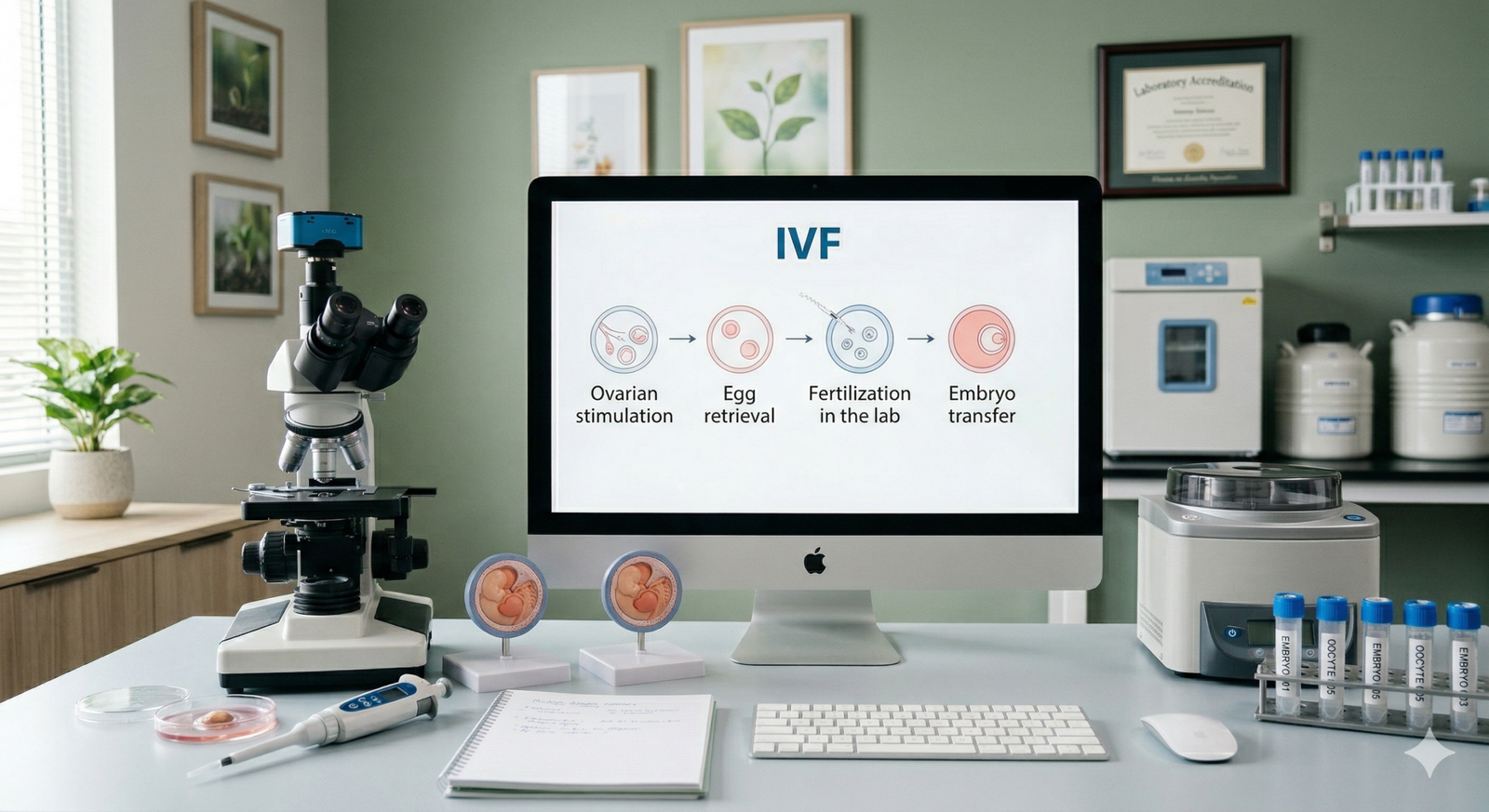
IVF Treatment: Step-by-Step Process
Understanding the IVF treatment steps can reduce anxiety and help you feel more prepared.
1. Ovarian Stimulation
Hormone injections are given to stimulate multiple egg production.
2. Egg Retrieval
Eggs are collected through a minor procedure under sedation.
3. Fertilization
Eggs and sperm are combined in the lab. Sometimes ICSI is used.
4. Embryo Development
Fertilized eggs grow into embryos over a few days.
5. Embryo Transfer
A healthy embryo is transferred into the uterus.
6. Pregnancy Test
After 10–14 days, a test confirms whether implantation was successful.
Treatment Options in IVF
IVF treatment may include advanced options such as:
- ICSI (Intracytoplasmic Sperm Injection)
- Frozen Embryo Transfer (FET)
- Donor egg or sperm IVF
- Genetic testing (PGT)
Your doctor will recommend what suits your condition best.
Risks and Safety of IVF Treatment
IVF treatment is generally safe, but like any medical procedure, it has some risks:
- Mild bloating or discomfort
- Hormonal side effects
- Ovarian Hyperstimulation Syndrome (rare)
- Multiple pregnancy (twins or more)
Doctors closely monitor every step to ensure safety.
Success Rate of IVF Treatment
Success rates vary depending on several factors:
- Age (younger women have higher success rates)
- Egg and sperm quality
- Underlying medical conditions
- Clinic expertise
On average, success rates range from 30% to 50% per cycle.
Lifestyle Tips to Improve IVF Success
You can improve your chances with these steps:
- Maintain a healthy body weight
- Eat a balanced, nutrient-rich diet
- Avoid smoking and alcohol
- Manage stress effectively
- Follow your doctor’s advice strictly
When to See a Fertility Specialist
Consider consulting a doctor if:
- You’ve been trying without success
- You’re over 35 and planning pregnancy
- You have irregular cycles
- You’ve experienced recurrent pregnancy loss
Early guidance can improve your outcomes significantly.
IVF treatment is a powerful and proven solution for couples facing infertility. While the journey may feel overwhelming at first, understanding the process can make it much easier to navigate.
If you’re considering IVF treatment, the best next step is to consult a fertility specialist who can guide you with a personalized plan and realistic expectations.
FAQs About IVF Treatment
How long does IVF treatment take?
A typical IVF treatment cycle takes about 4–6 weeks.
Is IVF treatment painful?
Most steps involve mild discomfort. Egg retrieval is done under sedation.
What is the cost of IVF treatment?
Costs vary depending on location, clinic, and additional procedures.
Can IVF treatment guarantee pregnancy?
No, but it significantly increases the chances of conception.
How many IVF cycles are needed?
Some couples succeed in one cycle, while others may need multiple attempts.