
Struggling to conceive can feel overwhelming, especially when months or years pass without success. The IVF process offers hope to many couples facing fertility challenges by providing a scientifically advanced way to achieve pregnancy.
If you’re considering IVF or simply want to understand how it works, this guide breaks everything down in a clear, patient-friendly way.
What is the IVF Process?
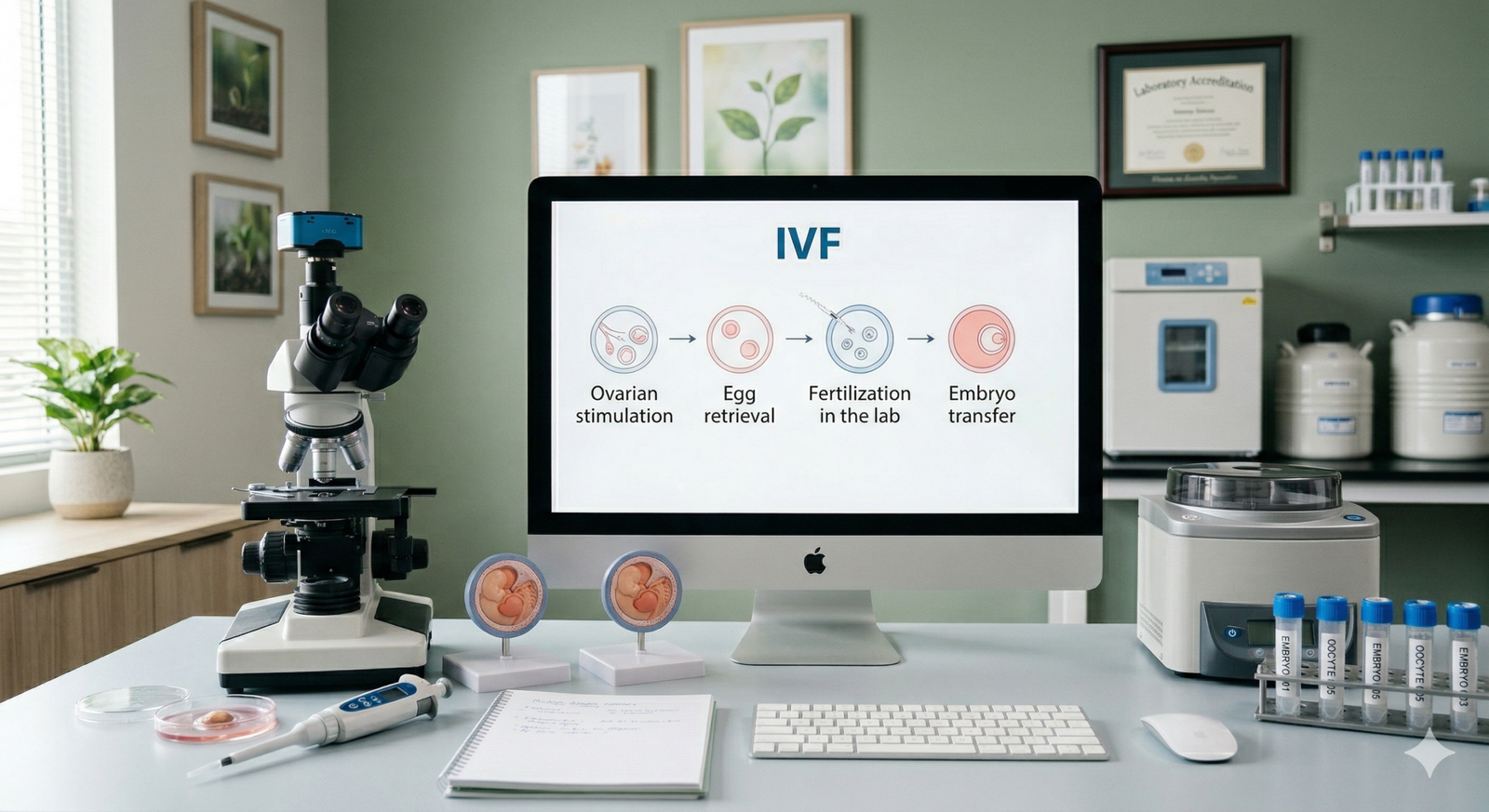
The IVF process (In Vitro Fertilization) is a fertility treatment where eggs are collected from the ovaries and fertilized with sperm in a laboratory. The resulting embryo is then placed into the uterus to achieve pregnancy.
In simple terms, fertilization happens outside the body, and the embryo is carefully transferred back into the womb.
Why the IVF Process Matters
Infertility affects many couples, and it’s not always easy to identify the cause. The IVF process helps by:
- Bypassing blocked fallopian tubes
- Overcoming male infertility issues
- Assisting women with ovulation problems
- Helping couples with unexplained infertility
For many patients, IVF is not just a treatment—it’s a path to parenthood.
Signs You May Need IVF
You may be advised to consider the IVF process if you experience:
- Difficulty conceiving after 12 months (or 6 months if over 35)
- Irregular or absent periods
- Known fallopian tube blockage
- Low sperm count or poor sperm quality
- Repeated miscarriages
- Diagnosed conditions like PCOS or endometriosis
Causes and Risk Factors for Infertility
Several factors may lead to the need for IVF:
Female Factors
- Ovulation disorders (e.g., PCOS)
- Damaged or blocked fallopian tubes
- Age-related decline in egg quality
- Endometriosis
Male Factors
- Low sperm count
- Poor sperm motility
- Abnormal sperm shape
Lifestyle Factors
- Smoking
- Excessive alcohol use
- Obesity or being underweight
- High stress levels
Diagnosis and Fertility Tests
Before starting the IVF process, doctors perform tests to understand the root cause:
- Blood tests (hormone levels)
- Ultrasound scan (ovaries and uterus)
- Semen analysis
- Hysterosalpingography (to check fallopian tubes)
These tests help create a personalized treatment plan.
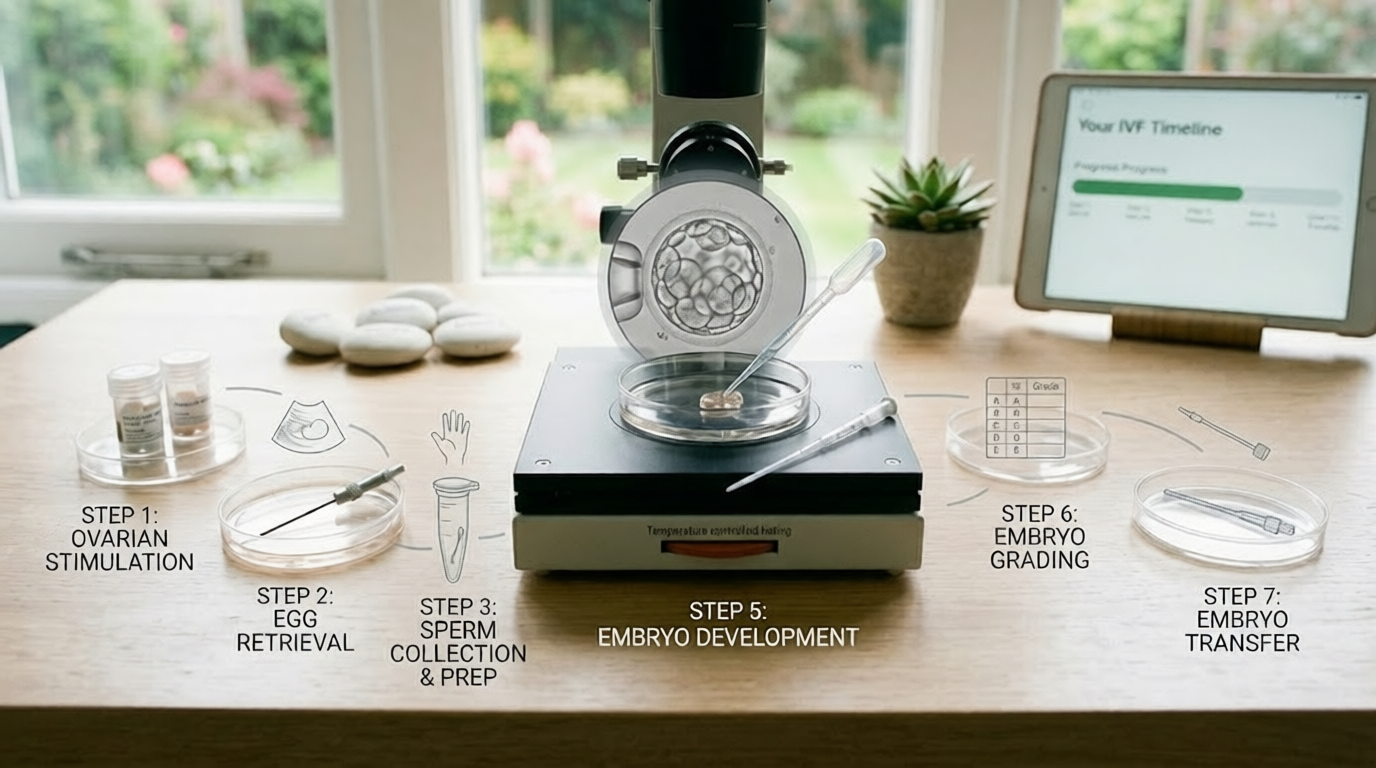
IVF Process: Step-by-Step
Understanding each step can make the IVF process less intimidating.
1. Ovarian Stimulation
You’ll receive hormone injections to stimulate the ovaries to produce multiple eggs.
2. Egg Retrieval
A minor procedure is performed to collect eggs from the ovaries.
3. Fertilization
Eggs are combined with sperm in a lab. In some cases, ICSI (Intracytoplasmic Sperm Injection) is used.
4. Embryo Development
Fertilized eggs grow into embryos over 3–5 days.
5. Embryo Transfer
A healthy embryo is placed into the uterus.
6. Pregnancy Test
After about 10–14 days, a blood test confirms pregnancy.
Treatment Options and Variations
The IVF process may include different approaches based on your condition:
- ICSI (Intracytoplasmic Sperm Injection) – for male infertility
- Frozen Embryo Transfer (FET) – using previously frozen embryos
- Donor Egg or Sperm IVF – when needed
- Preimplantation Genetic Testing (PGT) – to screen embryos
Your doctor will guide you on the best option.
Prevention and Lifestyle Tips
While not all infertility can be prevented, you can improve your chances:
- Maintain a healthy weight
- Avoid smoking and alcohol
- Eat a balanced diet
- Manage stress levels
- Track ovulation cycles
These steps can support both natural conception and IVF success.
When to See a Doctor
You should consult a fertility specialist if:
- You’ve been trying to conceive without success
- You’re over 35 and trying for 6 months
- You have irregular cycles or known reproductive issues
- You’ve had multiple miscarriages
Early consultation can save time and improve outcomes.
The IVF process is a well-established and effective fertility treatment that has helped millions of couples worldwide. While the journey can feel complex, understanding each step makes it more manageable and less stressful.
If you’re considering IVF, speaking with a qualified fertility specialist is the best next step. A personalized plan can significantly improve your chances of success.
FAQs About the IVF Process
How long does the IVF process take?
Typically, one IVF cycle takes about 4–6 weeks from start to finish.
Is the IVF process painful?
Most steps involve mild discomfort. Egg retrieval is done under sedation, so you won’t feel pain during the procedure.
What is the success rate of IVF?
Success depends on age, health, and other factors, but generally ranges between 30%–50% per cycle.
Is IVF safe?
Yes, the IVF process is considered safe, though minor side effects like bloating or mood changes can occur.
How many IVF cycles are needed?
Some patients succeed in one cycle, while others may need multiple attempts.