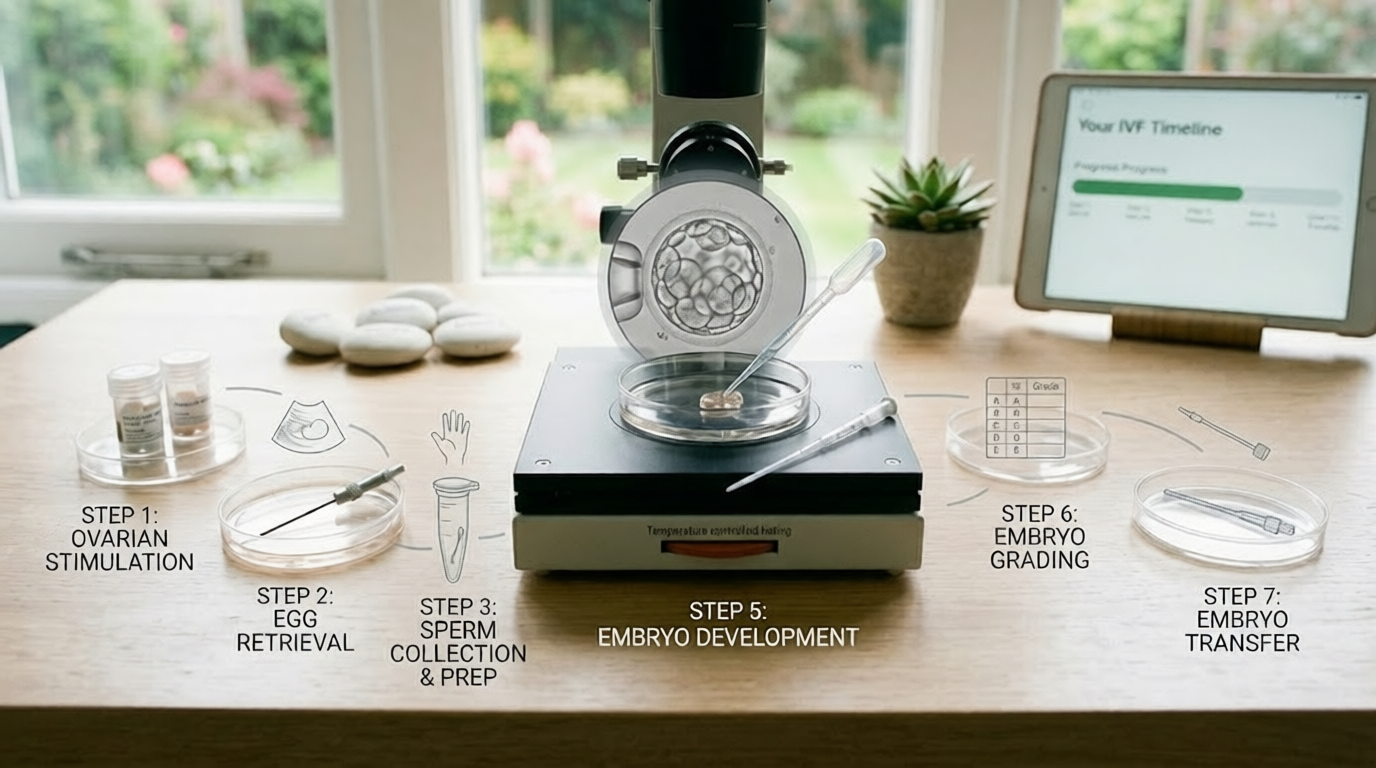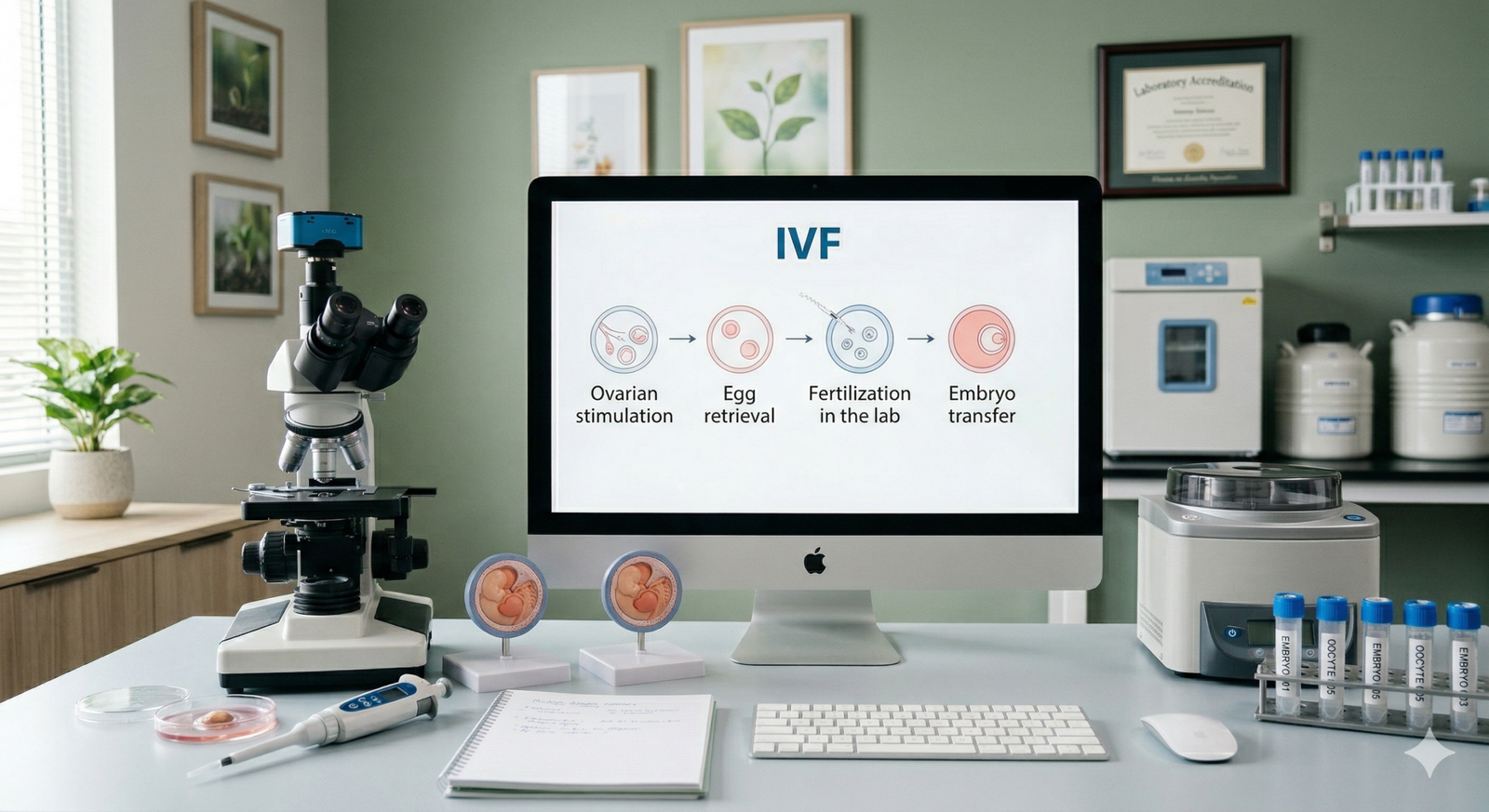
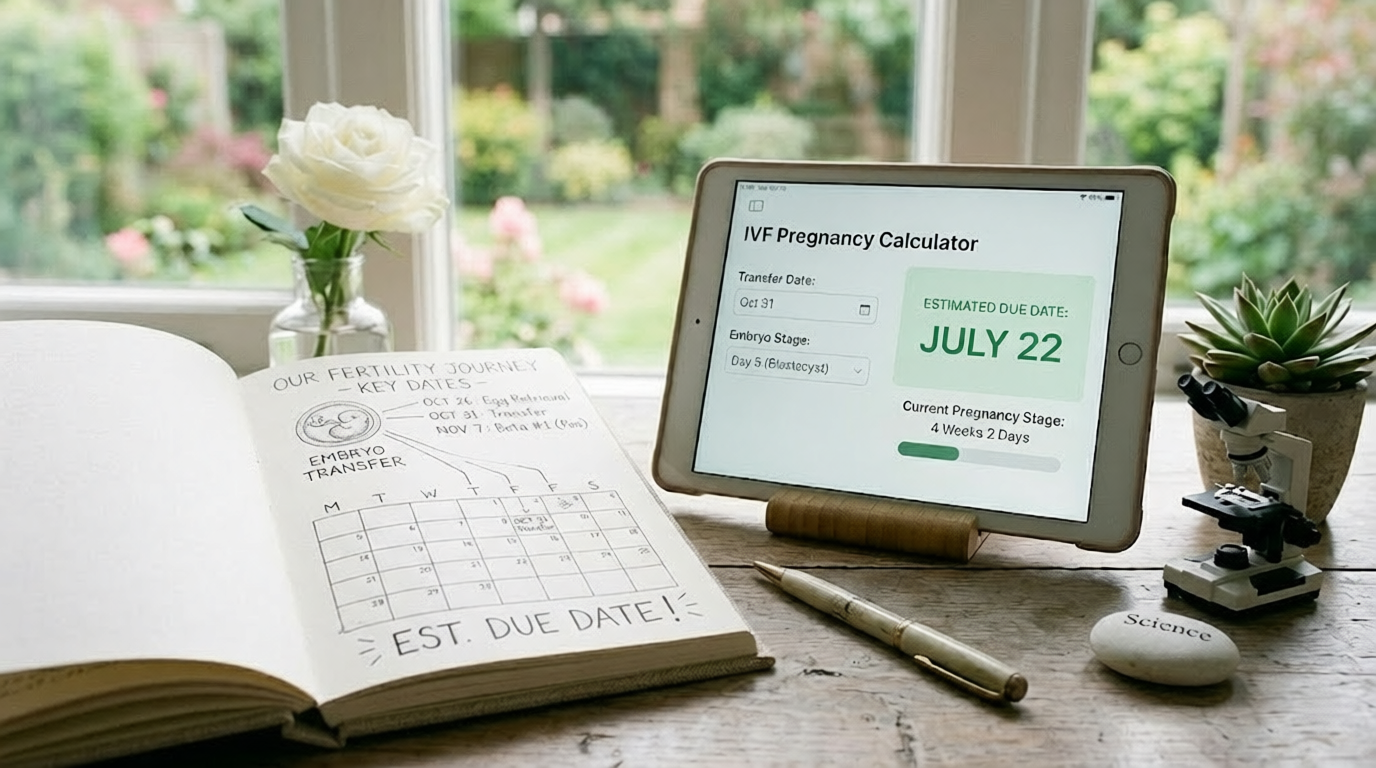
After going through the emotional journey of fertility treatment, one of the first questions patients ask is: “When is my baby due?”
An IVF pregnancy calculator helps estimate your due date based on your embryo transfer date, giving you a clear timeline of your pregnancy.
What is an IVF Pregnancy Calculator?
An IVF pregnancy calculator is a tool used to estimate your baby’s due date using key IVF treatment dates—especially the embryo transfer date.
Unlike natural pregnancy (which uses the last menstrual period), IVF dating is more precise because the exact fertilization timing is known.
Why IVF Pregnancy Calculation Matters
Knowing your accurate due date helps:
- Track baby’s growth properly
- Schedule important scans and tests
- Reduce anxiety about pregnancy progress
- Ensure correct medical monitoring
Since IVF pregnancies are carefully planned, accurate dating plays a crucial role in care.
How IVF Pregnancy is Calculated
The IVF pregnancy calculator works based on the embryo transfer date and the age of the embryo.
If you had a Day 3 Embryo Transfer:
- Add 263 days to your embryo transfer date
If you had a Day 5 (Blastocyst) Transfer:
- Add 261 days to your embryo transfer date
This gives you an estimated due date.
Example Calculation
Let’s say:
- Embryo transfer date: March 1
- Day 5 embryo
Add 261 days → Estimated due date: November 17
This is how an IVF pregnancy calculator works in a simple way.
IVF Pregnancy Timeline: What to Expect
First Trimester (Weeks 1–12)
- Implantation occurs
- Pregnancy test confirms success
- Early scans monitor development
Second Trimester (Weeks 13–26)
- Baby’s organs develop
- You may start feeling movement
- Routine anomaly scan is done
Third Trimester (Weeks 27–40)
- Baby gains weight
- Frequent monitoring
- Preparation for delivery
Symptoms in IVF Pregnancy
IVF pregnancy symptoms are similar to natural pregnancy:
- Mild cramping
- Breast tenderness
- Fatigue
- Nausea or morning sickness
- Spotting (in early days)
Always consult your doctor if symptoms feel unusual.
Factors That Can Affect IVF Due Date
Although IVF dating is accurate, some factors may influence the timeline:
- Late implantation
- Multiple embryo transfer (twins or more)
- Underlying medical conditions
- Doctor’s clinical assessment
Your doctor may adjust the due date based on ultrasound findings.
Is IVF Due Date More Accurate?
Yes. Compared to natural conception, IVF due dates are:
- More precise
- Based on exact fertilization timing
- Less dependent on cycle variations
This is why doctors rely heavily on IVF-based calculations.
When to See a Doctor
After IVF, regular follow-ups are essential. Contact your doctor if:
- You experience heavy bleeding
- Severe abdominal pain
- Sudden loss of pregnancy symptoms
- High fever or discomfort
Early care ensures a healthy pregnancy journey.
An IVF pregnancy calculator gives you a reliable estimate of your due date and helps you understand your pregnancy timeline clearly.
While the calculator provides a strong estimate, your doctor’s guidance and ultrasound reports are the most important for tracking your baby’s growth.
If you’ve recently undergone IVF or are planning treatment, consulting a fertility specialist will help you stay informed and confident throughout your pregnancy.
FAQs About IVF Pregnancy Calculator
How accurate is an IVF pregnancy calculator?
It is highly accurate because it uses the exact embryo transfer date.
Can IVF due dates change?
Yes, slightly—based on ultrasound findings and fetal growth.
What is the due date for Day 5 embryo transfer?
Usually 261 days from the transfer date.
Do IVF pregnancies last 40 weeks?
Yes, IVF pregnancies follow the same 40-week timeline.
Is IVF pregnancy different from natural pregnancy?
The process of conception differs, but pregnancy development is similar.